Television
“THE HILLS, JERSEY SHORE, and the Aesthetics of Class”

Over the last two years I have found myself writing a lot about MTV reality shows, including The City, Teen Mom, Jersey Shore, and The Real World. And a solid chunk of the text in this blog is devoted to The Hills. What the hell is wrong with me?
Rather than trying to end my MTV addiction, I’ve decided instead to try to pinpoint what is so fascinating to me about these programs. And I think what interests me the most is how popular, MTV-produced reality shows address their target teenage audiences. I’m interested in how these programs and their paratexts—including companion websites, message boards, tabloid news stories, and the various pet projects of its celebrity cast members—shape and encourage not only consumer choices, but lifestyle choices as well.
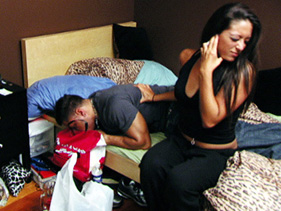
If MTV describes itself as “the world’s premier youth entertainment brand” and “the cultural home of the millennial generation,” then I’m interested in how programs like The Hills, Teen Mom, Jersey Shore, and The Real World work to educate and instruct this Millennial generation about appropriate sex, gender, race, class, and consumer roles. I’d also like to start looking at versions of these programs on other channels, like BET (Baldwin Hills, Harlem Heights) and the UK’s ITV2 (The Only Way Is Essex).

I also want to write about how the aesthetics of these reality programs serves to frame the viewing experience. To that end, I’ve published a piece over at FLOW that examines the visual style of The Hills and Jersey Shore. If you’d like to read it, click here. Otherwise, you should click here.
MILDRED PIERCE, PARTS 4 & 5: Glendale Sucks!
If you are one of the five people who has been keeping up with my Mildred Pierce recaps, please accept my sincerest apologies for the delay. The final two installments of Todd Hayne’s miniseries clocked in at 2 1/2 hours and I simply could not stay awake to watch the final half hour on Sunday night.

Parts 4 and 5 of Mildred Pierce are all about location: where characters live, where they want to live, and how where we’re from indelibly marks us. So it is fitting that Part 4 opens with a establishing shot of the ocean. Seagulls alight on the beach and then fly away again. We soon find out that this is Laguna Beach (before it was Laguna Beach). Mildred (Kate Winslet) and Lucy (Melissa Leo) have come here to check out a new location for her restaurant. From their conversation we discover that Mildred has already opened a second restaurant in Beverly Hills and that the Laguna location would be her third. Mildred plans to serve her signature chicken and waffles dinners, the dinners that have served her so well, but Lucy has a different idea. Lucy explains that when people are vacationing at the beach they want “a shore dinner”: fish, crab, lobster and maybe a steak. Mildred balks at the idea but Lucy is insistent. When the restaurant opens later in the episode, Mildred is surprised to see that her wealthy patrons want to eat outside on the patio. Moments like these reveal the divide between Mildred, hard-working but always working class, and the upper class clientele she serves. She might be serving them food and taking their money, but she will never truly understand them. The distance between Glendale and Pasadena is too great.

Veda, who is now 17-years-old and played with haughty perfection by Evan Rachel Wood, is all too aware of this distance. When her piano teacher dies suddenly, she must seek out a new one. Of course, Veda being Veda decides that she can only work with the best, a snooty Italian conductor, Carlo Treviso (Ronald Guttman). Halfway through Veda’s audition he gently closes the piano cover, as she is still playing, which is a total dick move. She flees the audition, sobbing (as she did in Part 3), and Mildred attempts to comfort her daughter, but her encouraging words enrage Veda, “You think I’m hot stuff, don’t you?” she spits, “Well I’m not, there’s one like me in every Glendale!” Veda’s point is that she is a big fish in a little pond, just like her mother. And if her mother were more cultured, more high-class, then she would realize how average and ordinary her daughter’s talents are. In other words, Mildred’s love and admiration for her daughter mean nothing to Veda because of who Mildred is: she is Glendale. And Glendale is filled with middle brow people with middle brow tastes, people who don’t know the first thing about “real” piano playing talent or the necessity of wearing tight turtlenecks. Did you know, by the way, that Veda hates Glendale?

Veda hates the ordinariness of Glendale/Mildred because she fears (or possibly knows), that deep down, she might be Glendale too. Mildred’s success in the restaurant and pie business is the result of hard work, sacrifice, intelligence, and perseverance, all qualities that Mildred values. However, it is precisely these qualities that Veda hates. Because anyone can work hard. Anyone can persevere. But only a few special people are born with true class and true talent. Veda desperately wants to be one of those special people and hates her mother for not bestowing this specialness on her at birth. This becomes painfully clear during my second favorite scene of the miniseries. Mildred has just discovered Veda’s plans to blackmail the son of a Hollywood director and she questions why her daughter would need this money, “I’ve never denied you anything, anything money could buy I’ve given you.” Veda replies:
“With enough money I can get away from you and your pie wagons and your chickens and everything that smells of grease. I can get away from Glendale and its dollar days and its furniture factories. Women who wear uniforms and men who wear smocks. From every rotten, stinking thing that reminds me of this place or you!”
Oh man, what a speech! Where to begin? First, Veda borrows Monty’s (Guy Pearce) words when she refers to Mildred’s “pie wagons,” the chain of restaurants that have created the life of privilege Veda now enjoys (and resents). She is a young Monty in the making. Veda also elaborates on what she hates so much about Glendale: people work in Glendale. There are furniture factories and department stores with … gasp … dollar days! Obviously, Veda would never buy anything on sale. But what is most interesting about this speech is Veda’s anger over “women who wear uniforms and men who wear smocks.” Veda clings to old-fashioned notions about gender. Specifically, she resents that her mother has taken on the role of breadwinner in her home, that her mother emasculated her father, and that Mildred takes “what she needs” from the men around her.
So Mildred kicks Veda out, Mildred is sad, and we get lots of sad, long takes of Mildred alone in Glendale, staring longingly at photographs of her two departed daughters. And what has Veda been doing all of this time? Apparently, Veda is a magnificent singer, a rare singer known as a coloratura soprano. She is so magnificent that mean old Treviso begged her to be his student. I am willing to buy that Veda is suddenly this amazing singer. But I do find it odd that, with all of her training and exposure to music instructors, Veda has only discovered this rare talent at the age of 18?

After so many months apart, Mildred is desperate to win Veda back. She runs into Monty (Guy Pearce), her old flame, and she makes the impulsive decision to purchase his withering estate. Monty even adjusts the price to account for all the money he borrowed from her years ago. What a great guy! He also gives her some oral sex, which she clearly appreciates, but then Mildred has to ruin all that sex and purchasing of expensive real estate by deciding that she and Monty should get married. Really Mildred? Really? Monty agrees, but only because he senses that to say no would mean that the real estate deal would fall through. And damn it, tight turtlenecks don’t come cheap!

Did I mention that this final segment of the miniseries was 2 1/2 hours long? That is a lot of melodrama! So let’s summarize quickly, shall we? Mildred and Monty get married. Veda shows up at the wedding reception and agrees to move back in with Mommy, now that Mommy is living in Pasadena in a sweet mansion. Mildred gazes longingly at Veda while she sleeps as if she can’t believe that her baby is home again. Veda gets to sing at the Philharmonic. Monty is spending all of Mildred’s money on fancy liquor, jodhpurs, and turtlenecks. Mildred is falling behind on payments and her creditors are pissed. Wally, for some reason, has turned on Mildred (WTF Wally?). Burt (Brian F. O’Byrne) and Mildred decide that they need to borrow money from Veda to save the business and Burt tells Mildred that she’s got to ask Veda for the money now, in the middle of the night!

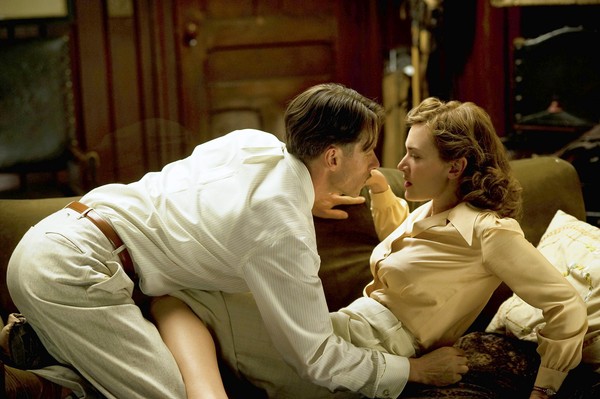
So Mildred rushes home to look for Veda and can’t find her. She heads to Monty’s quarters (apparently Monty and Mildred no longer sleep together) and guess who’s in bed with Daddy? Yep, it’s Veda! [My favorite scene of the whole miniseries] This revelation is not a surprise for those familiar with the novel or the 1945 film, but Evan Rachel Wood manages to make it shocking by her sheer defiance. As Monty attempts to put the blame on Mildred (he claims that Mildred used him as “bait” to lure Veda home), Veda simply reclines in bed, smoking a cigarette with those blood-red nails of hers. Then, to drive home the point that she really hates her mother, Veda gets out of bed, stark naked, and walks slowly over to the vanity. This is a real “fuck you” walk. It says “I’m young, I’m skinny, I’m beautiful, and I just stole your man. Suck it, Mommy.” She then begins to slowly brush her hair, eyeing her mother through the vanity mirror. Monty approaches and puts a robe around Veda’s shoulders, which is the final straw for Mildred. She lunges at her daughter, knocking her to the ground, and begins to strangle her. She only stops when Monty pries her hands from her daughter’s throat. Then, in a moment of perfect melodrama, Veda dashes down the steps to the piano, and tries to sing. All that comes out is a hoarse moan. Veda collapses on the very expensive Oriental rug, gasping and crying.

When we next see our characters, it is a few months (weeks?) later. Mildred and Burt have just returned from Reno, where Mildred got a divorce and then remarried her ex-husband. Because, of course. They decide to move back into the Glendale house, which will, in the 1990s, become the home of the Walsh family of Minnesota. Veda shows up to wish her parents well. Her voice is nearly healed and she’s headed to New York City (at last, no more Glendale!). Apparently, her old sponsors, Pleasant Cigarette, dropped her after her mother strangled her, which conveniently freed Veda up for a far more lucrative contract with Consolidated Foods. So what we are supposed to understand is that Veda was hoping her mother would attack her? That being caught in flagrante delicto was the only way for her to get out of her old contract? I find it all to be very far-fetched. but it’s enough for Mildred to finally decide that she is done with Veda. Weeping over Veda for the last time, Mildred retreats to the original pie wagon, where Burt urges, “To hell with her.” Mildred agrees, “All right, Burt, to hell with her.” Then they decide to get “stinko,” which is an old-timey word for getting shit-faced drunk.
Overall, I found this ending to be very unsatisfying. I understand that the HBO version is a faithful retelling of James M. Cain’s novel. However, I much prefer the ending to the original Mildred Pierce (1945, Michael Curtiz), in which Veda murders Monty because he refuses to marry her, and Mildred attempts to take the blame. No matter what Veda did, and no matter how angry Mildred became, she never gave up on her daughter. And maybe this Mildred hasn’t given up either. Maybe getting drunk and declaring “To hell with her!” is the only way Mildred can deal with her daughter’s betrayal.

So, for those managed to read through this very, very long recap, what did you think? Did you enjoy this miniseries? Was it worth 5 1/2 hours of your life?
MILDRED PIERCE PART 3: Winner Winner, Chicken Dinner
Part 3 of Mildred Pierce opens with a close up of a child’s doll. The camera then tracks over to a set of feet on a bed. The camera makes its way up the sleeping body and we see that this is Mildred Pierce (Kate Winslet), huddled in bed with her oldest daughter, Veda (Morgan Turner), who is also asleep. Mildred wakes with a start, momentarily forgetting why she is in bed with Veda. Then she glances over at the second, empty bed across the room and remembers that her youngest is dead. As the full weight of this memory begins to register, her face crumples and she squeezes Veda once more. Losing a child is unthinkable. But to momentarily forget this loss, and to remember it anew each morning, is a particular form of torture.
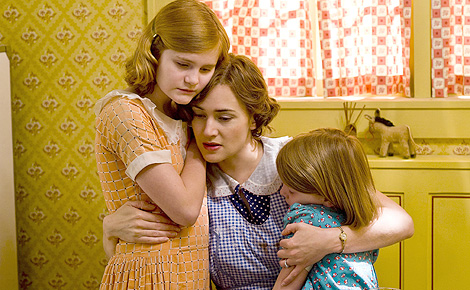
But, Mildred does not dwell on her youngest daughter’s untimely death for too long. We see her select the clothing that her daughter will be buried in (a ballerina costume and pink socks), we see the tiny coffin being carried from the hearse to the cemetery, and we see Mildred take her black dress and place it, decisively, in the back of her closet. This final act signals Mildred’s ability to compartmentalize her life. After all, she has a restaurant to open and Veda’s new grand piano isn’t going to pay for itself! So in the very next scene Mildred is haggling over chickens at the poultry farm, buying produce, and taking money out of her bank account. While in many ways the impending opening of the restaurant is poorly timed, it is probably exactly what Mildred needed to distract her from her daughter’s death. It is much easier to work hard than it is to mourn.
The preparations for Mildred’s opening night appear in a montage of furious cooking: Mildred butchers chickens, shells peas, and chops vegetables. She instructs her waitstaff on how meals should be ordered and prepared (chicken and waffles or chicken and vegetables, everyone gets biscuits). When customers begin pouring in (Wally launched an effective direct mail campaign), Mildred realizes that she is understaffed. Once again, Ida (Mare Winningham) and Lucy (Melissa Leo) come to the rescue, expediting the service and clearing tables. Once again, the miniseries makes clear that while Mildred can depend on some men like Wally (James LeGros), it is the women in her life who are her true safety net.

After closing up for the night, the entire waitstaff, plus Veda, Monty (Guy Pearce), Wally, Bert (Brian F. O’Byrne), Ida, and Lucy gather outside to toast the new restaurant’s success (they made 47 dollars!). Veda even hugs her mother in a rare moment of public affection. But almost immediately the entire group falls silent, aware that their joy is an affront. Nobody mentions Ray by name, but her ghost is there, an absent presence.
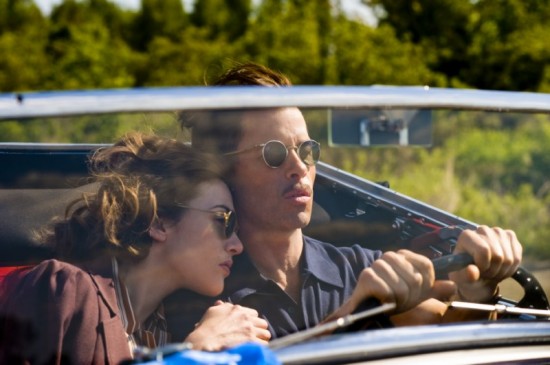
But that’s pretty much the last we’ll hear of Ray in this episode. The remainder of Part 3 works to establish the increasingly frustrating, increasingly dysfunctional relationship between Mildred and Monty. I spent a lot of this installment yelling at Monty and his silly Hitler mustache: “No Monty, Mildred does not want to have sex with you tonight! Her daughter just died!” But then, Monty does something totally creepy involving his toe and Mildred’s matronly underthings, and boom, they’re screwing. This happens a lot in Part 3. Mildred is angry or annoyed, Monty drops trou, and then it’s sexytime.
Mildred is no fool: she knows that Monty is a snob and that he looks down on her for being a working woman. Even worse, Monty is financially dependent on Mildred — he is above working but dependent on those who work. At one point he derisively refers to Mildred’s, the restaurant that is keeping him in handmade shoes and polo club memberships, as “the Pie Wagon.” But I think Monty sticks around for more than just the money. I think he also likes the idea of “slumming it” with Mildred and her shapely, working class legs. As he tells young Veda: “The best legs are found in kitchens, not drawing rooms.”

But why does Mildred keep Monty around? First, she’s flattered. Remember that Mildred is also a snob. Although she knows that she lacks the pedigree her daughter craves and that Monty claims to have, she still loves the idea of old money. Monty may be broke, but the dude is classy. Have you seen those white turtlenecks? And Monty exploits Mildred’s insecurities about her social standing. When Mildred visits Monty’s cold, empty family estate in order to end their relationship, she berates him for taking her money and disdaining her at the same time. But Monty knows what buttons to push. He actually makes Mildred feel low class for caring about money. “Maybe I was mistaken,” he sniffs, “You never were a lady” (or something like that). The scene culminates with Mildred tossing a crumpled up 10 dollar bill in Monty’s face (to prove that she doesn’t care about money either) and Monty saying (I kid you not) “All this needs is the crime of rape.” Yes, that is Monty’s version of foreplay. And this is the second reason why Mildred is around. She likes the sex. Especially when the sex involves class-based humiliation and Guy Pearce’s naked behind. Mildred, you are a dirty, dirty birdie.

Part 3 also devotes time to Mildred’s increasing estrangement from her remaining daughter. As Mildred works away in her restaurant, she relies on Monty to entertain her daughter. The last thing a budding snob needs is a bigger snob as her mentor. Indeed, by the end of Part 3, Veda has completely transformed into the venomous bitch that HBO’s previews promised us. Towards the end of the episode, we see Veda opening her Christmas presents. She is still in her pajamas, but she wears a red bow, rouge and red lipstick, all in attempt to look more “mature.” But the make up only highlights how she is still very much a little girl, especially when she begins to smoke a cigarette. Mildred tells her to put it out, but Veda refuses. What Veda won’t articulate (remember, this is a melodrama, and no one says what they really mean) is that she is angry that her mother did not buy her a new grand piano. Mildred had planned to do this, but had to spend the money she saved up on a bar for her restaurant instead (no more Prohibition! Wheee!). Veda wasn’t supposed to know about any of this, but of course, good old Monty spilled the beans because that’s what rich people in tight white turtlenecks do. The fight culminates with Mildred slapping Veda in the face and Veda responding with a slap of her own. Recall that in Part 2, Mildred disciplines Veda with a good, old fashioned spanking. Veda is too old to be spanked , of course, but she sure does deserve it! And she took it. But in Part 3 Veda retaliates, a small taste of what is to come. Now, bring on Evan Rachel Wood!

So what did you think of Part 3? Overall, I found it to be less satisfying than the first two, but maybe I was too distracted by Monty’s Hitler mustache?
MILDRED PIERCE PARTS 1 & 2: Food and Women

Let me begin with a confession: I have been anticipating the premiere of HBO’s adaptation of Mildred Pierce ever since I first heard about the project last spring. Then, there were just a few tantalizing shots of Kate Winslet in red lipstick, looking both stern and forlorn (which is exactly how poor old Mildred must always look). There is very little director Todd Haynes could have done in the premiere to discourage me from watching the rest of the series. Luckily, however, Parts One and Two, which aired last night, were solid (for a look at some more tepid reviews, check out James Poniewozik and Alan Sepinwall).

I am a huge fan of the first Mildred Pierce, Michael Curtiz’s 1945 adaptation of the James M. Cain novel of the same name. The film is amazing for so many reasons: Joan Crawford’s Academy Award-winning performance, its explicit (and fairly radical) commentary on the limits that gender places on women, that beautiful, beautiful cinematography, etc. But Mildred Pierce remains one of my favorite classic Hollywood films because it deftly blends film noir with the maternal melodrama. If you are an aficionado of American film genres as I am, then you know that film noir and melodrama are considered to be “modes” of filmmaking, rather than coherent genres in their own right. Unlike the gangster film or the Western, these two modes cannot be defined by a specific setting, nor do they have consistent plot formulas or conventions. Rather, these two modes of filmmaking transcend generic boundaries, so that we can speak of noir-science fiction films like The Day the Earth Stood Still (1951, Robert Wise) and Western melodramas like Brokeback Mountain (2005, Ang Lee). In other words, noir and melodrama are like a cloak that other films (generic or not) can try on as way to compliment, but not consume, their own unique elements. So while Mildred Pierce is a drama about the plight of the American woman of the 1930s and 1940s, who is constantly subject to the whims of the lecherous, selfish men around her, it is also a tortuous account of a mother sacrificing everything for the happiness of her children (maternal melodrama) and a murder mystery that begins at the end and then winds its way backwards to discover the truth (film noir). This is an amazing combination. For me, that’s the cinematic equivalent of carrot cake cheesecake. Have you ever had that? They actually mix carrot cake together with the cheesecake!

Since I mentioned cheesecake, let’s move on with this review. After its simple and decade appropriate Art Deco credits (love!), Part One of the miniseries opens with a pair of busy hands making biscuits and pies. We see close ups of perfectly crafted pie crusts awaiting their bright lemon custard fillings and stiff white meringue toppings. Yes, this is food porn. Indeed, throughout the first two parts of the miniseries, Haynes gives loving attention to food. Some might view these scenes as slow, but I enjoyed Haynes’ “elastic attitude towards time,” to quote Matt Zoller Seitz’s recap in Salon:
TV has permission to do this — settle into a scene the way you might settle into a warm bath, and linger. And yet it rarely avails itself of this privilege. On most scripted TV dramas, as in most movies, the mentality is more often “Just get on with it!” All climax, no foreplay, as it were.
Yes, we gets lots and lots of food foreplay here, but it serves a purpose. As in all melodramas, Mildred Pierce‘s mise en scène serves a specific narrative and thematic function. In his famous essay “Tale of Sound of Fury,” Thomas Elsaesser argues that the melodrama is an expressive code, a form of dramatic mise en scène. Specifically, in the domestic melodrama of the 1940s and 1950s, the scope of action is restricted. All of the turmoil is happening inside the characters, rather than outside. Characters want to speak and act, but social decorum, class restrictions, and pride prevent them from doing so. And so the mise en scène becomes a vehicle for helping to express the tense emotions roiling just below the surface. In the image, below, for example, Mildred is carefully decorating a cake as she carefully points out to her husband that most folks wait to water their lawns until later in the day (so that the water isn’t dried up by the heat of the late day sun). But Bert (Brian F. O’Byrne) has watered the grass early in an effort to meet up with his mistress. She lays out her reasoned argument, bit by bit, as she adds small decorative details to the cake (a cake she must make because her husband is no longer supporting the family financially). Thus, in Mildred Pierce extended, loving shots of food offer us insight into characters, their experiences, and their emotions.

Along the same lines, the opening shots of Mildred’s impressive pastry skills signify not only that Mildred is talented, but also that she is a hard worker and a perfectionist, two traits that are central to her character’s development over the course of the story. Furthermore, it is significant that Mildred’s talents are definitively domestic. When Mildred goes looking for work after good-for-nothing husband, Bert, leaves her to fend for herself and their daughters, she discovers that she has “no skills.” Her head hunter reminds her that as a housewife she is only qualified for domestic work: waitressing and housekeeping. But what we know, and what it takes Mildred about 75 minutes of screen time to realize, is that her seemingly useless “feminine” skill set will eventually lead to the creation of an empire. An empire of PIE!
But I’m getting ahead of myself. To return to the mise en scène of food: one of my favorite shots of the miniseries so far is an extreme close up of the ham sandwich Mildred orders after a discouraging day of trying to find work. Mildred has spent her morning pounding the pavement and becoming increasingly aware of the fact that the only jobs available are in the service industry. Mildred, you see, is a bit of a snob. As she explains to her neighbor/confidante, Lucy (Melissa Leo in another “feisty role”), she has something inside of her, pride or possibly nobility, which makes it difficult for her to accept a job in which she must kowtow to class-based roles and take commands from others. This, we are told, is why young Veda (Morgan Turner), her first born, is such a shit; she’s her mother’s daughter.

Anyway, at this point, we know that Mildred has little money to buy food. In an earlier scene Mildred calls a customer to see if she wants her usual order of baked goods, while fixing her daughters breakfast. When the woman declines we see Mildred pause, and then decisively cut a sausage in half, placing a serving on each girl’s plate. Mildred’s breakfast is a single triangle of toast; she starves herself so her daughters can eat. Therefore, I was relieved to see Mildred order herself a ham sandwich. When the meal arrives, Haynes offers an aerial shot: the bright white plate matching the white bread, the bright pink of the ham, and a dish of mostly-white coleslaw. Unlike the elaborate, sustaining meals we have seen Mildred prepare in her own home, this meal is devoid of color, and we can only assume, flavor. As Mildred chews her sandwich, she looks around the diner, overhearing a conversation in which two men discuss the Great Depression and how the lack of jobs is only going to increase. This is the turning point for Mildred — does she want a lifetime of tasteless sandwiches or is she going to swallow her pride and do whatever it takes to feed her family?
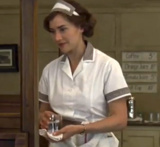
Moments later, a job opens up in the diner and Mildred takes it. Yes, this job is in the service industry, but unlike the housekeeping position offered by Mrs. Forrester (Hope Davis), a cruel snob, this job is filled with female allies. True, head waitress, Ida (Mare Winningham) bosses Mildred around, corrects her techniques, and ultimately tells her she did a terrible job on her first day. But we know that what Ida is actually doing is helping Mildred. She’s making her into a good waitress, and Mildred needs to be a good waitress.
This leads me to the second thing I loved about this mini-series: its focus on women. This is a world in which men use women to fulfill their sexual desires, keep their homes clean, raise their children, and support them in their careers. When they’ve had enough, the women are tossed aside to become “grass widows,” an American institution. Men control and limit Mildred’s actions: Bert leaves her financially destitute, Wally (an unrecognizable and totally awesome James LeGros) takes advantage of her new status as “grass widow” (though we get the sense that Mildred was a little bit horny and didn’t mind this too much), and Mildred is dependent upon people like Bert, Wally, and Monte (Guy Pearce) to finance her restaurant. Nevertheless, Mildred Pierce celebrates the bonds between women. Her neighbor, Lucy, fills in the holes left by Bert’s absence: she makes excuses for leaving “left overs” in Mildred’s fridge so that the proud woman won’t go hungry and she (rightly) urges Mildred to keep her new job as a waitress.
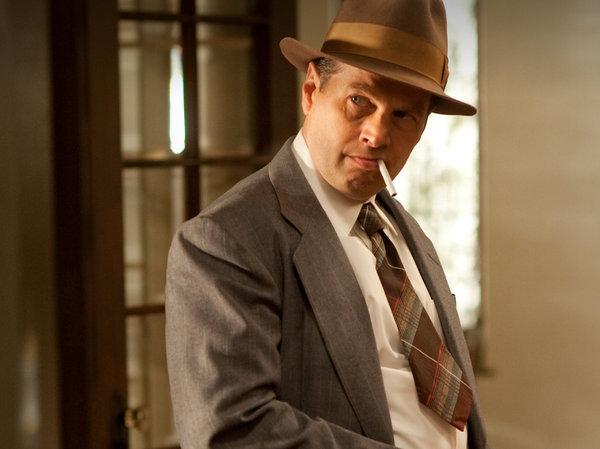
*SPOILERS LURK BELOW! PROCEDE WITH CAUTION!*
And then, of course, there are the bonds between mothers and daughters. This female relationship forms the heart of Mildred Pierce. Motherhood is what motivates Mildred to get past her own pride, look for work until her heels bleed, refrain from bad-mouthing her husband in front of her daughters, and to spend any extra money she earns on food and clothing for her daughter (notice that for most of Parts One and Two, Mildred can be seen wearing just one “nice” dress). When Ray dies at the end of Part Two (I won’t say much about this since, as I’ve noted elsewhere, I have difficulties watching and dealing with the death of children on film and television), we know Mildred’s fate is sealed. The love she had for her two daughters will now be channeled into one, all-consuming love for Veda. That’s the thing about maternal love. It may change forms, but it doesn’t disappear. And love like that can be dangerous (see, for example, Toni Morrison’s Beloved). So far I have yet to pick up on the noir aspects of this story, but with Mildred’s and Veda’s unhealthy relationship established at the end of Part Two, the twisted tale of jealousy and deceit that ends in murder is just around the corner.
A Few Other Things:
* When Mildred is sitting in the diner eating her nasty ham sandwich, we hear two young women discussing Greta Garbo. One of the women mentions that she loves Garbo so much she could watch her sleep. Then both women declare in unison, “Garbo snores!” This conversation is intended to serve as a contrast to the more “serious” economic discussion the two men near them are having. But it’s also a great little nugget for film buffs who remember the tagline from Garbo’s first talking picture, Anna Christie (1930), “Garbo talks!”

* I am (or rather, was) smitten with Mildred’s youngest daughter, Ray (Quinn McColgan), because she is almost exactly like my own daughter: a motor mouth who will talk and talk and talk, even when no one is listening (she, too, is her mother’s daughter). Ray is always recreating scenes from films, such as when she performs the famous moment when James Cagney is shot in Public Enemy (1931), “I’m not so tough!” That’s one of my favorite movie scenes (and is at the center of the arguments I make about the links between gangster films and melodrama in the first chapter of my book).

* Todd Haynes is killing the cinematography so far. Everything is a feast for the eyes. I swooned over the 30s era fashions while my husband swooned over the automobiles (yes, I see the gender breakdown there, but I’m being honest).
* Once again Kate Winslet’s boobs appear on screen. When I mentioned this to my husband he noted, “Well, those boobs won her an Oscar. Maybe they’ll win her an Emmy too.” Leave it to the software programmer to come up with the most cynical yet succinct summary of Winslet’s career that I’ve ever heard.
So what did you think of Parts One and Two of Mildred Pierce? Too long? Too slow? Will you watch again? And most importantly, did it make you want to eat some pie? Please share your thought below.
REAL WORLD, I Wish I Knew How to Quit You

As a child of the 1980s, I was literally raised on MTV. I’m not using the word “literally” here in the way that my students do (“Dude, I was literally puking my brains out last night!”). I mean: I spent so many hours of my youth watching music videos that I could argue that the music station raised me. It shaped my musical predilections (I still love 80s music), my fashion tastes (yep, still fond of leggings), and my idols (to me, Hall & Oates will always be cool). When MTV started airing original programming, I watched that too. My favorite show was Remote Control, a game show that rewarded the one thing that I did best — watch TV! The show’s theme song really spoke to me “Kenny wasn’t like the other kids, TV mattered, nothing else did. Girls said yes but he said no! Now he’s got his own game show. Remote Control!” Finally, something I could win. But I needed to be 18 to play. Needless to say, I was devastated when the show was cancelled in 1990.

In 1992, when the wonderful first season of The Real World premiered, I was there to see it. The season enthralled because it was the first time that I had ever seen “a group of seven strangers picked to live in a house and have their lives taped, to find out what happens when people stop being polite and start getting real.” How could they agree to this? Were they crazy? I was also enthralled because the first cast was filled with such fascinating people. They had interesting careers and career aspirations: a folk singer, an indie rocker, a rapper, a poet, a model, a painter, and a wide-eyed, young Southerner. As a 16-year-old living in central Pennsylvania I loved seeing these smart, artistic people, living together in New York City, putting up with each other’s differences, arguing, and coming to resolutions, however brief. They were very different from my 16-year-old peers. And their conversations were way more interesting.

From that season on, I was hooked and watched almost every season of The Real World up until Back to New York in 2001. At that point my reality TV plate was pretty full, what with American Idol, Survivor, and Temptation Island all vying for my attention. I didn’t miss it too much. But then, in 2002, the Las Vegas season happened. The scene that pulled me back in was the one in which Trishelle, Brynn, and Steven make out in a hot tub. If memory serves, they had only known each other for a few hours (though really, when is the “appropriate” time for a three-way in a hot tub?). I was appalled and intrigued by the sleaziness and the exhibitionism of these well-toned twentysomethings. I was back in.

Although this version of The Real World was quite different from the series I had originally fallen in love with, I remained fascinated with each new casts’ total incapacity for introspection or self reflection. They seemed to exist in a perpetual now. They’re like those birds that keep flying into the same glass window day after day. This is the mindset of the typical Real World cast member. The same mistakes are made over and over — they get drunk and make asses of themselves, they throw themselves at lovers who just aren’t interested, they shirk commitments made to employers and to each other — and yet, no one emerges any wiser. When these situations blow up in their faces, they’re usually surprised. Just like those birds. “Why am I puking my brains out? Why is there a window there?”

I suppose I also enjoyed watching these young people screw up because it reminded me of what I was like in my early twenties. I often drank too much and made an ass of myself. I too fell in love with the wrong people. I let down bosses, friends, and family. This is the how life is when you are old enough to live on your own, but too young to concern yourself with living a responsible life. To see this behavior so raw and bare on my television screen reassured me about my own youth. Or rather, it reassured me that my youth had passed. I was no longer that out of control 20-year-old. I had stopped flying into windows. So I continued to watch The Real World, basking in the Schadenfreude of it all … until Cancun and Ayiiia made me rethink the series.

Ayiiia is an ideal Real World cast member: she is young, physically fit, a heavy drinker, aggressive, outspoken, thin-skinned, and, unfortunately, mentally unstable. MTV has a history of casting mentally unstable people whose exposure to MTV’s unrelenting cameras ultimately drives them to perform an onscreen freak out or breakdown (see Irene from Seattle, Frankie from San Diego, Paula from Key West, Ryan from the most recent season in New Orleans). True, Ayiiia was not picked by MTV’s producers; she was the winner of a contest in which MTV fans were allowed to choose the final cast member for the Cancun house. Nevertheless, all potential cast members for the show are subject to background checks and psychological evaluations. The producers would have known about Ayiiia’s history of self mutilation. Now, I’m not saying that The Real World shouldn’t feature cast members who are struggling with addictions, phobias, or even fatal diseases. Pedro Zamora is a great example of how casting someone with a particular ailment, in his case, HIV, creates an opportunity for dialogue and awareness.

People who self mutilate do so under extreme stress. When they feel angry or powerless or attacked, they will cut and tear at their own skin as a way to manage their pain. And being on The Real World is highly stressful. By the end of any given season, almost every cast member has been involved in at least one screaming match with another roommate. And many of these battles are ongoing, cropping up whenever two particularly hot-headed roommates are forced to interact and work together. Indeed, roommates are cast because they are likely to fight with one another. It’s like placing a mongoose and a cobra into a glass case and then wondering why there’s blood all over the walls.
Sure enough, after weeks of constant fighting with her roommates, Ayiiia began cutting herself again. And after watching this season I felt complicit in this young woman’s pain and exploitation and so I gave the series up all together. And my husband promised to stop watching too. However, a few months later, I came home from teaching to find my husband curled up on the couch watching the premiere of The Real World: Washington, D.C. “What are you doing?” I demanded, “We quit this show!” My husband replied “But I didn’t even record it!The DVR just…did it. And there was nothing else to watch.”
 And just like that, I was back in it. Now I find myself watching season 25 (!) of The Real World. As I sat through the first two episodes last weekend, I felt like I was trapped in the movie Groundhog’s Day. Everything I was seeing, I had already seen before. For example, when Heather, an attractive young blonde, introduces herself to the MTV audience she tells us, “I’m very impulse driven. I do what I want to do.” And this makes you different from every other college student how? Later, Heather is gobsmacked by the differences between Leroy, a sexually frank, adventurous African American, and Michael, a sexually naive, sheltered Caucasian, “They just couldn’t be any more different!” she marvels. Later on, Adam, a former juvenile delinquent, calls his “girlfriend” (those are MTV’s quotation marks, not mine) and complains: “Some of these people might not like me because they’re completely different from me.” This is true. But they may also not like Adam because he gets black out drunk on his second or third night with the roommates, acts the fool, and refuses to apologize for his awful behavior. It’s a good thing that Nany is probably going to reward his douche-y behavior by becoming “his girl” (and dumping her long term boyfriend back home). Yes, Nany, I’m sure Adam will treat you much better than the string of women he has already brought home for one-night stands.
There are many good reasons why I should stop watching The Real World once and for all: each season blends into the next; many of the young people cast on the series are mentally ill and should not be placed in situations where their vulnerabilities can be provoked and exploited; and finally, there is so much great TV out there, do I really need to spend one hour a week on this? But I will keep watching. Not because it’s a great program, but because I can’t quite give up my MTV just yet.
Compulsory Masculinity on the JERSEY SHORE
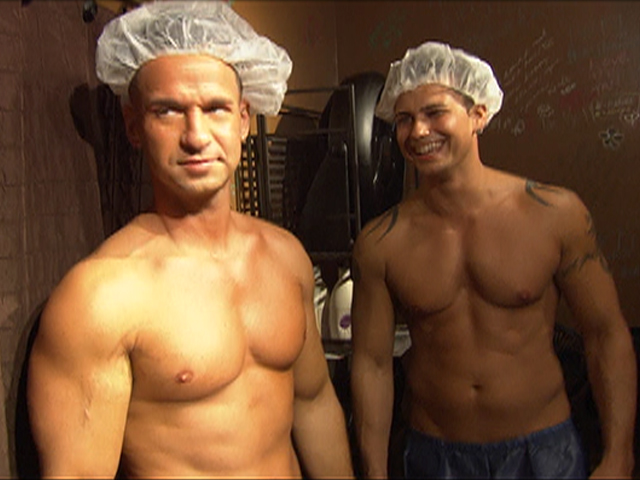
When criticizing an artifact of popular culture people often toss out hyperboles like “It’s everything that’s wrong with this world.” Well, you know what? Jersey Shore really is everything that’s wrong with this world. Nothing is more useless than an underemployed twentysomething reality television star with an inflated sense of ego and the relentless desire to press his or her naughty parts against the naughty parts of drunken reality TV groupies (the worst kind of drunken groupies). And Jersey Shore employs seven of these individuals (the eighth cast member, Sammi, mercifully exited the show a few weeks ago). It’s not just that I know I could spend my limited television viewing time more productively (8 Firefly episodes await me on my Netflix instant queue); I know that a lot of the behaviors I’m watching are highly problematic and that they’re being played for laughs.
I don’t approve of grenade whistles (c’mon, that’s just too mean folks):
But how can I stay mad at a show that gave me this?
Also, I can’ stop watching Jersey Shore because I can’t stop writing about it (click here for my thoughts on why the Jersey Shore men are like the Teenage Mutant Ninja Turtles). This week I’m writing about Jersey Shore for Antenna. You can read it here. And please do feel free to comment and join the discussion at Antenna. That kind of thing warms my heart. Thanks!
My Popular Culture New Year’s Resolutions

I realize that New Year’s Resolutions are pretty pointless. They are the reason why I have to wait in line to use my favorite elliptical machine at the gym for the entire month of January. They are the reason why people stock up on healthy crap, like quinoa and farro, and then never ever cook it. Resolutions give people false hope that it is possible to change their change terrible lifestyle habits and grating personality ticks. I’d like to think that I’ll be a better mother/wife/daughter/sister/friend/colleague in 2011. But I will likely go on being my inadequate self, no matter how many resolutions I make.

However, resolutions that do not require me to diet, exercise more, act nicer to people I don’t like, act nicer to people I do like, or stop kicking puppies are far easier to keep. In the spirit of not making myself a better person in 2011, below I have listed my popular culture resolutions. Please to enjoy:
1. Rather than watching them in fits and starts, in 2011 I resolve to finish watching all available episodes of Dexter, Breaking Bad, and Friday Night Lights.

I tend to watch TV on DVD in the summertime, when most good television is on hiatus, or during the “slow” times, like the winter holidays. That means I tend to feast on back-t0-back episodes of a series, watching two episodes an evening for several weeks. But then, like a fickle lover, I abandon the series as soon as one of my favorite network or cable shows premieres. I have completed seasons 1 and 2 of Breaking Bad and seasons 1, 2 and 3 of Dexter. But Friday Night Lights? Poor, sweet, Friday Night Lights. We have watched you in such a piecemeal fashion that I can’t recall where we left off. Is Julie (Aimee Teegarden) dating Matt (Zach Gilford) again? Is Landry (Jess Plemons) still trying to cover up that accidental murder? Is Tyra’s (Adrianne Palicki) hair straight or curly? I am so sorry Friday Night Lights. I have neglected you and you deserve better.
2. I will make more of an effort to see movies while they are still in the theaters.

Before I had children, I went out to the movies all the time. ALL THE TIME. After the birth of my first child in 2006, I didn’t go nearly as much. And after the birth of #2 in January 2010, movie-going stopped almost entirely. I needed to be around to put the baby to bed around 7:00 pm (he is/was breastfed) which meant I could only go to movies that started at 7:30 pm or later. And due to the chronic sleep deprivation inflicted upon me by my darling baby boy, I couldn’t go to any movies that finished later than 10:00 or 10:30 pm. Indeed, I am ashamed to admit that I recently fell asleep (briefly) during a 9:20 pm showing of True Grit (2010, Ethan and Joel Coen). This means that any movie I wanted to see had to start no earlier than 7:30 pm and no later than 8:00 pm. Not much wiggle room. Not much fun for those who tried to make movie plans with me. However, in 2011 I plan to wean the baby (soon soon soon) AND teach him how to sleep through the night. Easy right? Greenville movie theater that smells like pee, here I come!
3. I will watch Firefly.
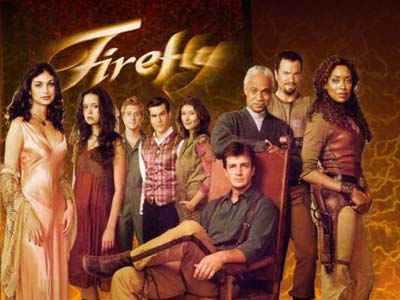
A few years ago my husband and I borrowed Season 1 of Buffy the Vampire Slayer on DVD from a friend. We loved it and proceeded to watch the next 6 seasons within one year (hey, we only had the one kid then). So when Firefly, Joss Whedon’s much-lauded follow-up project became available on Netflix Instant earlier this year, my husband suggested that we watch it. At the time we were still knee-deep in Breaking Bad episodes (see Resolution # 1), and our DVR queue was filled with shows. I simply couldn’t commit. So my husband watched it without me. Then, last semester I decided to observe my colleague’s class, a team-taught course on frontier mythology. The day I visited they were discussing Firefly. By the end of the class I realized that I had made a terrible mistake. Why didn’t I watch it with my husband? Oh the regret! You see, 90% of my TV and DVD watching is done with my husband at my side; this is our “quality time” together. So if I ever want to watch something that he does not want to watch, it is very difficult to find the time for it. But in 2011 I will make time for Firefly. Even if it means putting the kids back into their safety cages. Don’t be concerned. They like their cages.
4. I will watch more movies that are a. not new releases and b. not assigned for my classes.

There was a blissful time in my life, not too long ago, when I would sit on my couch, pen and notebook in hand, watching film after film. These were the dissertation years, when watching films all day was part of my “homework.” Sure, some of the films I had to watch were real stinkers, like Cutthroat Alley (2003, Timothy Wayne Folsome) and Teenagers from Outerspace (1959, Tom Graeff). But it was fun even watching the stinkers. However, once I started my position at ECU, I found that I stopped watching older films unless I planned to teach them in my classes. I stopped working on that list of films that all film scholars have in their heads: “The List” of films that I want to see and that I know that I need to see. So in 2011, I resolve to watch at least some of the following (Yes, I realize that there are some films on this list that I should have watched a looooong time ago. And yes, some of these are stinkers):
Eyes without a Face (1960, Georges Franju)
Thelma and Louise (1991, Ridley Scott)
Rashomon (1950, Akira Kurosawa)
Rambo: First Blood Part II (1985, George P. Cosmatos)
Red Dawn (1984, John Milius)
Summer Stock (1950, Charles Walters)
Panther Panchali (1955, Satyajit Ray)
Play Time (1967, Jacques Tati)
There are so many more films on “The List” but I want my New Year’s resolutions to be reasonable. And I am hoping that blogging about my resolutions will ensure that I stick to at least some of them. I also plan to blog about some of the films in Resolution #4 as I watch them.
5. I will stop wasting precious “screen time” on Reality TV shows with little nutritional value.
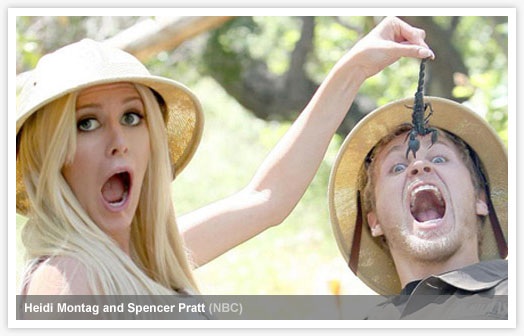
Most reality programming is the TV equivalent of McDonald’s. It’s great when you’re consuming it, but you know that at best you’ve filled your body with worthless calories, and at worst you’re gearing up for a heart attack. Don’t get me wrong: MTV’s reality shows have served me well. I have devoted many a blog post and article to The Hills, The City, The Real World and Teen Mom. And my next book project will focus on these programs and their teenage audiences. But, in 2011 I vow to cut out all “unnecessary” TV junkfood from my diet. I will not watch the revamped American Idol. I will not watch any dance competition shows. I will not watch anything in which people try to lose weight, compete for plastic surgery, or interact with a Kardashian. This is not a moral choice. There is nothing “wrong” with these shows. But if I want to keep Resolutions #1-4, then I need to trim some fat. My kids won’t stay in their cages forever.
6. Finally, and most importantly, in 2011 I will play more Angry Birds.

Because those stupid pigs won’t kill themselves.
So, what are your popular culture resolutions for the year? Remember, it is so much easier to watch a movie than exercise! Won’t you join me on the couch in 2011?
Nucky Thompson: The Gangster who Won Me Over
When Boardwalk Empire premiered on September 1 of this year, I was unenthused with Terence Winter’s decision to cast Steve Buscemi in the role of the series’ central protagonist, Nucky Thompson. Traditionally the gangster hero is played by an actor (almost always male), who is formidable in stature (Vito Corleone), personality (Rico Bandello), or both (Tony Soprano). The gangster is the very definition of a “tough guy.” If he shoulder checks you on the street, you’re not going to demand an apology. The gangster inspires fear, even when he’s a puny as Little Caesar‘s (1931, Mervyn Leroy) Rico Bandello.

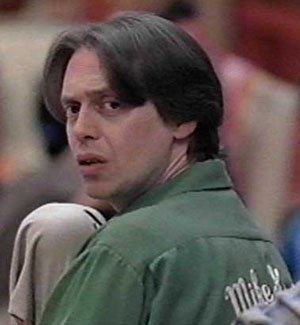
By contrast, Buscemi is a character actor best known for playing weaselly, neurotic, or pathetic characters. In Reservoir Dogs (1992, Quentin Tarantino) he objected to his assigned alias, Mr. Pink (“Why do I have to be Mr. Pink!”) and petulantly refused to tip his waitress, inspiring one of my favorite movie lines of all time:
Mr. Pink: [rubbing his thumb and index finger together] You know what this is? It’s the world’s smallest violin playing just for the waitresses.

In The Big Lebowski (1998, Joel and Ethan Cohen), he is Donny, one of The Dude’s (Jeff Bridges) bowling buddies. While good-natured, Donny is incredibly annoying and is often told to “Shut the fuck up!” Buscemi has a face that almost demands that it be told to “Shut the fuck up!”
Even when animated, as he is in Pixar’s Monsters, Inc. (2001), Buscemi plays Randall Boggs, a duplicitous chameleon who delights in his profession (the scaring of children), and is consumed with jealousy over the success of his rival, Sulley (John Goodman). As always, Buscemi’s character fails to master his bigger, smarter, braver and, almost always, better looking, foes.

As a fan of Buscemi’s work, this is how I like him. He is a “character actor,” after all. Character actors, by definition, are not the leading men. They are there to support, antagonize, or bewilder the leading men. Thus, I was surprised to hear that he was cast as the lead in a television series. A movie only demands that an actor be charismatic for 2 hours but a television series asks that actor to command the screen week after week. As I watched the opening credits of Boardwalk Empire, which, like The Sopranos, features its protagonist taking stock of his domain, I was doubtful:
Buscemi stands on the beach, looking like something out of a Magritte painting; he appears stylized and inscrutable, devoid of the fire and passion I expect of my gangster heroes. “This is not going to work,” I sighed to myself.

After the first few episodes of the series, I believed that I was right. A gangster story is only as good as its hero, and Boardwalk Empire lacked one. Nucky seemed too calm, too polite, too contained, too un-Buscemi-like, to carry the series. In his seminal piece on the genre, “The Gangster as Tragic Hero” (1948), Robert Warshow argued that “[t]he gangster’s whole life is an effort to assert himself as an individual to draw himself out of the crowd, and he always dies because he is an individual.” Thus, Nucky’s seemingly reasonable demeanor stands in stark contrast to one of the gangster hero’s central qualities: his excessive nature. The gangster’s outsized desires and ambitions are what lead to both his success as well as his demise.
Nucky, by contrast, appears to be a conciliatory man. He gives money to anyone who asks for it, endures back talk from his ward/employee, Jimmy Darmody (Michael Pitt), and wines and dines politicians whose piggish desires clearly disgust him. We don’t see Nucky lose his cool, punch a disrespectful underling, or accidentally kill anyone (as say, Tony Soprano might do). What kind of gangster hero is that?
But as I continued to watch the series I realized that Nucky was a great gangster hero and that Buscemi was nailing the role. While other gangster heroes are defined by their unbridled passion, their inability to contain their desires and emotions (such as Tom Powers’ suicidal decision to avenger his best friend’s murder in Public Enemy), Nucky’s power lies in his ability to be in control at all times. And given Buscemi’s small, 5 foot, 9 inch frame, such control makes sense. A Tony Soprano can throw a punch when he likes, but a little man like Nucky would invariably fail as a physical aggressor. Instead, Nucky must rely on his intellect and reason in order to remain dominant.
This quality is best exemplified in the finale, when Jimmy, who has recently discovered the role Nucky played in the procurement and rape of his mother at age 13, confronts Nucky at a party. Jimmy is not just angry about the abuse his mother endured, he is also hurt to discover that Nucky took care of him out of an obligation to the Commodore (Dabney Coleman), rather than out of love. Jimmy always saw Nucky was a father figure but he now realizes that Nucky just viewed him as another item on his long to-do list. When Jimmy directly poses this question to Nucky, the aging gangster responds, “What difference does it make?” Nucky seems almost perplexed by Jimmy’s anger, as if the love between a father and a son is incomprehensible to him. And given Nucky’s abusive relationship with his own father, it probably is.

Just because Nucky appears controlled on the outside does not mean the man is not excessive. He is just adept at having others enact his excess for him. For example, when Nucky discovers that Margaret Schroeder’s (Kelly MacDonald) husband, Hans, has beaten her to the point that she has a miscarriage, he decides to have the man killed. But Nucky’s decision proves to be dangerous to his empire. It attracts the interest of Federal Agent Nelson Van Alden (Michael Shannon), who is sure that the murder is somehow linked to Nucky. We only find out in the finale that Nucky’s decision to have Hans killed was based purely on emotion; his son died when he was just a few days old and therefore the death of any baby strikes a nerve. Even when telling this story to Margaret, Nucky’s emotions are barely visible, registered in the twitch of his lips or perhaps a moment when we can detect tears in his eyes. But only for a moment. Then he shakes it off and once again becomes “Nucky Thompson.” For this reason, one of my favorite moments of the season was when Nucky burned down his father’s home. It was so out of character for him, but also very revealing of the emotions he normally keeps buried.

Nucky must reign in his emotions and dispassionately govern those around him in order to maintain his power. The few moments when he does slip up and allow his emotions to take over, such as the murder of Hans, are the cause of most of his problems. Indeed, his hasty to decision to fire his brother Eli (She Wigham) will likely prove to be his greatest mistake yet: the finale closes with Eli, Jimmy, and the Commodore conspiring to oust Nucky from his seat at the top of the Boardwalk Empire.
In this way, Nucky hearkens back to one of cinema’s most beloved gangster hero’s, Michael Corleone (Al Pacino). Like Michael, Nucky uses reason to get ahead and both men know how to run a tight ship. Nucky and Michael embody the mantra, first articulated by Tony Camonte (Paul Muni) inScarface (1932, Howard Hawks) “Do it first, do it yourself, and keep on doing it.” However, both characters inevitably alienate those who love them most because of their inability to emotionally connect. Terence Winter must be aware of these parallels because the season finale clearly references The Godfather‘s famous Baptism scene:
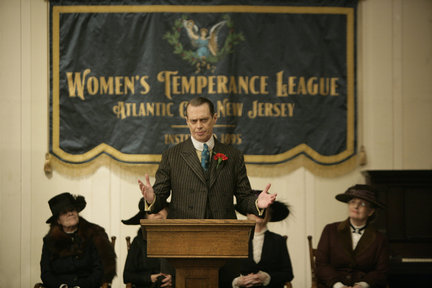
In the above scene from The Godfather, Michael and his family are attending the baptism of their infant son. As Michael’s son is washed clean of his sins, and Michael repeats the prayers, his henchmen kill off his rivals one by one, thus securing his place at the top. Similarly, in Boardwalk Empire, Nucky speaks at a voter rally in support of his hand-picked candidate for mayor of Atlantic City. As Nucky assures the crowd that a Republican administration will crack down on crime, specifically seeking out the individuals who murdered five bootleggers in the woods at the beginning of the season (the true culprits being Jimmy and Al Capone, of course), we see Nucky’s henchmen carrying out this “justice.” There is even a moment in which Jimmy slits the throat of Leo D’Allessio (Max Casella) as he sits complacently in a barber’s chair, a direct reference to Moe Green’s (Alex Rocco) execution as he received a massage. If The Godfather‘s baptism scene was about the contrast between family and business, and how it is impossible to keep the two separate, Boardwalk Empire‘s homage is about the contrast between American politics and crime, and how it is impossible to keep the two separate. Applied specifically to Nucky Thompson, this scene is also about the contrast between reason and passion, brain and body, and how, soon enough, Nucky will not be able to keep them separated.

So while initially I felt that Steve Buscemi was wrong for the role of Nucky Thompson, and that Nucky Thompson was the wrong character to play the role of gangster hero, I am happy to say that Boardwalk Empire has changed my mind. Buscemi, with his small, squirrelly body and his sad, trout face, was the perfect choice for a character who has spent a lifetime privileging his ambitions over his emotions.
So what do you (or did you) think of Steve Buscemi in the role of Nucky Thompson? Do you find him, ummm, sexy? ‘Cause I certainly don’t. No, not me. Don’t find Buscemi sexy at all. Now look away, nothing to see here folks…
Why Does Pop Culture Like to Hate on Cornell?
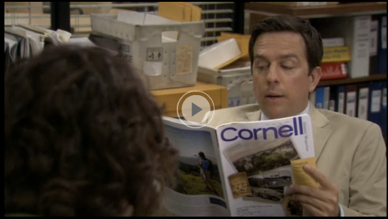
“Andy, Cornell called, they think you suck.”
-Michael Scott (Steve Carrell)
I am an alumna of Cornell, class of 1999. I regard those four years of college as some of the greatest in my life. I received a top-notch education, met an array of smart, interesting, and hilarious people, and drank a lot of alcohol. I also met my husband at Cornell and so the two of us often wax poetic about our times there: about getting beers at Ruloff’s, hiking through the gorges (“Ithaca is gorges!”), and heading to the Commons for a great meal. Our daughter has been informed that she, too, will attend Cornell (a move ensuring that she most certainly will not attend Cornell), and we have been dressing the baby in Cornell gear in the hopes that he will get Big Red fever by osmosis. In short, we love Cornell.

So of course we were both delighted when one of our favorite comedies, The Office, gave Cornell a big shout out in the Season 3 premiere “Gay Witch Hunt.” It is in this episode that we first meet Andy Bernard (Ed Helms), Jim’s (Jon Krasinski) new co-worker at the Stamford, CT branch of Dunder Mifflin. During one of the show’s signature “talking head” interviews Andy tells us “I went to Cornell, ever heard of it?” This reference is used to provide the viewer with key information about this addition to The Office’s cast: Andy is threatened by his new co-worker, Jim, and believes that mentioning his prestigious alma mater will make him appear more impressive to the show’s fictional documentary crew. It doesn’t. Nevertheless, I gushed to my husband: “I can’t believe they’re talking about Cornell!”
Over time, however, my enthusiasm for The Office‘s Cornell obsession began to wane. You see, Andy, like Michael, is both incredibly insecure and yet has an inflated sense of self. He is a fool. A boob. The running joke about Andy’s Cornell name-checking is that it reveals his need to brag while at the same time demonstrating that he doesn’t have much to brag about at all. He thinks his Cornell degree is impressive but no one else does.
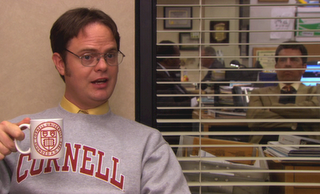
The series’ most extended Cornell reference occurs in “Employee Transfer,” when Dwight (Rainn Wilson) decks himself out in Cornell gear and proclaims that he will be applying to Cornell, all as a way to get under Andy’s skin. Andy decides to interview Dwight as part of the application process and the scene culminates with Dwight deciding to apply to Dartmouth instead since it is a “vastly superior school.” Indeed, Dartmouth is frequently ranked higher than Cornell, a fact which rankles many a Cornell undergrad. Things are starting to get personal, people.
All of this joking at Cornell’s expense got me wondering: did someone on The Office‘s writing staff know a Cornell graduate who was a total douchebag? Or was one of the show’s writers rejected from Cornell? [Note: a reader just informed me that the character of Andy Bernard is a tribute to former NBC president Kevin Reilly, class of 1984]. Or, is it possible that a Cornell degree has come to be a signifier for a particular kind of character? For example, the holy trinity of Harvard, Princeton and Yale are referenced when we are supposed to see a character as being particularly smart. MIT is used if that person is a science or math geek. If you’re smart but also a free-thinker? Then you went to Brown. And if your character loves to party? Then it’s Arizona State, Ole Miss, or any school with a good football team.
So does The Office have a bone to pick with Cornell? Or are they simply playing off of well-known Cornell stereotypes? Is Cornell synonymous with self-important fools who are not nearly as smart as they think they are? Let’s take a look at some of the other famous, fictional, Big Red alums:
1. The Simpson‘s Sideshow Mel
 Mel first appears in the episode “Itchy & Scratchy & Marge ” as a replacement for the murderous Sideshow Bob. At some point it is revealed that Sideshow Mel is a graduate of Cornell University. Sure, he wears a bone in his hair and communicates via a slide whistle, but offstage he speaks in a lovely British accent (which means he’s smart, y’all!) and once played the role of Biff in Arthur Miller’s Death of a Salesman. He is also lactose-intolerant. Advantage: Cornell.
2. Up in the Air‘s Natalie Keener

One of the first things we learn about young, ambitious Natalie (Anna Kendrick), is that she is a recent graduate of Cornell University. By citing Cornell, the movie is not necessarily highlighting Natalie’s intellectual pedigree; that is what references to Harvard, Yale and Princeton are for. Instead, Cornell is meant to show us that Natalie is a hard worker, a striver, even. She is like a yappy dog that won’t shut up until you crouch down and pet it. Luckily, Natalie becomes more likable as the film progresses and we learn more about her life. In a way, Natalie needs to get past her life at Cornell (and the rigid blueprint she had for her life) in order to embrace what she wants. Advantage: Haters.
3. Ugly Betty’s Nick Pepper
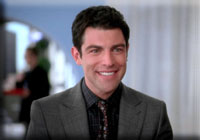
I do not watch Ugly Betty. Or rather, I should say that I watched it once, thought it was awful, and have never attempted to watch it again. But from what I have read, the character of Nick Pepper (Max Greenfield) is a Cornell alum. And from what I have read about him, he is quite similar to The Office‘s Andy: he has an inflated sense of self, annoys his co-workers, and dresses in what he believes to be the trendiest of clothes. Normally, I would give this point to the Haters, but given that Ugly Betty is a terrible show, I am going to go ahead and call it a Draw.
4. Made of Honor‘s Tom Bailey
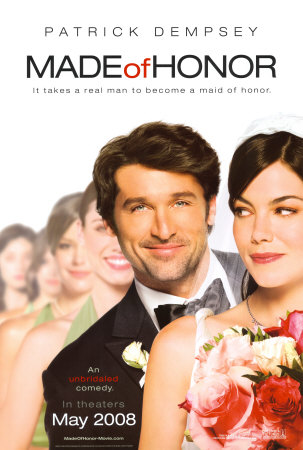
I don’t even need to describe this character, played by Patrick Dempsey, or his relationship with Cornell. The movie is called Made of Honor. Get it? Nope, I don’t either. Why substitute “Made” for “Maid”? Poor use of puns means Advantage: Haters.
5. American Pie‘s Vicky

Vicky (Tara Reid), one of the horny teenagers in this classic teen sex comedy, is headed to Cornell after graduation. Vicky is actually pretty likable: not too uptight, not too arrogant. Yes, she’s played by Tara Reid, but it’s pre-Taradise Tara Reid, so it’s Advantage: Cornell.
In conclusion, it’s difficult to determine exactly what Cornell’s screen image is. Certainly the Cornell screen image is not as solidified as Harvard’s or Penn State’s screen image. So for now, I’ll take the Andy Bernards and the Sideshow Mels as evidence that Cornell has some significance in popular culture. And that’s all we self-important, type A Cornell grads want in the end — a little recognition.
Cornell grads: can you think of any other prominent fictional Cornell alumni? If so, discuss below. And, of course, Go Big Red!
Welfare Queen Redux: TEEN MOM, Class and the Bad Mother

Earlier this fall I wrote a post about Teen Mom. In it I praised the parenting skills of some of the mothers, such as Maci, and was extremely judgmental of other mothers depicted on the show, like Amber. In several episodes we see Amber physically and verbally abuse her on-again, off-again, fiance, Gary. In one particularly harrowing scene, Amber repeatedly punches Gary in the head and kicks him in the back, all while calling him a “fat fuck.” Gary, a passive, lump of a man, accepts these blows without retaliation, calmly asking Amber “Are you done?” What is most amazing about this scene is that it was caught on tape. In other words, during this violent fight, MTV’s cameras continued to roll. No one intervened on Gary’s behalf. No one called the police. As many commentators have pointed out, had this abuse been reversed — if Gary had been the one beating the shit out of Amber — there would have been a very different reaction. But our society has some very odd double standards when it comes to violence and who may wield it. Men should never hit women. But women? They can beat their men as much as they like because they’re just women. They can’t do much harm with those teeny tiny hands!

Beyond the damage inflicted on poor, doughy Gary in this scene, we must also account for the damage inflicted on little Leah. Where was she as her mother repeatedly beat her father? Was she playing, unsupervised, by an open window again? A more likely scenario is that she was sitting by the feet of one of MTV’s cameramen, watching this primal scene unfold. What lessons about love, family and basic human decency are being conveyed to an impressionable little girl at such a moment? We giggle when we see little Leah imitate her mother by tottering around in her high heeled shoes. But it would be far less amusing if Leah walked up to her father, punched him in jaw and called him a “fat fuck.”

Yes, we can all agree that Amber is a Bad Mother. In addition to beating up her significant other in front of her child, she seems completely unaware of how to care for her daughter. When Leah throws a tantrum, Amber’s response is to scream “SHUT UP!” over and over until Leah quiets down. Sometimes this technique even works (who knew?). Amber is also fond of lounging in bed, listening to her I-Pod or texting on her smart phone, as Leah runs around their bare apartment, looking for some way to amuse herself. In these moments I am amazed at how well-behaved Leah is. When my daughter was 1 she required constant attention and supervision. But at a young age Leah has clearly learned how to fend for herself. And how not to fall out of an open window. Way to go, Leah.
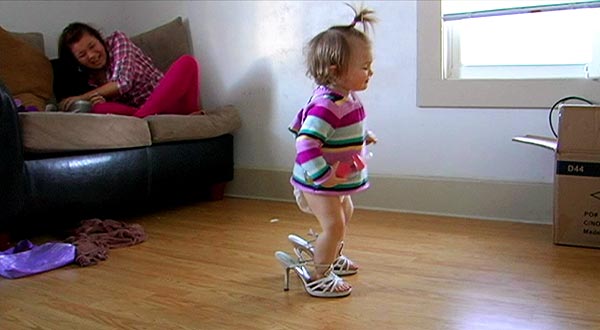
I’ve devoted the last 450 words to criticizing Amber’s parenting and I could easily write another 450. And that’s exactly what MTV wants me to do. You see, Amber is the arch villain of Teen Mom, its prima facie case for teen abstinence. The message is: “If you don’t use a condom, kids, you WILL become a Mom-monster, just like Amber!” The network has come under fire for “glamorizing” teen pregnancy. But to refute these charges, Teen Mom‘s executive producer Morgan J. Freeman needs only to point at Amber. A villain like that will make even the horniest teenager jump into a cold shower.
However, my opinion and my judgment of Amber was radically altered after watching her on the Teen Mom reunion special that aired on October 19th. The Amber that appeared on this show was a very different woman from the one who appears in Teen Mom. This new Amber was clearly on some kind of medication (anti-depressants, Lithium, valium?). But it wasn’t just the medication. This Amber was sad and contrite. This Amber had clearly watched the Amber that appeared on Teen Mom and did not like what she saw. Indeed, after reviewing a “highlight reel” of her poor behavior, she told Dr. Drew, that cunning exploiteer of human suffering, “If that was said to me, I’d go crazy on somebody.” Self reflection. This is something new for Amber.
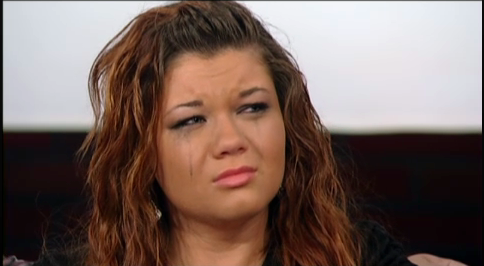
Throughout this devastating — yes devastating — interview, Amber alternately sobbed or covered her face with her hands. When Dr. Drew asks Amber if her own childhood resembled Leah’s, Amber truly looks shocked, as if she had never considered the parallels between the abuse she suffered/watched as a child and the abuse her daughter now endures. Dr. Drew asks “Is that what you were exposed to as a kid” and we can actually see the wheels turning in Amber’s head. Her face crumples and all she can say is “Fuck,” before bursting into tears. As I watched Amber I felt empathy for her. I realized that despite her horrific behavior, she was a victim too. This revelation does not excuse her behavior, but it certainly explains it. And I wish MTV had done a better job of giving viewers this background. Instead, Teen Mom presented Amber as a simple villain, which is exactly what they needed her to be in order to promote their message about safe sex. Talking too much about Amber’s shitty childhood would complicate a message that needs to remain simple: “Don’t have sex, kids! For the love of God, DO NOT HAVE SEX! Because if you do, then we will need to cancel the third most watched original cable series! And we really don’t want to do that. Now please watch this sexy music video.”

In many ways, Amber is similar to that other archetypal Bad Mother, the mythical “welfare queen” invented by the Reagan Administration as a way to dismantle what they saw as a corrupt and flawed welfare system. If you are interested in reading more about the parallels between Amber and the welfare queen of the 1980s, please read the article I just published at FLOW, where I discuss these and other illuminating arguments in more detail. Or you could just stay here and look at this picture of Leah stuck in a steering wheel. Don’t babies do the darndest things?
 judgmental observer