Work, Study and Scholarship as an Academic Parent, Part I: Grad School Babies

On July 19-21 I attended the biennial conference, Console-ing Passions: A Conference on Television, Audio, Video, New Media, and Feminism, hosted by Suffolk University (on a side note, if you write about or study anything related to these themes, I strongly encourage you to apply to Console-ing Passions in 2o14. You won’t regret it). In addition to presenting a paper on Teen Mom (don’t you judge me), I also chaired a workshop entitled “Work, Study and Scholarship as an Academic Parent.” During this workshop, Eleanor Patterson, Jason Mittell, and Melissa Click, three media studies scholars at different points in their academic careers, candidly discussed the challenges and rewards, both personal and professional, related to being a parent in academia.
The reason I’m sharing what transpired during this workshop here is twofold. First, as anyone who has ever attended an academic conference knows, the turn out at individual panels and workshops is precarious. You could have 50 people in your audience or 5 (we had more than 5, less than 50). I thought the stories and advice that circulated during our 90-minute workshop would be useful reading for other parents who live and work in the Ivory Tower as well as those who are pondering whether or not to become parents. Second, for my part of the workshop I explored definitions of the “child friendly department” — and what academics with children have a right to expect (or not expect) from their employers, colleagues, and students — and conducted a survey to see how other folks in the academy defined this term. I am grateful that 180 busy parents agreed to participate in my survey. Since many of them told me they were curious about its findings, I wanted share the results here.
I will cover the workshop in two parts to make reading and sharing more manageable. In Part I I will be discussing the challenges and rewards of having a child while still in graduate school and in Part II I will address the challenges and rewards of post-doc life with children.
“Navigating Motherhood as a Media Studies Graduate Student”
During our workshop Eleanor Patterson, a doctoral student in the Media & Cultural Studies program at the University of Wisconsin, Madison, discussed her experiences being a parent while still in graduate school. I asked Eleanor if she would participate in this workshop after reading her smart, funny, and insightful post, “So You Want to be a Grad Student Mama.” Here are some (but not all) of the key points Eleanor addressed during our workshop, with additional commentary by me (because I just can’t help sharing my own war stories):
Parenting is a feminist issue

Eleanor began her presentation with this statement: “being a parent in academia is a site where power is literally exercised over the body, in how we reproduce and parent. As a grad student, our labor has less political and social power within academic institutions.” It is difficult to be a new parent in any context but when you become a new parent as a graduate student, the low man/woman on the academic totem pole, navigating the field becomes even more difficult. New parents often find themselves in situations where they must request “special considerations” (flexible scheduling, missing meetings to care for sick children, etc.) and asking for these considerations is daunting when you feel like you have no power or that the very act of asking could somehow tarnish your reputation as a “serious” scholar. You become paranoid, constantly wondering how your choice to have a child will impact how others see you. You become extra determined to not let being a parent impact the way you function professionally (which is impossible, by the way).
As the authors of “Making Space for Graduate Student Parents: Practice and Politics” point out, being a parent and being an academic are similar in many ways: “The intensity and reverence with which academics and parents undertake their respective ‘labors of love’ is undoubtedly similar. And certainly both vocations can be marked by constant self scrutiny and a nagging sense of incompletion and imperfection.” It’s true. Nevertheless…
Being a parent and a graduate student are two roles that frequently appear to be at odds

During our workshop, Eleanor rightly pointed out that unlike faculty parents, grad students must adjust to “the new demands of academia while simultaneously adjusting to the new life of parent.” Although very little research has been done on graduate student parents, what is known is that there is a lower attrition rate for graduate student moms. After citing this fact, Eleanor was quick to add “I don’t mean to suggest that grad students shouldn’t be moms, but I bring this up to say that being a grad parent is complicated and there are concrete, material incongruences with how academia is structured and being a grad parent.” To name just one example, graduate students often struggle financially as they are sandwiched between student loans stemming from college and a highly uncertain economic future. And new babies? Well, they cost a lot of money. They need clothing and diapers and constant visits to the doctor and toys that are made with lead-free paint. How can a grad student, who can barely pay her rent, support the life of another human being?
It should not be surprising then that the majority of graduate students decide to wait until after they finish their degrees, or later, to have children. According to Mary Ann Mason’s 2009 article in The Chronicle of Higher Education “Exact figures are elusive, but a study we did of doctoral students at the University of California indicated that about 13 percent become parents by the time they graduate.” This is a problem for female academics in particular since the median age for women to complete a doctoral degree is 33 and for most women, fertility begins to drop starting at age 30. In her aforementioned blog post on parenting as a grad student, Eleanor explains “I also believe that the general discourse that encourages women who want children to wait until they’ve completed their Ph.D. is part of a greater patriarchal discourse that disciplines our bodies. I think it is similar in many ways to the advice female faculty often receive to have their children over the summer. As if taming our biological reproduction to match the academic school calendar would make academia more amenable to parenting or mothering.”

After my husband and I got together in my early twenties, we began to have earnest conversations about when we could start having children. I was emotionally ready for kids, but I was terrified about how it would impact my academic career. How would I finish my degree with a child in the house? Would I ever get a job if I had a kid first? I asked some of the professors and older graduate students in my department for advice and received lots of conflicting opinions. One popular answer was to wait to start my family until I was awarded tenure. Allow me to explain why this is problematic logic: I started my Masters degree in the Fall of 1999 and finished my PhD in the summer of 2007. Other than taking one year off after my MA to work for AmeriCorps so that I didn’t start drawing symbols and formulas all over the windows of my Pittsburgh apartment, Beautiful Mind-style (a story for another time, perhaps), I moved relatively quickly through my degrees. Then I won the academic lottery by snagging a tenure track job for the fall of 2007. If all goes well and I am awarded tenure in the spring of 2013 (fingers crossed), I will be 36 years old.

If I had waited to have children until tenure, I would be trying for my first at age 36. I know many women who were able to get pregnant with healthy babies at age 36 and beyond. But I also know a lot of women my age and older who are suffering through the stress and financial burden (not to mention the heartache) of infertility. Simply put, it is more difficult (and expensive) to get pregnant in your mid-30s. So, for many female academics who want to start a family, having a child while still in graduate school is probably the only way to do both. As Mason points out “[Many women] can see their biological clocks running out before they achieve the golden ring of tenure.”
Grad students are urged to “hide” their pregnancies and/or babies when they go on the job market

Eleanor explains that “Graduate student mothers are not only confronted with logistical difficulties, limited support, and potentially constrained career paths; they must also contend with conflicting and powerful ideologies that surround academia and motherhood. I know this is an issue, because every professionalization workshop on job talks, and being on the job market, have emphasized that you should not discuss your position as a parent, or your partner, at all, unless once you have an offer, you might angle for a spousal hire.” I was given the same advice when I went on the academic job market in the winter of 2006. At the time, I was still breastfeeding my 7 month-old daughter, so keeping my status as a parent under wraps was challenging. Breast feeding mothers who are away from their babies need to pump every few hours or else they risk diminishing or losing their milk supply.
During my campus interviews I had to ask for a bathroom break every few hours so I could hide in a stall and pump, praying that no one would inquire about the weird “whoosh whoosh” sound of my battery-powered pump. I would emerge from the bathroom 20 minutes later, with a wrinkled suit and sweaty brow, pretending like nothing unusual had just occurred. When I finally gave up this exhausting ruse and told one of my future colleagues what I was up to (this was my third campus interview in the space of 2 weeks and I was just fed up with lying), he breathed a sigh of relief and said “Oh great, I’m glad you told me you have a kid. Now I can tell you about child friendly our department is!” How silly I felt for keeping it a secret. I’m not saying that all of you parents should out yourself during your job interviews this fall but a good question to ask yourself is this: do you want to spend the next 40 years working in a department that sees your children as a liability?
Grad students are inadvertently penalized for having kids

Part of being a graduate student is immersing yourself in your field. In addition to taking classes, teaching classes and writing, graduate students benefit from attending talks given by guest speakers, participating in colloquia, and (if you are a film studies scholar like myself), going to (or renting) movies with your fellow students. But when you are a parent, your time becomes limited. Once you have shelled out money to cover daycare while you go to class, teach and write, you are unlikely to have additional funds for a sitter so you can go to a talk, much less a movie. While your friends are having cocktails with Dr. Famous Scholar after her amazing, intellectually stimulating talk, you’re at home stacking blocks with your baby. Yes, your baby is wonderful, but you are definitely missing out on some key grad student experiences.
During her presentation Eleanor cited a study by the American Sociological Association that found that many crucial resources — including help with publishing, mentoring, effective teaching training, and fellowships — were less available to graduate student parents, particularly mothers, than to other students (Spalter-Roth & Kennelly, 2004). Graduate mothers are also less likely to be enrolled in higher ranking departments (Kennelly & Spalter-Roth, 2006). Furthermore, having a child in graduate school often comes with little to no support. Mason found that “Only 13 percent of institutions in the Association of American Universities (the 62 top-tanked research universities) offer paid maternity leave to doctoral students, and only 5 percent provide dependent health care for a child.”
What to do if you want to have a child while in graduate school:

Unless you have had a Doogie Howser-like educational trajectory and thus finished your Ph.D. in your mid-twenties, having a child while still in grad school may be the only option for women (and men) who want both an academic career and a family. Eleanor offered up some great questions to ask yourself before you make the decision to have a child while finishing up your graduate degree:
*How much university/departmental support is available for graduate students with children?
*Will you get paid parental leave and/or continuation of health insurance when you take parental leave?
*Will your health insurance cover dependents?
*Will your department “stop the clock” on your funding while you take parental leave?
*Is there an on-campus daycare (or any daycare) that you can afford?
*Are professors in your department willing to give you some leeway (in terms of paper extensions, missed classes, etc) after your child is born?
*How far along are you in your degree? The final years of dissertation work are often the most conducive to parenting since you no longer need to be on campus daily for classes.
Saranna Thornton outlines similar ways to make parenting more amenable to graduate students here.
It’s still hard

Finishing a Ph.D. is hard. Raising a child is hard. Putting those two jobs together? Very, very hard. Eleanor offers some of the highlights “To get things turned in on time, I have to plan my weeks out in advance, and no longer have the luxury of waiting for my muse to hit before I begin writing. I regularly have to write during my ‘free’ time between class/teaching to get stuff finished.” She also describes typing papers with a sleeping child on her lap. I have clear memories of breastfeeding my newborn daughter while simultaneously typing up my job application letters. I’m not sure that I would ever want to relive the year in which I had my first baby, completed my dissertation, taught two classes, and applied to 40 jobs. But what kept me going that year (and what continues to keep me going) is the realization that the pay off for all of that stress, the many sleepless nights, and endless hustle to write during the isolated gaps of my day (being a parent teaches you how to write any time), is a job that makes me happy when I am away from my children and a personal life that makes me happy when I am away from my job.
Of course, I should add that I had an ideal situation for having a baby during graduate school. My husband worked from home and made a good salary so that we could afford to hire a nanny for 25 hours each week. This gave me just enough time to finish my dissertation and apply to jobs (even though I still did a lot of this work while holding a baby in my lap). But even if you don’t have a partner with a great job, here are some reasons why having a child during graduate school can be a great choice:
* your schedule is far more flexible as a graduate student (especially an ABD) than it is as a full-time faculty member (remember a TT job involves research, teaching, service, and meetingsmeetingsmeetings)
* when things get crazy in the first years of the job, your child will be older and less likely to be keeping you up all night with his/her blood-curdling screams
*since most of your graduate student cohorts don’t have (and don’t plan to have) kids, you will have a built-in community of eager aunties and uncles who will genuinely enjoy taking a break from “the life of the mind” to play with your kid for a few hours while you work on dissertation revisions (or at least, this was my experience)
*the push to publish a book (or two) once you are on the tenure track often scares faculty away from having kids. I know several academics who fully intended to have children before landing their first job and who now say “Who has the time?”
I hope this section doesn’t come off as “this worked for me so it must work for everyone” advice. My point is that graduate students are often under the impression that they must put having children on hold until they finish their degrees or get tenure. I don’t think this is necessarily the best advice.
Embrace your choice

As Eleanor concluded her presentation she offered up a great piece of advice to graduate student parents: “perform legitimacy.” In other words, don’t apologize for your decision to have a child or hide this fact. The more visible student parents are, the better the environment will be for all graduate student parents. She also emphasized the importance of good mentors, both at the graduate student and at the faculty level.
I mentioned earlier in this piece that as a graduate student I was advised by many to wait until tenure to have children. However, I had one faculty mentor who gave me very different advice. She was one of the few professors in my department who brought her child to receptions and events and discussed the fact that she was a mother openly. As a graduate student I watched her do this and I mentally noted: “This is possible. This is okay.” One day I asked her to meet me for coffee and she told me about her experiences having a child in graduate school and why it was a great decision for her. I view this conversation as one of the most pivotal in my entire academic career and I will forever be grateful to this mentor. I hope to do the same for someone else some day.
*****
This post, as well as Eleanor’s workshop presentation, are based almost entirely on personal experiences. I would love for readers to share their experiences below. What kind of advice (if any) did you receive about having children in graduate school? If you ended up having kids as a student, what was the biggest challenge and the biggest benefit of this decision? What advice would you give to graduate students who are contemplating having kids right now? Although this post focused more on the experiences of female graduate student parents, it would be great to hear from all of the men out there who had children while in graduate school (we know it’s hard for you guys too). How did your experiences differ from those outlined in this post?
Works Cited (& further reading)
Collett, Jessica. “Navigating Graduate School as a (Single) Parent.” scatterplot 5 Apr 2010. <http://scatter.wordpress.com/2010/04/05/navigating-graduate-school-as-a-single-parent/>.
Kennelly, Ivy and Roberta M. Spalter-Roth. “Parents on the Job Market: Resources and Strategies that Help Sociologists Attain Tenure-Track Jobs.” The American Sociologist 37.4 (2006): 29-49.
Mason, Mary Ann. “Why So Few Doctoral-Student Parents?” The Chronicle of Higher Education. 21 Oct 2009. <http://chronicle.com/article/Why-So-Few-Doctoral-Student/48872/>.
Patterson, Eleanor. “So You Want to be a Grad Student Mama.” Antenna 2 Aug 2011. <http://blog.commarts.wisc.edu/2011/08/02/grad-student-mama/>.
Springer, Kristen W., Brenda K. Parker and Catherine Leviten-Reid. “Making Space for Graduate Student Parents: Practice and Politics.” Journal of Family Issues 30.4 (2009): 435-457.
Thornton, Saranna. “Faculty Forum: Making Graduate School More Parent Friendly.” Academe Online Nov 2005. <http://www.aaup.org/AAUP/pubsres/academe/2005/ND/Col/ff.htm>.
BRAVE: A Mother and her Daughter Weigh In

Movies and television shows for and about women usually find themselves subject to more scrutiny than other pop culture products. Last summer the critical and commercial success of Bridesmaids (2011, Paul Feig) had reviewers declaring that yes, women are funny, as if no women had ever been funny on film before. Oh Mae West, Lucille Ball, Carol Burnett, Joan Rivers, Gilda Radner, Catherine O’Hara, Whoopi Goldberg, Roseanne Barr (etc.) it’s like you never even existed. And more recently, Lena Dunham’s new HBO series Girls was criticized both for not being funny enough (even though the show was never billed as a sitcom) and because Lena Dunham’s character, Hannah Horvath, is too fat and frumpy to be a credible (i.e., beautiful) leading woman. Place a woman before the camera and eventually, she will be labeled as either not measuring up or as measuring “over.” She will be almost perfect, but not quite. She will be:
too fat

also too fat

also too fat

too skinny

also too skinny

once too skinny…
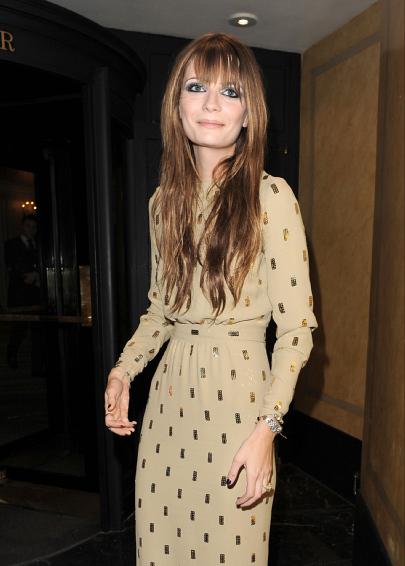
but now too fat

too twee
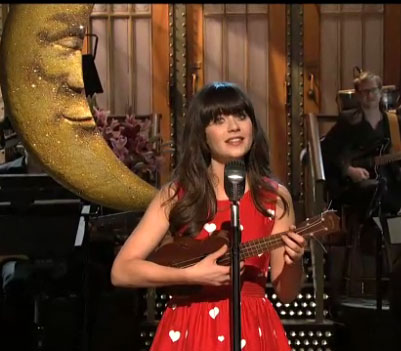
too old

too young

too trashy

too stuck up

too sexy


too ambitious

too simple

too complex

Didn’t complain enough about being physically assaulted by her boyfriend

Complained too much about being physically assaulted by her husband
Is this getting tiresome yet? Good. I find it tiresome too. It’s difficult to locate a female celebrity/film character/TV character who hasn’t been characterized as being too something in some way. There are many reasons for this — the 24 hour news cycle, gender inequality, the tendency to judge women based on their appearances, and the hyppersexualization of women in the media. Most germane to this blog post, however, is the fact that there just are not many films and TV shows created by women and/or addressing the lives of women. For example, with so few TV shows written by and focused on women, it should not be surprising that the new female-focused television programs that premiered in the 2011-2012 season (Girls, 2 Broke Girls, and The New Girl) were subject to so much backlash (in which, I will admit, I also participated). We have so many hopes and expectations for women-centered texts that when they finally do appear, we want them to be everything and to represent everyone. They should also be funny. But realistic. And also provide great role models. But realistic role models. Aw hell, here we go again…
So it should not be surprising that Brave, the first Pixar film to ever feature a female protagonist and the first to be co-directed and co-written by a woman (until she was fired and replaced by a man) has been the subject of high expectations and mixed reviews. As Slate‘s Dana Stevens writes “In order to satisfy expectations at this point, Brave would have to not only revolutionize the depiction of girls and women onscreen, but make its audience laugh as hard as we did in Toy Story and cry as hard as we did in Up. Oh, and could it also reinvent computer animation and rake in three times its budget on opening weekend?” Amen.

Below is a summary of Brave‘s strengths and weaknesses, for those keeping score:
The Positive
*SO PRETTY!
Pixar films are gorgeous. Enough said.
* The female characters, Princess Merida and Queen Elinor, are complex and realistic:
Slate‘s Dana Stevens writes: “Elinor is never an evil-queen villain, but nor is she an idealized self-sacrificing mother. Rather, she’s a particular, individual person, devoted but flawed”
*Brave isn’t a movie about women trying to prove that they are as good as men, it’s a movie about one woman asserting her right to choose her path:
New York Magazine‘s David Edelstein writes: “In addition to being fast, funny, and unpretentious, Brave is a happy antidote to all the recent films in which women triumph by besting men at their own macho games, as if the history of male dominance is one of patriarchs suppressing females’ essential warlike nature. Merida wants nothing more than to control her own fate, her rage provoked by the refusal of her mother—for whom duty and subservience are paramount—to see the world through her eyes.”
*There is no love interest for Merida. I repeat: THERE IS NO LOVE INTEREST FOR MERIDA!
The Village Voice’s Melissa Anderson writes: “Where fellow bow-and-arrow expert Katniss Everdeen from The Hunger Games and the titular princess of Snow White and the Huntsman are each one point in love triangles, Merida, resolutely asexual, is nonetheless entangled in the most complicated, all-consuming love- and hate-filled dyad of all: that between a teenage daughter and her mother.”
*Yes, Brave is the rare Disney film in which a mother is both alive and not an evil cannibal:
Time‘s Richard Corliss writes “Disney princesses have a rough time with the women who run their lives. The female authority figure is usually a stepmother — in Disney animated features, the inevitable phrase would be “wicked stepmother” — who offers Snow White a poisoned apple, forces scullery work on Cinderella and, in Tangled, locks Rapunzel in a high tower for her entire childhood and most of her adolescence. The millions of actual stepmoms, among all the postnuclear families in the world, must think of these portrayals as libel. They should bring a class-action suit against the Walt Disney Company and picket its Burbank headquarters.

The Negative
*Brave isn’t as good as Toy Story or other Pixar films:
Los Angeles Times’ Kenneth Turan says: “Shown on its own, without any logo attached, “Brave” simply doesn’t feel as much like the Pixar movies we’ve come to expect.”
Chicago Tribune‘s Micael Phillips writes: “At this point in Pixar’s history, the studio contends with nearly impossible expectations itself. This is what happens when you turn out some bona fide masterworks. “Brave” isn’t that; it’s simply a bona fide eyeful.”
Boston Globe‘s Ty Burr writes: “Uh-oh: “Brave” is the first Pixar movie that doesn’t feel like a Pixar movie.”
*Too much teen angst, not enough action:
Boston Globe‘s Ty Burr writes: “The first half-hour bumps along with humor and a striking lack of direction.”
*We’ve seen these characters and plots before:
A.V. Club’s Tasha Robinson writes: “These kinds of lapses don’t seriously harm the movie, but they do enhance the feeling that it’s skating along a series of broad stereotypes—martinet mom, browbeaten but resistant dad, rebellious teenager, bratty kids—without finding the depth in them that, say, The Incredibles did.”
Slant Magazine’s Richard Larson says: “But ultimately the film offers nothing more than a caricature of a well-worn conceit (a princess doesn’t fit into her shiny box, so she just breaks all the rules and does what she wants), neatly repackaged for another generation of young moviegoers who haven’t met Princess Jasmine from Aladdin and don’t realize that they’re eating yesterday’s leftovers.”
Whew.




So what should we take away from this conversation, other than the fact that my 6-year-old knows what a vasectomy is? First, it is significant that she likes Merida better than her previous favorite princesses (Belle, Aurora, and Tiana) because Merida is “brave.” Clearly my daughter has been conditioned to understand the film through its ubiquitous marketing campaign (“Merida is BRAVE!”). But still, I think it is significant that a 6-year-old moviegoer recognizes the value of a young woman defeating a large, scary bear. It is important that a 6-year-old girl understands the value of a woman who is brave. Second, it is significant that my daughter does not view Merida’s bravery as a male character trait being co-opted by a female character, like it’s unnatural. The film is so female-centered (yes, we have the slapstick moments with the four clans, but that is comic relief, not the film’s heart) that female bravery makes sense. Of course Merida stood up to that scary bear — who else was going to save her mother?
So while much of the critique of this film focuses on its bait-and-switch tactics — trailers and posters promise a film about a brave young girl fighting battles but delivers a mother-daughter melodrama, the film promises Pixar but delivers a Lifetime-style tearjerker — I don’t see it as a bait-and-switch. Rebelling against your parents’ repressive visions of your future and being willing to sacrifice your life in order to rectify your mistakes is brave behavior indeed. So while Brave is not a perfect film and Merida is not a perfect character, both are good enough. And I think we can all agree that good enough is sometimes good enough.
So did you take your children to see Brave? Did they like it? Why or why not?
Call for Papers: Multiplicities: Cycles, Sequels, Remakes and Reboots in Film & Television
I wanted to use this space to promote an anthology I will be putting together with R. Barton Palmer, a wonderful scholar and colleague who I met back in the Spring of 2011, when he gave talk at ECU. If you are reading this post (Hello, YOU!) and you know of anyone who might like to submit an abstract (due August 30, 2012), please pass along the information below.
Multiplicities: Cycles, Sequels, Remakes and Reboots in Film & Television (working title)
Project Overview:
Like film genres, film cycles are a series of films associated with each other due to shared images, characters, settings, plots, or themes. But while film genres are primarily defined by the repetition of key images (their semantics) and themes (their syntax), film cycles are primarily defined by how they are used (their pragmatics). In other words, the formation and longevity of film cycles are a direct result of their immediate financial viability as well as the public discourses circulating around them. And because they are so dependent on audience desires, film cycles are also subject to defined time constraints: most film cycles are financially viable for only five to ten years. The contemporaneity of the film cycle—which is made to capitalize on a trend before audience interest wanes—has contributed to its marginalized status, linking it with “low culture” and the masses.
As a result of their timeliness (as opposed to timelessness), film cycles remain a critically under examined area of inquiry in the field of film and media studies, despite the significant role film cycles have played in the history of American and international film production. This collection of essays seeks to remedy that gap by providing a wide-ranging examination of film cycles, sequels, franchises, remakes and reboots in both American and international cinema. Submissions should investigate the relationship between audience, industry and culture in relation to individual production cycles. We are also soliciting essays that examine how production cycles in the television industry are tied to audience, culture, and production trends in other media.
Possible topics include, but are not limited to:

-sequels, trilogies, and franchises as cycles

-the relationship between film cycles and subcultures

-the relationship between film cycles and political and social movements

-analyses of intrageneric cycles (film cycles within larger film genres) such as teen-targeted musicals (High School Musical, Save the Last Dance, You Got Served) or torture porn horror films (Saw, Hostel, Touristas)

-analyses of intergeneric film cycles (stand-alone film cycles) like disaster films (The Day After Tomorrow, Poseidon, 2012) or mumblecore (Baghead, Cyrus, Tiny Furniture)


-the transmedia nature of cycles (the relationship between Harry Potter books, films, toys, video games, fan fiction, vids, etc.)

-the relationships between cycles in television, music, and film, like the appearance of fairytale television shows (Once Upon a Time, Grimm) and films (Snow White and the Huntsman, Mirror, Mirror) in 2011-2012

-production cycles found within television (television musicals, comedy verite, etc.)
– essays that explore the (dis)connections between film cycles, on the one hand, and remakes, sequels, adaptations, and appropriations on the other
Submission Guidelines:
Please submit your abstracts of 400 words and a brief (1-page) CV via email to both of the editors by August 30, 2012. Finished essays should be approximately 6,000 to 7,000 words in length, including footnotes. Acceptance of essays will be contingent upon the contributors’ ability to deliver an essay that conforms to the work proposed by the submitted abstract. We will notify contributors by November 2012.
Please email your abstract and CV to both editors:
R. Barton Palmer: PPALMER@clemson.edu
Amanda Ann Klein: kleina@ecu.edu
I am also happy to answer any questions you might have about this project over email.
Reconsidering GIRLS
A month ago I participated in a blogathon devoted to the new HBO program Girls. The impetus for the blogathon was a series of discussions I was having with some media studies scholars (primarily Kristen Warner and Jennifer Jones) about the hype leading up to the show’s April 15th premiere. The public discourses surrounding the Girls premiere — in commercials created by HBO, interviews with the press, and reviews by critics who received advanced copies of the first three episodes — primarily stuck to the same theme: Girls is an authentic portrait of what it is like to be a twentysomething female today. Had the show simply been promoted as a new quirky portrait of a pirvileged, highly-educated but emotionally immature young woman’s struggles to make it as an artist in New York City, I am not sure our blogathon would have taken place at all. But the show’s generic title, which implies a universality (even as it mocks the maturity of its protagonists), coupled with the ecstatic reviews lauding the program’s authenticity, bumped up against the program’s rather rigid white, heterosexual, upper-class cast in an unpleasant way. Thus, the blogathon was our attempt to ask: do we take a television series to task for claiming to provide an authentic female bildungsroman when its “authenticity” is limited to one vision of female life?

One thing I did not say in my original post about the show, and which I think needs to be said, is that I do not blame Lena Dunham, the show’s creator, head writer, and star, for the way HBO advertised her show or the way television critics made her show, before a single episode ever aired, into a text that “speaks” for all of today’s young women. Dunham did not, for example, ever claim that her show was “FUBU” (for us, by us). That unfortunate statement came from a glowing preview written by television critic Emily Nussbaum. I enjoy Nussbaum’s work, particularly the way she writes about female characters on TV, but this was an absurd thing to write (well, to be fair, she was quoting her colleague). In addition to the problem of appropriating the phrase “for us, by us,” which was first used by Daymond John for his 1992 clothing line, FUBU (made by and for African American clientele), the claim that Girls was written for “us” by “us” implies that the white, heterosexual, upper class experience is generalizable to all women.

I suppose I understand why Nussbaum would include this statement in her review of Girls. Sometimes when I watch a film or television show, a moment rings so true that I wonder, briefly, if the creator has somehow read my diary. Knowing that this is impossible — I burned all of my diaries! — I then wonder if perhaps this truthful moment is something “universal.” That is an exhilarating feeling — that a private, personal experience is actually an experience linking me to a larger group of individuals. Indeed, you can feel Nussbaum’s excitement and her joy as she writes about Girls — the show clearly tapped into something personal and true for her. I too had moments like that when I watched Girls this season. But, I am also aware that I will have many more moments of personal recognition than, say, a white woman who had to pay her own way through college, or an African American woman who is looking at the screen and seeing no black faces, or a lesbian who is thinking “Seriously ladies, this is one of the reasons why I don’t date men.” To call Girls a show “for us, by us” implies that all of those other “us-es” don’t count.

My reactions to the Girls pilot probably seems nitpicky. “Okay fine,” you might be thinking,”so you’re mad about the way the show was promoted. But what about the show itself? Isn’t it important to judge it on its own merits?” Yes, hypothetical, puzzled reader, you are right. Let’s talk about the show itself: in my original post about the pilot, I was critical of the show’s tone. I felt that Girls was playing coy with its politics. It felt like Dunham was adding a “first world problems” hashtag (complete with air quotes) to the pilot, rather than actually grappling with these issues head on. I wrote:
…the show is awash in its own privilege. It winks and nods, but then dismisses it as if to say “I acknowledged this okay? Can we move on to what I want to talk about now?” If you have the critical fortitude to acknowledge privilege, like when Hannah’s friend scoffs at her for whining about having to pay her own bills (reminding her that he has $50,000 in student loans), then you better well deal with it.
I was honestly confused about what, exactly, Lena Dunham was trying to tell us about her character, Hannah Horvath. Are we supposed to genuinely sympathize with her “plight” or are we supposed to view her existential struggle to become the “voice of her generation” (or “a voice of a generation”) as the whiny complaints of a young woman whose biggest dilemma is that her ex-boyfriend from college has finally come out of the closet? Or that her shirtless, douchebag lover doesn’t text her enough? Or that her best friend is dating a man with, to quote Hannah’s diary, “a vagina”? If, according to Jason Mittell, the goal of a pilot is “to educate viewers on what the show is, and inspire us to keep watching,” then I do think Girls failed in one of its primary jobs — to let us know what the series’ tone will be. Is it a serious drama with sympathetic characters (Parenthood) ? A broad comedy in which characters are built for punchlines (Big Bang Theory)? A world filled with unlikable characters who do awful things and it’s funny (Curb Your Enthusiasm)? A world filled with unlikable characters who do awful things and it FREAKS YOU OUT (Sopranos)?
The Girls pilot did not make its tone clear. If you take that ambiguous tone, couple it with the show’s overblown hype and claims to authenticity, and then look at the blinding whiteness of its cast, then that is the best way to explain why I (and so many others) did not react favorably to the pilot. But I feel differently now, which is why I am writing this follow up post. I think the tone of the series became crystal clear partway through episode 2, “Vagina Panic,” when Hannah decides to get tested for STDs. The scene opens with Hannah wearing one of those flimsy hospital gowns that open in the back, a piece of clothing that is engineered to make patients feel humiliated and therefore, pliant. As Hannah lays back on the examination table, feet in stirrups, she begins to ramble. I want to pause for a moment and point out that generally I hate the way movies and television depict the “foot in the stirrups” scenario because it is usually played for drama — “My God, Mrs. Smith, you’re seven months pregnant!” — or for comedy — “My God, Mrs. Smith, I’ve found your car keys!”

Instead, this scene reveals the pelvic exam, that necessary female rite of passage, for what it is — very, very, very uncomfortable. I don’t care how old I get, I will never be comfortable having a doctor slide her gloved hand into an area which is normally pretty selective about who may enter it, insert a cold metal instrument inside of me so as to make that personal opening wider, and then have a perfectly casual conversation about my summer travel plans as she examines my holy of holies like a miner digging for diamonds. The pelvic exam is one of the few scenarios in which a woman must act like she is totally cool with a stranger rummaging around in her vagina, not for the purposes of generating an orgasm, but to figure out if there is anything “wrong with it.” So I found Hannah’s verbal diarrhea in this scene to be completely appropriate (even if the content of her ramblings was not). This was my “universal moment,” in which I saw a genuinely frustrating experience from my own life recreated accurately on screen.

The tone of the series also became clear to me here because Hannah, in her attempt to fill the air with conversation, launches into a ludicrous monologue about AIDS. I will quote it at length because it must be read to be believed:
The thing is that, these days if you are diagnosed with AIDS, it’s actually not a death sentence. There are so many good drugs and people live a long time. Also, if you have AIDS, there’s a lot of stuff people aren’t going to bother you about. Like, for example, no one is going to call you on the phone and say ‘Did you get a job?’ or ‘Did you paid your rent?,’ or ‘Are you taking an HMTL course yet?’ because all they’re going to say is ‘Congratulations on not being dead.’ You know, it’s also a really good excuse to be mad at a guy. It’s not just something dumb like, ‘You didn’t text me back,’ it’s like ‘You gave me AIDS. So deal with that. Forever.’ Maybe I’m actually not scared of AIDS. Maybe I thought I was scared of AIDS, but really what I am is… wanting AIDS.
What the hell, Hannah?
A nice recap of the episode over at Press Play compares this scene to a scene in the pilot episode of My So Called Life (1994) in which Angela Chase (Claire Danes) tells her English teacher, during a discussion of The Diary of Anne Frank, that Anne Frank was “lucky.” Angela’s teacher is horrified by her response: “Is that suppsosed to be funny? How on earth could you make a statement like that?” she asks. Angela, who has been mooning over her first real crush, Jordan Catalano (Jared Leto), suddenly snaps out of her reverie. After her teacher prods her again, Angela begrudgingly clarifies her response: “I don’t know. Because she was trapped for three years in an attic with this guy she really liked?” If you’d like to watch this scene, start at the 3.30 minute mark on the video below:
This scene is the epitome of that oft-used term “First World Problems.” Only a young woman who is well fed, well loved, and generally provided for would look at the plight of a little Jewish girl forced into hiding during the Holocaust and be jealous of her. Angela is so caught in the throes of her own teenage crush that she is only capable of viewing the world in terms of young women who get to be with their crushes and young women who are kept apart from them. Even something as large as the Holocaust becomes invisible in this world view. If my daughter said something like that I would be forced to give her a lengthy lecture on the nature of “real problems” even as I know that I possibly said something similarly awful at age 15. Indeed, this moment appears in the My So Called Life to tell us almost everything we need to know about the series’ protagonist, Angela: she is privileged; she is uncomfortable in her own skin; she misunderstands and is misunderstood by the adults in her life; and most importantly, she is desperately in love (or what she believes to be love) with Jordan Catalano. This is all that matters to Angela Chase and so her skewed (and horrifying) analysis of The Diary of Anne Frank makes perfect sense in this context. The audience is not expected to identify with Angela here (unless she is also a privileged 15-year-old in love, in which case, she might) but to understand that this scene is telling us what we need to know about Angela as we move forward through this series.

In the same way, Hannah’s infuriating rant about AIDS is a wonderful crystallization of her character. Only a young woman with no “real problems” would fantasize about having a really real problem. Hannah feels that having AIDS would somehow be simpler and more desirable than having to find a job or a boyfriend just as Angela can only see the benefits of being hunted down by blood-thirsty Nazis. As I listened to Hannah blather on I wanted to chastise her for saying such obnoxious things. But then her gynecologist did it for me. She looked at Hannah and said, with the utmost sympathy, “You couldn’t pay me to be 24 again.” This moment acknowledged Hannah’s self centeredness, her privilege and her ignorance about her own privilege, and then, very carefully, cut her some slack. Hannah is, after all, 23. And if I learned anything from Blink-182, it is that “nobody likes you when you’re 23”:
In fact, people in their early twenties are really no better than people in their early teens. In many ways they are worse because they are now equipped with college degrees that lead them to believe that they “understand” things about “the world.” A recent roundtable discussion in Slate, called “Girls on Girls,” offered this perspective on Hannah’s age:
Isn’t that funny arrogance and vulnerability the special purview of the 22, 23, and 24 year old? You are confused, on the low end of the work totem pole or still trying to prove yourself (unless you’re Mark Zuckerberg), and yet you also are young. You’re the next thing. You’ve left your parents’ home and are free to reject all the posters and accoutrements and funny habits and small town-ness of their lives.
A 23-year-old is like a very independent, very entitled toddler who can drive a car and is legally allowed to drink. We say and do very, very dumb things when we are in our early twenties, and that seems to be what Girls is about.
So as this season of Girls draws to a close, I find myself in an uncomfortable situation. On the one hand, I am really enjoying this series. Not every scene or character works (I could completely do without Shoshannah [Zosia Mamet]), but every episode contains at least one scene that I would characterize as “sublime.” And yes, I am using sublime in the Kantian sense of the word, meaning an overwhelming experience that generates awe and respect. I felt this way when Charlie (Christopher Abbott) serenaded his girlfriend, Marnie (Allison Williams), with excerpts from Hannah’s stolen diary that document their relationship from her cynical and judgmental perspective.

When Charlie gets on stage and announces that his next song was wrriten for his girlfriend, Marnie looks pleased (even though we know she does not truly love Charlie). Then, looking Marnie right in the eye, Charlie sings:
What is Marnie thinking
she needs to know what’s out there
how does it feel to date a man with a vagina.
As I watched this slow-moving car crash I was overwhelmed with a confusing mixture of sadness, humiliation, and awkward triumph. To watch Charlie completely abase himself — to throw himself onto his own sensitive-boyfriend-sword — in order to drive home the point that he deserves to be treated with respect, was truly beautiful. Sublime. As Charlie tells Marnie in a follow up episode, he just wants to be treated “like my life is real.” His song did that. This is the kind of scene that makes me happy that I study film and television for a living.

But still, I keep coming back to my original problem with this show — it makes whiteness and it attendant privilege the default setting (and as John Scalzi recently pointed out, “white” is the lowest difficulty setting in the game of life). Why am I picking on Girls for doing what just about every single TV show currently on the air does? Because Girls is written and produced by an extremely smart and talented young woman and if she can’t find a way to make non-white characters, non-straight characters, or non-wealthy characters the default setting, then who is going to do this? Cord Jefferson’s piece in Gawker really nails this issue:
One of the reasons Girls seems to be so adored is that its depiction of upper-middle class, Urban Outfitters ennui reads as more true than most everything before it, as if, at long last, there is finally a team of young people that “gets it.” Many sub-30, post-college men and women look at the show and nod their heads in agreement with every abortion joke, drug reference, and unfortunate sex scene. This stuff is indeed happening in Ivy League pockets throughout the United States, the only difference is it’s happening to black, Latino, and Asian people as well, not just Dunham and her trio of white friends.
There is currently not a single leading character on Girls that couldn’t be played honestly and convincingly by a black actor or a Pakistani actor or a Taiwanese actor. It may come as a surprise to some Americans, but there are women of all races who freeload off their wealthy parents and work in tony art galleries.
Jefferson concludes his piece with this heart-breaking statement:
The guys begging for money look like us. The mad black chicks telling white ladies to stay away from their families look like us. Always a gangster, never a rich kid whose parents are both college professors. After a while, the disparity between our affinity for these shows and their lack of affinity towards us puts reality into stark relief: When we look at Lena Dunham and Jerry Seinfeld, we see people with whom we have a lot in common. When they look at us, they see strangers.
Like the fictional Charlie, the very real Jefferson wants for television to acknowledge that his life is “real.” Like Charlie, he is tired of sleeping over at the white folks’ apartments all the time and hanging out with their friends. He likes them and all, but he wants them to meet some of his other friends. Like Charlie, Jefferson (and every audience member whose world view is routinely hidden from mainstream television) has his own apartment, filled with cleverly constructed shelving units and lofted beds. But like Marnie, white audiences won’t ever know this until we take the time to visit this apartment and look around. So no, Girls is not unique in its erasure of all that is not white, straight and middle to upper-class. But I wish that it were.
For another reconsideration of the series by one of my fellow blogathoners, check out Jennifer Jones’ “GIRLS at the Half.”
Blogging GIRLS: Reactions to the Pilot
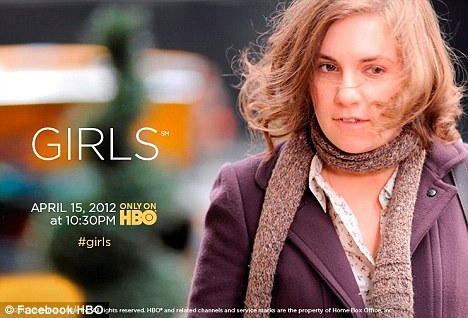
Full disclosure: I am an upper-middle class, highly educated (I have a PhD!), white woman. So when the protagonist of Girls, Hannah (played by the show’s writer/producer/director Lena Dunham), admits to her emotionally distant, sometime-lover Adam (Adam Driver), that her parents have cut her off financially at age 24, and then adds, sheepishly, “Do you hate me?” her mixture of white privilege and liberal guilt reverberated with me. It was a moment of resonance, a particular feeling generated by a particular situation, and I experienced it as a “real” moment.
My guess is that Girls will create lots of resonant moments for many viewers for a variety of reasons. I imagine that some will relate to Marnie (Allison Williams) and her mixed feelings about her too-nice boyfriend or Jessa (Jemima Kirk) and her desire to travel in order to avoid impending adulthood. These are interesting characters. They are messy and imperfect, which is almost always preferable to neat and perfect characters. And I like that Hannah is slightly overweight, or as her fuck buddy assures her “You’re not that fat anymore.” I daresay that this is one of the most radical aspects of Girls: the very ordinariness of its protagonist. As I watched Hannah move across the screen, examining her for an inkling of physical charisma, I was both frustrated and elated. I was frustrated because I am so accustomed to looking at perfectly formed women on TV, with tiny waistlines and flat-ironed hair, that looking at a normal one was a little bit of a let down. But I was also elated by Hannah’s ordinariness and the radicalness of placing a slightly frumpy, slightly average-looking female character at the center of a television series about young women. Jenny Jones offers up a lovely analysis of Hannah’s appetites in her own response to the pilot:
The shot opens with Hannah in close-up but off-center, shoved into the bottom right corner of the shot, breathlessly stuffing spaghetti into her mouth. As the scene continues, she and her father voraciously shovel down food while Hannah’s mother encourages them to slow down. From the start this positions Hannah against her mother and toward her father, an issue which springs up later when her mother is also the instigator for stopping Hannah’s money flow. Hannah is portrayed as consuming carelessly–including sex, drugs, and money–and food does seem to be a primary way that’s characterized. Eating a cupcake in the shower seems to be the ultimate example of this.
I, too, loved seeing Hannah shoveling food into her mouth because I also eat this way and I know it is disgusting. It’s also unusual for a not-stick-thin actress to eat heartily on camera and not make it into a schtick (as Bridesmaids did with Melissa McCarthy’s character). As I watched I asked myself: what if every model and every actress was as average-looking as Lena Dunham? Note that I did not say “ugly” or “fat” (she is neither of these things). She’s just…plain. If film and television were populated with ordinary women would I feel less critical of my own aging body? Would my 5-year-old daughter be less likely to tell me, as she examines her perfectly perfect little body in the mirror,”This shirt makes me look fat”? (True story).

Why is it so rare and exceptional to have an ordinary-looking female protagonist? Ordinary male protagonists are ubiquitous, of course, but for some reason a female character can’t just be smart or powerful or deadly with a broadsword. She has to be fuckable. I don’t want to my 5-year-old to think she has to be fuckable. And the media are working against me and my attempts to bolster her self esteem. And that sucks.
But even as I praise Girls for these praiseworthy elements, it must be acknowledged that there is a wide swath of audience who will have difficulty finding an entryway into this show. As Francie Latour wrote in a recent editorial for the Boston Globe:
It’s a zeitgeist so glaring and grounded in statistical reality that Hollywood has to will itself not to see it: America is transforming into a majority-minority nation faster than experts could have predicted, yet the most racially and ethnically diverse metropolis in America is delivered to us again and again on the small screen as a virtual sea of white. The census may tell us that blacks, Latinos and Asians together make up 64.4 percent of New York City’s population.
Latour’s observations are not in any way surprising. Films and television series are usually not made with a non-white, non-middle class viewer in mind. And when television shows do feature, for example, an all African American cast, it is rare that these shows are allowed to explore the subtle realities of their character’s lives. These shows tend instead to be broad comedies or exploitative reality shows. So no, I’m not surprised that there were no brown faces (no poor faces, no queer faces) in the pilot episode of Girls. But I am disappointed.

No show can (or should) offer to represent all possible identities since this is both impossible and by nature unsatisfactory. But Girls is a specific kind of show. It is a show that aims for verisimilitude — with its focus on the plastic retainer Marnie sleeps in, the scene in which Jessa talks to Marnie while taking a dump and wiping herself (gross, but okay, there was some realism there) and the spartan decor in struggling actor Adam’s apartment. If this show takes the time and care to present the realities of life in New York City for this group of young women in their early twenties, then I do expect to see some homosexuals and some African Americans and definitely some Spanish-speaking characters. It’s New York City for crying out loud! It’s telling that the only person of color to speak a line of dialogue in the entire pilot is a crazy, homeless, African American man who makes a pass at Hannah as she leaves her parent’s hotel room. I mean, seriously, HBO? That’s the role you decided to give to the black guy? [note: I forgot about Hannah’s Asian coworker who asked for the Luna bar and the Smart Water and the Vitamin water. So that’s two POC]. They found a way to bring a British woman onto the show (she’s that Mamet girl’s “British cousin” of course!) so couldn’t an Indian girl be Hannah’s old friend from the weight loss camp her parents made her go to as a tween (I just made up that backstory, by the way)? Couldn’t an African American guy be an actor friend of Hannah’s fuck buddy? There are ways to do this that do not stretch the credibility of this program. And that would make the show more real because I just don’t buy that a girl like Hannah would only interact with straight white people when living in Brooklyn. I do not buy it. And by the way, saying that you wish you could have done this doesn’t count. Consider the following exchange from an interview with Dunham in The Huffington Post:
Are you concerned that people might just think “Girls” is another example of white people problems?
Definitely. We really tried to be aware and bring in characters whose job it was to go “Hashtag white people problems, guys.” I think that’s really important to be aware of. Because it can seem really rarified. When I get a tweet from a girl who’s like, “I’d love to watch the show, but I wish there were more women of color.” You know what? I do, too, and if we have the opportunity to do a second season, I’ll address that.
What? Why could you not do that this season? As the show’s closing credits inform us, you run this show, Ms. Dunham. If your hands are tied, you’re the one who’s tied them.

So is identification necessary to the pleasures offered by Girls? I would argue yes. It is a program that aims to create “real” moments, such as Hannah awkwardly trying to maintain a sexy bondage position while her doltish lover looks for lube and condoms. We are meant to watch this scene and think “Ah yes, I remember having an awkward sexual encounter like that!” And this is not to say that a gay man or a black woman cannot identify with a straight white woman and her awkward, somewhat humiliating sexual experiences. Of course they can. But I don’t think the show is cultivating that identification. I believe this show is zeroed in on a particular kind of viewer, a viewer who is like Dunham: white, middle- to upper-middle class, educated, and liberal. A viewer like me.
Why do I think this? Because the show is awash in its own privilege. It winks and nods, but then dismisses it as if to say “I acknowledged this okay? Can we move on to what I want to talk about now?” If you have the critical fortitude to acknowledge privilege, like when Hannah’s friend scoffs at her for whining about having to pay her own bills (reminding her that he has $50,000 in student loans), then you better well deal with it. Kristen Warner addresses this nicely in her post on the pilot:
White womanhood holds in its grasp innocence. They are the only ones who can truly be innocent. The only ones who can truly and sincerely have a conversation about why working at McDonalds is not an option while waiting on a cup of opium with Jay-Z playing in the background without remotely considering the juxtaposition of all these um…ideas. And the way that the main character, Hannah, and her girlfriends deploy that innocence (in sometimes successful but mostly unsuccessful ways) reveals the invisibility and instability of whiteness.
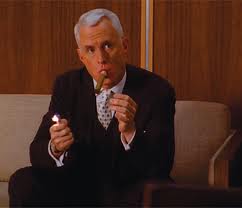
To offer up a counterexample, the current season of Mad Men is finally starting to do a respectable job of acknowledging its insulated whiteness. In the past Roger Sterling (John Slattery) has been a likable cad, making skirt-chasing, cheating on your wife, and getting drunk at lunch almost (almost) seem charming. But this season Roger has become a dinosaur, an artifact of the white male patriarchy. He is no longer charming. He can’t bring in new clients because he can’t understand that the world is changing. Instead he sits in his office and stews, getting drunker and hazier as the days goes by. In the meantime, Peggy (Elisabeth Moss) puts her feet up on her desk, wears ties, and extorts money from her desperate boss. She is going to replace Roger because she at least understands, in a limited way, that the culture around her is changing. Roger just puts his head in the sand and this will be his downfall.
But Girls does not really address its privilege in a satisfactory way (meaning, I was not satisfied). When Hannah steals the housekeeper’s money we cut to her walking on the street (being harassed by the craaaazy black man) and smirking a small smirk of triumph. What did I need after that scene? I needed a 30 second scene depicting the housekeeper walking into the hotel room, instinctively looking around for her tip, and then muttering something about “cheap motherfuckers” before stripping the bed. That’s all I needed. Just a moment of consequence. Instead, Hannah gets to commit her selfish act in a vacuum and whoosh, it’s gone. Invisible. Quirky.

Am I being picky? A little. Can you judge an entire series based on its pilot? No. But let me explain myself through a teaching analogy: when I am grading essays I tend to be harder on my best writers. I challenge them more on their ideas, get more annoyed at their grammatical errors, and more outraged at their lazy arguments. “I know you are capable of better work than this” I might write at the end of a perfectly respectable essay. If you have the ability and the intelligence, then why create something subpar? I’m taking the same critical eye to my study of Girls. Dunham is a great writer and a pretty good actress with an ear for smart dialogue, and I know she can do better. Do better, Dunham, you are capable of better work than this. I give you a B. I know you can get an A.
For more reactions to Girls, I encourage you to check out our Facebook group, which is the hub of our Girls blogathon.
You Always Remember Your First Time
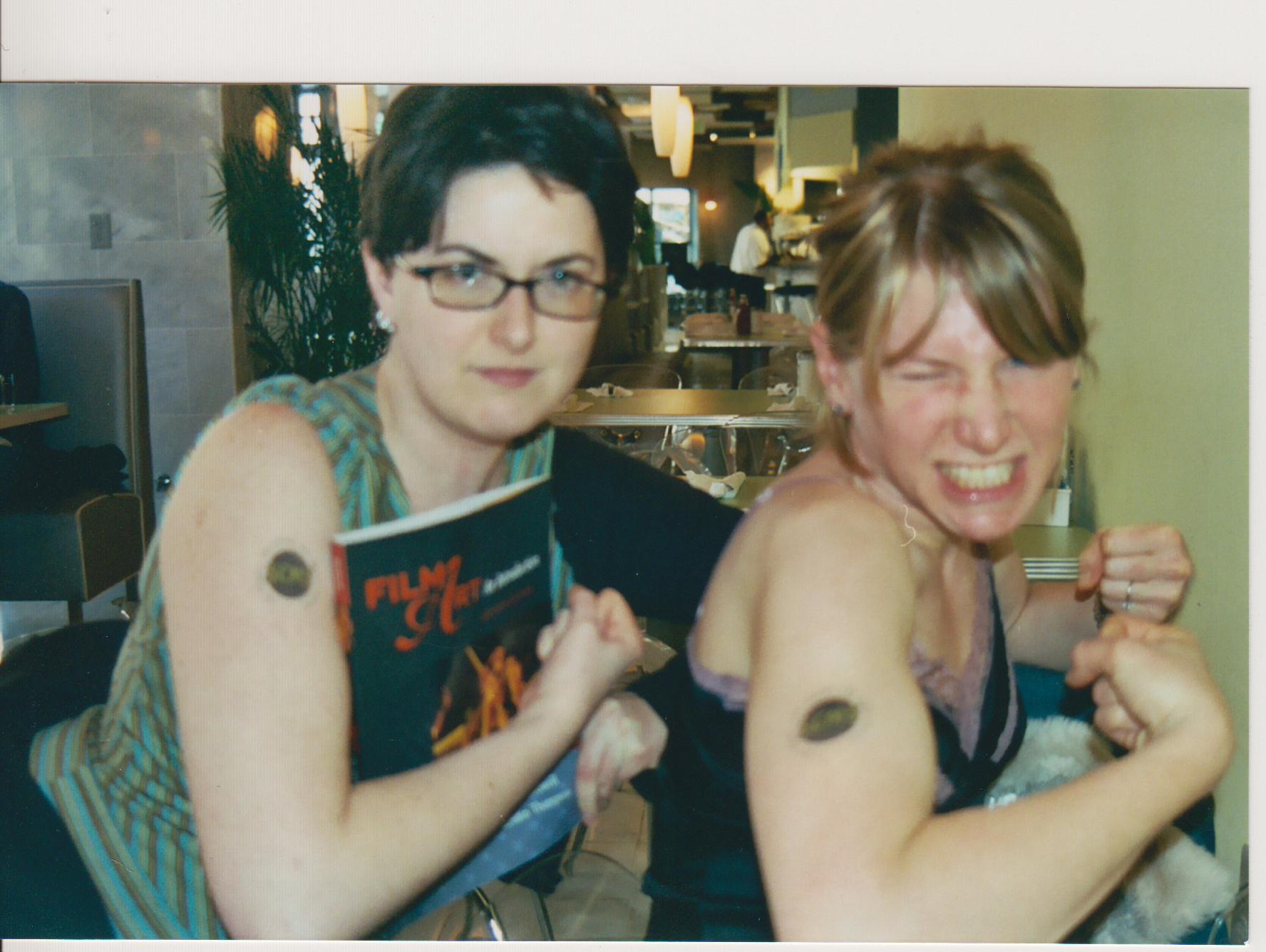
Last weekend I attended the Society for Cinema and Media Studies’ conference in Boston.* SCMS is certainly the largest conference in my field (this year’s conference featured 420 individual sessions across 5 days!) and while quantity rarely implies quality, I do think that some of the most vibrant and interesting work in the field of cinema and media studies can be found at this conference. It is certainly challenging for me to go out of town for almost 5 days in the middle of a busy semester. It is also expensive, tiring, and stressful. I’ve been home a full week and I’m still not caught up (good thing I’m making good use of my time by writing this blog post).
So why bother attending SCMS if it wipes me out for a week? The opportunity to present my work to professionals in my field and to hear them present their work is a major draw. But truthfully, the 4-paper panel format + 20 minute Q & A session is not my favorite way to engage with scholarship. As a visual learner I prefer to consume academic work as a reader rather than as a listener (in order to pay attention at a panel I need for all presenters to use clips, still images, or at the very least jazz hands, in their talks). For me, what is just as valuable as attending panels and taking notes, professionally speaking, is putting faces to names, shaking hands, and breaking bread with new friends. Some of the best ideas for current and future work and collaborations happens during the hastily constructed group dinner or the chance meeting in the hallway. Also, martinis.
I also enjoy attending SCMS because it serves as a makeshift reunion for my graduate school friends. That is reason enough to attend. In fact, last year my proposal was rejected (grumble grumble) and I still decided to attend SCMS 2011 because it was in New Orleans I wanted to see my University of Pittsburgh friends.

“But I’m talking about the Cathedral of Learning.”
“Then I can dig it.”
Of course, I also spent a lot of my time at SCMS talking with people who did not graduate from my alma mater. Where did I meet these people, who live on opposite coasts and even in other countries? Some of them I met through reading and commenting on their work in online journals/group blogs like Flow TV and Antenna. Some I met by way of their personal blogs. But I met most of them through Twitter. In fact, over the last two years I have enjoyed SCMS more than ever due to social media.
But I’m getting ahead of myself. Let me first demonstrate the difference between my most recent SCMS experience — where I spent time with graduate students and tenured professors, American and international scholars, and folks representing numerous facets of my field (TV studies, Film Studies, Media Industries, etc) — and my very first SCMS, in Atlanta (2004), where I spent my time with 4 people (all from Pittsburgh).
As I was preparing for my first conference I was advised by well-meaning professors and more experienced graduate students to “network” with people in “my field.” This was a terrifying suggestion because I was so new to “the field” that it really didn’t feel like “my field.” I was just peeking in through the windows. The only people I knew in were my classmates and professors. Everyone else existed on the spines of the books I puzzled over or as bylines in the lengthy journal articles I photocopied weekly at Hillman Library.

How can I “network” with people like Professor You-Have-Influenced-Everything-I-Ever-Wrote and Professor I’m-Cited-By-Everyone? To me they weren’t people, they were voices. You don’t talk to voices — you listen to them. So my first conference experience went something like this: attend panels, nod during the Q & A sessions but never (never ever) raise my hand to contribute, and, when the panels are done for the day, return to my Super 8 Motel room (which smelled of stale cigarette smoke and despair) and think about all of the cool stuff everyone else was probably doing at that very moment.

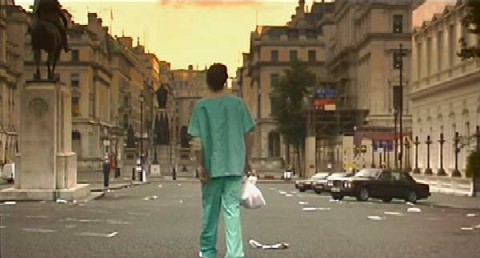
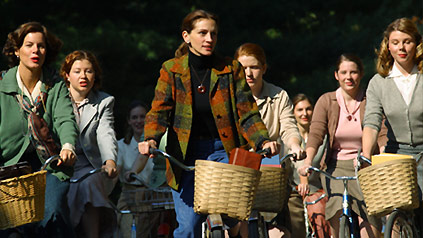
Don’t cry for me. I wasn’t alone. That year I attended SCMS with two graduate students from my program. We clung together like Kate Winslet and Leonardo DiCaprio, only without the death and hypothermia. One glorious night we sat in our motel room, on a dirty comforter that had actual cigarette burns in it, and watched Mona Lisa Smile (2003, Mike Newell). We ate chocolate cake and inserted our own dialogue. This is more fun than it sounds. We also booked our plane tickets back to Pittsburgh for a Sunday evening departure (what fools we were!) so we spent the last few hours of our trip wandering through downtown Atlanta, which was weirdly empty. At one point we wondered if we were the only survivors of a deadly virus that had decimated the city. Here are some of the actual pictures I took that day:
Let me clarify that my first SCMS was a positive conference experience. I delivered my paper without passing out, I attended some great panels, and my friends and I enjoyed making fun of “feminist” Julia Roberts. But fear of rejection prevented me from meeting anyone new.
Keep in mind that I am hardly a shrinking violet. In fact, I can be quite obnoxious outgoing when the mood strikes. But this exhibitionism is coupled with a crushing fear of rejection and anxiety about my own worth. In other words, I am a human. So the idea of approaching Professor You-Have-Influenced-Everything-I-Ever-Wrote after a panel was not a possibility. What was I supposed to say to her? Better to grin through her paper, ask her no questions, and then watch her exit the room with a group of equally imposing scholars and imagine the conversations they will soon be having at the hotel bar:
Professor You-Have-Influenced-Everything-I-Ever-Wrote: “Did you see that silly graduate student grining during my paper?”
Professor I’m-Cited-By-Everyone: “I did! I can tell she’s never read Deleuze.”
Together: [clinking martini glasses] “Isn’t it grand not being a graduate student!”
Note: Now that I am a professor, I know that professors do not get together and make fun of graduate students while drinking martinis. They drink gin & tonics.
While writing this post I asked fellow scholars in my field to share stories of their first SCMS. I learned that my confusing/ overwhelming/ anxiety-generating experience was not unique. Below is a sampling of their responses (names have been omitted to protect the innocent):
From a Visiting Lecturer:
“First SCMS, Philly, 2 years post defense. Wore make-up trying to be ‘professional’ — only remember washing the make-up off my face like an ashamed teenager hoping to not break out in hives. Shit, that story depresses me. I seriously remember nothing about that SCMS other than the miserable Greyhound experience and make-up.”
From an Assistant Professor:
“I don’t remember the year but it was in Chicago, maybe 2000, and it was easy enough to go there from Madison without giving a paper, just to check the conference out. I was a PhD student. I think the difference between then and now is mostly a matter of knowing lots of people, many of them old friends. The conference is more familiar, much more social, and less lonely now. But I also find it frustrating to see some friends for 10 seconds total and have no time to talk to them…To be honest I don’t remember my first SCMS that well, and they all blend together in my memory.”
From an Associate Professor:
“1996, my 2nd year of grad school (about to get MA), in Dallas, when it was resolutely SCS – no M. If you ask any fellow old-timer, they may remember it as the ‘Bio-Dome’ conference, as the hotel was on a highway intersection, where the only way out was via expensive taxi, and only walkable restaurants were overpriced hotel food, Dennys, or Quiznos…I mostly stuck to my tribe of grad students to drink & play poker in our rooms, couldn’t manage any sort of small talk with faculty whose work I knew, and pretty much was a quiet wallflower. (I guess that didn’t last!) I was mostly unimpressed with the presentations, which used almost no media (a few VHS tapes?), were almost all read papers, and generally felt very old-school film studies for us media & cultural studies folks.”
From an Assistant Professor:
“2006, Vancouver, ABD. I visited friends who had recently moved there (and had another friend from Washington state drive up), so I may have only gone to a couple other panels, if any. I totally stalked one of my favorite inspirational scholars and was floored when she gave me her card and said she’d be happy to talk with me. I remember being in awe just to be there and so impressed with my panel chair. I got to have dinner with my former graduate school director [and his wife], which was great. I really missed them when they left.”
From an Assistant Professor:
“My first SCMS was 1999 (West Palm Beach). I was in my second year of my Ph.D. program…I was struck by how little my panel-mates’ papers had in common with mine (the basic overlap was that we were all talking about the internet but one of the other presenters was talking about online activism…absolutely nothing to do with what I was talking about). I don’t remember anyone close from my cohort being there, so I was limited to my hotel roommate and his connections — so a couple of evenings of uncomfortable non-conversations. I remember also seeking out my professors at times and being very treated very generously by their willingness to introduce me around and take me to good panels. Mostly, I felt unworthy of being there.”
These testimonials are linked by similar emotions: fear, anxiety, confusion, the desire to do what is comfortable (stick with your friends), and lots of downtime in the hotel room. Is this arduous first-timer experience a problem that needs to be fixed? Not necessarily. Everyone feels anxious and uncomfortable when they start working in a new profession. The longer you work, the more people you meet, and the more comfortable you feel. In fact, this is what several people who responded to my request for first-time conference stories told me. For example, one Assistant Professor said: “The only thing that’s different for me [since my first SCMS in 2004] is the number of people I know at the event each year, and that’s simply a function of being older and having left grad school.” She’s right. Things do get better. And as Max Dawson pointed out in a blog post after last year‘s SCMS, this trial by fire might actually be beneficial in the long run: “I wonder what our field would look like if young scholars didn’t have to build their own support networks early on in their careers. Would bonds formed through sponsored networking events be as resilient and meaningful as the connections formed when you eat eight meals in three days with the same group of four people? Would I feel as comfortable asking a mentor assigned to me by SCMS for feedback on a project as I do asking the same favor of the friends I made while hiding out behind the potted plants during the SCMS Vancouver opening reception?” Is the crippling anxiety of the first conference a necessary evil along the path to success in academia? Possibly.
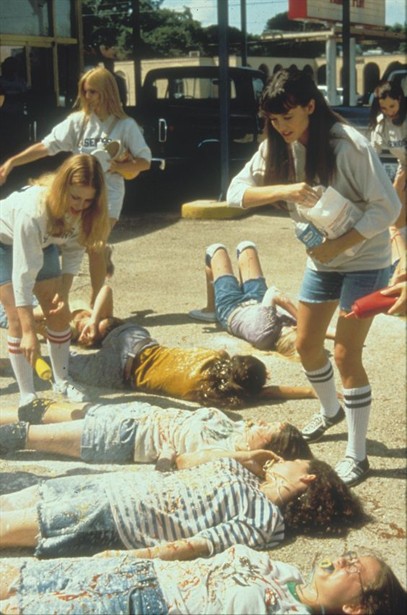
One dissatisfied PhD student explained to me: “Sososo [sic] many people said ‘it gets better,’ but a. what if it doesn’t? and b. so what if it gets better? Are we really buying into the idea that because it got better for you we shouldn’t try to change the way it continues to be for everyone else or at least newcomers?” She has a point: does she need to wait another 7 or 8 years to get the most out of this conference? Why even bother attending as a graduate student?
This same graduate student also said: “Sometimes [at conferences] I meet more new people to socialize with along with old friends, most often the people I meet are fellow grad students so the payoffs for developing these networks won’t become clear until years (perhaps many years) down the road. These people are all great, spending time with them is great! But… it doesn’t make me feel energized to be part of a community of scholars. It doesn’t make me feel mentored. It may encourage my work in some ways, but nothing immediate or dramatic. It’s all fine.” I, too, think it’s “fine” that this graduate student socializes primarily with other graduate students since these are the scholars she will collaborate with most often as she moves through her career. What is not fine is that she doesn’t feel like she is part of a community scholars and that she doesn’t feel mentored. I think that large field-specific conferences, like SCMS, should be able to provide both of these services to graduate students, either formally or informally.
There are ways to make a large, often terrifying social/professional event like SCMS (and make no mistake, events which combine the social and professional are the most confusing to maneuver) less intimidating, more useful, and more fun for junior scholars. Here are some (simple) things to do:
1. Get a Twitter Account

I know. Many of you want nothing to do with Twitter. You think it’s banal, narcissistic, and an excuse to disconnect from “real life.” So what are your criticisms? Seriously, Twitter is an amazing way to get to know (and like) a diverse pool of scholars in the field. Every day I chat with friends (yep, using the word friend here) about their classes, their scholarship, the TV and films they’re watching, their children/cats/pups, their dental surgery, and what they’ve having for dinner. Why are these “virtual colleagues” so crucial to a positive conference experience? Because an event like SCMS, with over 1300 participants (maybe more?), feels so much smaller when you can view so many other people as colleagues rather than as faces in the crowd. Many others share my view on this:
From an Assistant Professor:
“Member of SCMS since 2004; 2008 Philadelphia first conference, four years post-Ph.D. Didn’t submit proposal (weirdly self-conscious), but attended only a few panels and didn’t network beyond people I was already friends with. 2010 New Orleans (my first conference post-Twitter) was entirely different, since I felt more confident about networking w/ relative strangers. I really do credit Twitter with breaking me out of my academic shell. For all its faults, it’s now indispensable in my academic life. Quote this (awful drivel/dribble) if you want.”
From a first year PhD student:
“[I]t was great to meet you [she means me!] and other scholars I feel like I know very well online but hadn’t actually met ‘in person’… Being a UW student opens a lot of doors, as does having a fairly visible Twitter profile and online presence.”
From a Visiting Lecturer:
“…the conference was enjoyable because I knew people beforehand (via social media, of course). And it’s not just that I knew their names, academic affiliations, and fields of interest, but that I KNEW them — as people and friends. I know about their precious (but often pukey) children, un-housetrained doggies, frustrations with family members, favorite and least favorite TV shows, challenges in the classroom, etc. Because of this, we’ve a history and can (happily) skip all the formal introductions and (sometimes) forced pleasantries that often come with attending a conference. In brief, Twitter FTW!”
“I was fairly nervous about attending SCMS. While much of this nervousness was eased by having a built-in community through Twitter, I still felt occasionally out of place as a Master’s student at the conference.”
Don’t know where to start on Twitter? Follow me! No really, FOLLOW ME. My Twitter handle is @AmandaAnnKlein. Want more people to follow? Check out the the super “interactive web of Tweeters” on the SCMS website and follow the people whose handles are listed there — they are all active Tweeters, or at least they were during SCMS. For a more detailed account of my Twitter love, read my previous post on the subject.
2. Introduce People

You’re standing in the hallway chatting with a scholar, and another person waves and dashes over to say hello before dashing off somewhere else. But wait, before she dashes, introduce these two people! They may immediately forget each other but there is a chance that they will see each other again and, remembering that brief hallway introduction, say “hello again!” I became so accustomed to introducing people over the course of my 4-day stay at the conference that I found I was introducing people who already knew each other quite well. So yeah, I sometimes felt like a douchebag, but overall, I felt like I was connecting people. A PhD student I quoted above had praise for her professors at the University of Wisconsin-Madison, who took the time to introduce her to other scholars: “In general, the Madison folks take care of their own. I was introduced to several people by senior graduate students in my program and got better acquainted with junior faculty and graduate students I met at previous conferences.” These encounters had a positive impact on her conference experience.
3. Never Say “No”

This year there were a lot of opportunities to meet people outside of panel presentations and workshops. Go to the annual Grrrl’s Night Out! dinner. Join a special interest group (there are a lot) or caucus and attend their annual meeting at SCMS. Go to the new member orientation meeting (for an account of how this year’s meeting went, you can read about Myles McNutt’s experiences here). Or go to some of the more informal events, like SCMS karaoke (we had a great time).
Along the same lines: try not to decline invitations for meals or drinks with new people. Your brain might be telling you: “But you were going to take a naaaaaaap!” Tell your brain to shut up and go anyway. Informal conversations can lead to future conversations, collaborations, opportunities, and yes, even friendships. Just go.
4. Know When to Say “No”
I know I just said that you should go to as many events as possible and that you should say yes to every invitation extended to you. But, it’s also important to know your limits. Do you get anxious in social situations? Do you find it mentally taxing to meet new people? If so, make sure to schedule some alone time so you can decompress: take a nap, exercise, stare at the wall. But give yourself that time.
5. Senior Members: Be Generous

I’ll illustrate this point with an experience I had this year. I was heading out to lunch with a senior scholar I know and some of his colleagues. I was nervous because I didn’t know of these people and they all knew each other. As Senior Scholar introduced me to each new person he did not simply say my name and rank. Instead he said “This is Amanda. She just published a fabulous book on film cycles!” I was bowled over by this praise (we are so seldom praised in this field) and not only did it make me feel more comfortable around this new group of people, it made me feel like a valued member of the field (even if I’m not quite there yet). So when you’re introducing people: BE GENEROUS. It is always, always appreciated.
6. Make suggestions

Over the past few years it’s been clear that the SCMS board has been listening to feedback from its members regarding the format of the annual conference. The new member orientation, graduate student lounge, and the addition of conference-oriented blogs on the SCMS website are all responses to member feedback. If there’s something that isn’t working at the conference, offer some solutions. As for me, I would like to see more workshops offered at SCMS and more lunch breaks. It would also be great to have a few more on-site coffee/tea/muffin kiosks, which I think would encourage people to attend more back-to-back panels. Caffeine and refined sugar = engagement.
Lots of folks would also like SCMS to help facilitate a formalized form of mentoring. I have been told that some of the caucuses currently have or are working on getting a mentoring system in place. But it would be nice to have a mentoring system available to all graduate student members of SCMS. I’m not sure how this would work but I’m envisioning something along the lines of this: professors who are willing to mentor submit their names, areas of study, and the days they plan to be at the conference to a designated coordinator. People who want to be mentored do the same. The mentee then gets matched with a mentor in the same area of study who will be at the conference on similar days. They must commit to one face-to-face meeting at SCMS and the mentor must also be willing to answer follow up questions (within reason) from the mentee over e-mail once the conference is over. This system would be especially helpful for students who attend SCMS as the sole representative of his/her graduate program — students who are basically at SCMS on their own. These are the students who are most in need of good mentors. Finally, I would like champagne fountains to be placed in all the women’s rest rooms. Make it happen, board of directors.
So why did I just devote almost 4000 words to the subject of socializing at an academic conference? Because I like martinis? Sure. But I also believe that we are more than a “field.” We’re a community. And when we are gathered as a community at a major conference (whether it is SCMS, MLA, NCA, CSA, etc) I think we have a duty to make these gatherings as welcoming and productive as possible. Am I saying that we need to hold everyone’s hand and pat their heads? No, though I enjoy a good pat on the head. But I think we can all do better.
If you have any other suggestions for ways to make large conferences like SCMS more friendly, useful, mentorly (is that a word?), and enjoyable for newcomers, please list them below. I’d also love to hear about your “first time,” particularly from graduate students (since I was only able to get 3 graduate student responses for this post).
* For those who are unfamiliar with the Society for Cinema and Media Studies, let me be lazy (but accurate!) and cut and paste their mission statement below:
The Society for Cinema and Media Studies is the leading scholarly organization in the United States dedicated to promoting a broad understanding of film, television, and related media through research and teaching grounded in the contemporary humanities tradition.SCMS encourages excellence in scholarship and pedagogy and fosters critical inquiry into the global, national, and local circulation of cinema, television, and other related media. SCMS scholars situate these media in various contexts, including historical, theoretical, cultural, industrial, social, artistic, and psychological.SCMS seeks to further media study within higher education and the wider cultural sphere, and to serve as a resource for scholars, teachers, administrators, and the public. SCMS works to maintain productive relationships with organizations in other nations, disciplines, and areas of media study; to foster dialogue between media industries and scholars; and to promote the preservation of our film, television, and media heritage. We encourage membership and participation of scholars and those in related positions not only in the US but around the world.
THE WONDER YEARS, Involuntary Memory, and Mourning

In 1988 I was 12 years old. I was a 6th grader at the Susquehanna Township Middle School. I lived in the suburbs. I had never kissed a boy. I wore giant Sally Jesse Raphael-style glasses and every day was a bad hair day. In other words, I was a pretty typical 12-year-old kid.
Therefore, despite our gender differences, I felt a strong kinship with Kevin Arnold (Fred Savage), the protagonist of The Wonder Years. Kevin was also a typical 12-year-old kid: he was alternately moral and selfish, brave and cowardly, kind and cruel. He knew better than to question his parents and teachers, but he did it anyway, and suffered the consequences. He had an older brother who tortured him and a father who worked a lot and said very little. He was grappling with an adult world he only partially understood, but felt its ramifications as strongly as any adult. Kevin was me, only in a boy’s body.

If you are unfamiliar with this program for some reason, The Wonder Years was a 30 minute comedy/drama that ran on ABC from 1988-1993. The series opens in 1968, when protagonist Kevin Arnold (Fred Savage) is starting junior high. Throughout the series Kevin’s personal coming-of-age story runs parallel with America’s very different, public coming-of-age story. As Kevin becomes more of an adult, America is also coming to terms with a new kind of adulthood: Vietnam, 2nd wave feminism, the Black Power movement, hippies, free love, a man on the moon, you get the picture. In episode 4, “Angel,” Kevin’s older sister, Karen (Olivia D’Abo), introduces the family to her radical boyfriend, Louis (played by a very young, very handsome John Corbett). Kevin takes an instant dislike to Louis because he makes out with his sister on his parents’ lawn (gross!) and because, as Kevin’s voice over explains: “I don’t know what it was about Louis that I didn’t like. Guess there was something about him I didn’t understand.” Here we catch a glimpse of Louis’ spray-painted VW van, with the words “Somethings Happening” scrawled on the door. To Kevin, those words were ciphers, shorthand for a movement that he was too young to comprehend. Louis and his leather vest and VW van were something, to use Kevin’s words “that [were]…taking my sister away from us.”
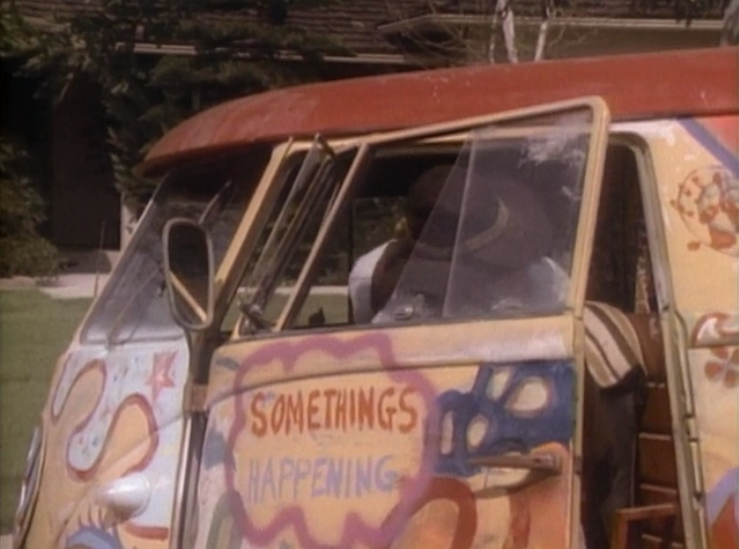
When I watched this episode at age 12, those words were also meaningless to me. A spray-painted van and long hair signified “hippie,” but I didn’t actually know what a hippie was. To me, “hippie” was a costume worn at Halloween rather than a representative of a political movement. What I didn’t know then is that in 1968, a younger generation was beginning to question the way the world worked. They saw their parents as sleep walkers, as drones who had yet to be enlightened about “what’s going on.” For example, in the same episode Louis has dinner with Kevin and the rest of the Arnold family. When Norma (Alley Mills), Kevin’s mother, mentions that the son of a family friend was recently killed in Vietnam, a heated conversation ensues. I am quoting this scene at length because it is a testament to both the pitch-perfect writing of this series and the respect it has for its characters. No one is a caricature and no one is a “symbol” of his or her generation:

NORMA: One of the boys on our block was killed in Vietnam several weeks ago.
LOUIS: Oh, I know. I mean, uh, Karen told me. Another meaningless death.
JACK: I beg you pardon?
LOUIS: I just meant that…it’s just a shame, uh…a kid has to die for basically no reason.
NORMA: More broccoli, anyone?
JACK: I don’t think it’s meaningless when a young man dies for freedom and for his country.
LOUIS: I just have a little trouble…justifying dying for a government that systematically represses its citizens.
NORMA: Oh, honey. Try the potatoes – I put grated cheese on them.
JACK: What the hell is that supposed to mean?
KAREN: It means the United States government is responsible…For the oppression of blacks, women, free speech…
JACK: Well perhaps, little lady, you’d like to go live in Russia for a little while…
LOUIS: Oh, uh…I think what Karen is saying is that –
JACK : Look, buster! I happen to believe that freedom and democracy have certain advantages that Communist dictatorships don’t, and that is what Vietnam is all about!
LOUIS : No, man, that’s what they brainwash you to believe it’s all about.
JACK: So…you think I’ve been brainwashed, do you, Louis?
LOUIS: No. No. Look… I think anyone…who supports the American war effort in Vietnam…[shrugs]…is having the wool pulled over his eyes.
JACK: I see…
LOUIS : Just like they did with Korea.
JACK: [getting angry] What the hell do you know about Korea? I was in Korea. I lost a lot of good friends there.
KAREN: Daddy, that doesn’t have anything to do with what we’re saying.
JACK : And they weren’t brainwashed! They were brave men who weren’t afraid to fight for what they believed in. Now if you’re afraid to fight – why don’t you just say so?! Why don’t you just admit you’re chicken?
LOUIS: You’re damned right! I am chicken. I don’t want to die like your friends! What do you think that you achieved over there? Hmm? Do you think that those people are free? They’re not free, man.
JACK: That’s crap!
LOUIS : You were used, man, and your friends were used.
JACK : That’s crap!
KAREN : Daddy, you never listen to what we say! Some of what we say is true!
LOUIS: Don’t accept all this death and then justify it. It is wrong! Your friends should be alive – they should be…[gestures]…enjoying dinner, and arguing with their kids, just like you are.
JACK: What do you know about it?! Who the hell are you to say that?!
When I watched this scene in 1988, I don’t think I understood the nuances of the argument. I saw it much the same way that Kevin sees it: one more fight in a long string of fights that he has witnessed between his sister and his parents.
But recently my husband and I began rewatching this series (it’s streaming on Netflix RIGHT NOW) and I was struck by the honesty of this scene. It would have been easy to make Jack an out-of-touch defender of the old guard holding on to his ideals, even as he sees them crumbling around him. Yet, Jack is sympathetic here and so is his point of view: He fought in Korea. He served his country. Now he is enjoying his reward (or trying to): a comfortable home in the suburbs with his wife and children. When Louis, who could also come off as a radical caricature but doesn’t, begins to poke holes in Jack’s worldview, there is a sadness there. Louis is not enjoying this argument. You can feel that Louis is angry, which we expect, but what I love about this scene is that it also legitimizes Jack’s anger. When he snaps, “What do you know about it?! Who the hell are you to say that?!” you can feel the rage and betrayal of Jack’s generation. How does this hippie know anything about the way the world works? Where is his authority to speak? And why is his hair so damn long?

This scene was just one of many that has resonated with me in new ways since I began rewatching The Wonder Years, some 24 years after it first aired. This experience has resulted in a doubled viewing position. On the one hand, I am watching as a 35-year-old and so the historical and cultural touchstones that I missed when I was 12 (the changing meaning of the suburbs in America in the 1960s; the anti-war movement; the students protests of 1968; The Feminine Mystique) are suddenly visible and significant. But at the same time, as I watch, I am still watching as a 12 year old.
When I sat down to watch the pilot episode a few days ago, and the opening credits began to play, I felt crushed, not by nostalgia, but by the weight of being 12. Those credits, a faux-scratchy home movie of Kevin Arnold and his family enjoying their last days of innocence, were etched onto my brain so that each frame was a surprise and a memory.
This experience was like reliving entire pieces of my adolescence (complete with the attendant emotions) while simultaneously having the ability to contemplate these pieces of my youth from the detached perspective of an adult. When I was 12 I so strongly identified with Kevin Arnold that when Winnie Cooper walks up to the bus stop in the pilot episode, having shed her pigtails and glasses for pink fishnet stockings and white go-go boots, I too, fell madly in love with her. Even at 35 I was hit by that excruciating longing and terror so characteristic of 12-year-old desire. I was in the past and the present at the same time. Here is the scene below (start watching at the 1.30 mark):
Because of this doubled viewing position, revisiting The Wonder Years has been therapeutic for me. You see, almost three months ago, my father died. I will not say that he “passed away” since this term implies a softness, like falling asleep or slowly vanishing. Death can be like this, but this was not my experience of it. And when I returned to my regular life, after the funeral and the sad faces and the conversations I didn’t want to be having, I encountered a steady stream of condolence notes, tentative e-mails, and awkward conversations with well-meaning colleagues about my winter break. One condolence note in particular stood out to me. Here is what it said:
“My Dad died when I was 30. I remember being surprised at how his death could make me feel like a child again.”
This note made me think about my experiences sitting in my father’s beige hospital room with my mother and brother. As we sat there together I realized that it had been almost a decade since the four of us had been alone together; no spouses, no children, no reminders of the lives that we had built apart from the original family unit. Whether we liked it or not, the three of us were transported back to an earlier time in our lives and into roles we had long since abandoned. I was once again a daughter and a sister rather than a wife and mother. I suddenly felt like a child again.
Perhaps this is why, some three months later, I have been finding so much comfort in the past: looking through old photo albums, creating Pinterest boards chronicling my youth, and yes, rewatching shows from my childhood, like The Wonder Years. This choice is fitting, in a lot of ways, since almost every episode of The Wonder Years contains a shot, or an entire scene, that focuses on the Arnold family watching television. These scenes focus on iconic TV moments, of course, such as when Kevin and his family watch the crew of the Apollo 8 orbit the moon:

But we also see the family in more mundane television-viewing scenarios. The TV is a way for the family to bond and a way for them to escape from each other. In the pilot Kevin even addresses the primacy of television after experiencing one of the most important landmarks of his adolescence: his first kiss:
“It was the first kiss for both of us. We never really talked about it afterward. But I think about the events of that day again and again. And somehow I know that Winnie does too, whenever some blowhard starts talking about the anonymity of the suburbs or the mindlessness of the TV generation. Because we know that inside each one of those identical boxes, with its Dodge parked out front and its white bread on the table and its TV set glowing blue in the falling dusk, there were people with stories, there were families bound together in the pain and the struggle of love. There were moments that made us cry with laughter, and there were moments, like that one, of sorrow and wonder.”
These words are a defense of suburban life with its “little boxes made of ticky tacky,” but they are also a defense of television watching itself. Kevin argues that although his generation seems to be living in identical houses and watching indentical shows on their indentical TV sets, that doesn’t mean that their experiences of the world aren’t unique, meaningful, and real. For Kevin, TV doesn’t detract from his reality. It is a meaningful part of his reality. Mine too.
***
When people write about a moment in the present sending them back in time, they almost always cite Marcel Prousts’ seven volume novel, Remembrance of Things Past (1913-1927). There’s a reason for the ubiquity of Proust quotes in writings about memory: the dude nails it. So here’s Proust talking about how eating a madeleine cookie and a hot cup of tea generated an “involuntary memory”:
“No sooner had the warm liquid mixed with the crumbs touched my palate than a shudder ran through me and I stopped, intent upon the extraordinary thing that was happening to me. An exquisite pleasure had invaded my senses, something isolated, detached, with no suggestion of its origin. And at once the vicissitudes of life had become indifferent to me, its disasters innocuous, its brevity illusory – this new sensation having had on me the effect which love has of filling me with a precious essence; or rather this essence was not in me it was me. I had ceased now to feel mediocre, contingent, mortal. Whence could it have come to me, this all-powerful joy? I sensed that it was connected with the taste of the tea and the cake, but that it infinitely transcended those savours, could, no, indeed, be of the same nature. Whence did it come? What did it mean? How could I seize and apprehend it?…”
Rewatching The Wonder Years is performing the same spell on me as Proust’s madeleine did on him. Take for an example, the episode, “My Father’s Office,” in which Kevin attempts to understand why his father is so tired and grumpy when he comes from working his job as a middle-management drone in an ominous sounding place called NORCOM. After asking his father a few questions and receiving only unsatisfactory answers, Kevin agrees to go to work with him for the day. He sees that his dad has a lot of power, which makes him proud, but that he must also answer to a needling boss, which embarrasses him slightly. Over the course of the day, Kevin comes to understand that the trials his father endures everyday have nothing to do with being his father. He also learns that his father once wished to be a ship’s captain, navigating his vessel by watching the stars. This blows Kevin’s mind.

The episode concludes with Kevin joining his father in their yard to look at the stars. Up until this point, star-gazing had been something Kevin’s father did alone, when he was angry or frustrated. Kevin often watched him do this through the window with a mixture of curiosity and fear. But at the end of this episode, Kevin joins his father and they share this experience while strains of “Blackbird” play on the soundtrack.

Of course, as Kevin points out, understanding comes with a price: “That night my father stood there, looking up at the sky the way he always did. But suddenly I realized I wasn’t afraid of him in quite the same way anymore. The funny thing is, I felt like I lost something.” I’ll admit that at age 12 I did not quite understand the meaning of Kevin’s epiphany (he always concluded the episode with an epiphany well beyond his young age). I, too, had a hard time seeing my father as a “real person” but I didn’t see why such an understanding would also be a loss. In fact, it has only been in the last few years, as I’ve watched my father’s body deteriorate and his attendant anger and humiliation, that I understood what Kevin Arnold meant. He meant that when we are able to see our parents as something other than a servant of our needs, our relationship with them changes. Once we realize that our parents have feelings and desires that have nothing to do with us, we understand them better. They become people, rather than parents. But we also lose a piece of our childhood once we gain that understanding. This is a loss that needs to be mourned. And sure enough, as the credits rolled on “My Father’s Office,” I cried.

Over the last few months, I have been stumbling through my own grief. I thought it would move in a straight line, but it moves in circles, disappearing and returning. When the grief moves away, I enjoy the freedom and respite. But when it circles close I try to grab it and confront it. It may sound strange, but the involuntary memories evoked by The Wonder Years are helping me to work through my grief and bring it close. Proust writes:
“But when from a long-distant past nothing subsists, after the people are dead, after the things are broken and scattered, taste and smell alone, more fragile but more enduring, more unsubstantial, more persistent, more faithful, remain poised a long time, like souls, remembering, waiting, hoping, amid the ruins of all the rest; and bear unflinchingly, in the tiny and almost impalpable drop of their essence, the vast structure of recollection.”
The Wonder Years is filled with such remembrances, structures of feelings I have long forgotten and which I doubt I could access in any other way. We all mourn in our own ways and in our own time. For now, I think, I’ll take my mourning in 30 minute journeys to my past, when my parents were both still my “parents” and when I had not yet become a parent myself. For some, nostalgia can be toxic and overwhelming but for me, right now, it is as comforting as a plate of madeleines, a cup of hot tea, and a seat on the couch in front of the glowing box.

My Mom’s 2012 Oscar Picks

My parents believed that children who got straight As and attended Ivy league schools had only two possible future professions: doctor or lawyer. That’s what they owed society. So when my parents saw 10 graduate school applications neatly laid out on the diningroom table during the fall of my senior year of college, they can be forgiven for asking, in hopeful tones “When do you plan to take the LSAT?” It took my parents years to get over this. You can imagine how excited I was when my mother developed an interest in the cinema, the focus on my PhD.
Her cinephilia started not too long after an independent theater, The Midtown Cinema, opened up in her city (which also coincided with her retirement from politics). There she could go and see “art” films like Mulholland Drive (2001, David Lynch) in their initial release. She also got into the habit of calling me after going to see one of those art films — because if I wasn’t going to be a doctor (meaning, the “real” kind), then at least I could help her understand what the hell was going on in Adaptation (2002, Spike Jonze). That was a fun conversation.
I am always impressed that my mother wants to discuss the films that challenge her. For example, after going to see Inception (2010, Christopher Nolan), she left the following message on my voicemail: “Honey, your father and I just saw Inception. We have A LOT of questions.”

Perhaps the best thing about my mother’s cinephilia is her pithy, honest responses to them. Her critiques generally match up with what the professional critics have to say. And she sees enough of the new releases to have a solid understanding of the contemporary cinematic landscape. She can tell when a film is being manipulative (like War Horse [2011, Steven Speilberg]) and when it is being subtle. Her one blind spot is experimentation. My mother doesn’t like films that are “too weird” or that steer too far away from conventional cinematic language. For example, she really enjoyed The Artist (2011, Michel Hazanavicius), which, with its lack of sound, can certainly be labeled as “experimental.” But she hated Tree of Life (2011, Terence Malick). We have discussed her hate for this film on several occasions. I think she is actually mad at Terence Malick for making this film and for luring her into the theater to see it.

For the last few years my mother has also made a point of trying to see all of the films nominated for awards. In fact, there are many Oscar seasons when she has a far more informed opinion of the year in film than I do. Therefore, I thought it would be interesting to have my mother, amateur film buff, give you some of her 2012 Oscar picks. I sent her a list of questions via e-mail, and then I called her and we discussed them.
Before we get to the interview, allow me to tell you a little bit about my mother, in order to contextualize some parts of our conversation. She is 69-years-old, born and raised in Pennsylvania. She received her BA as well as her MA in education from Shippensburg University. When she first moved to Harrisburg as a young, single woman, she taught public school, but quit teaching when I was born. Then, when I was about 8 years-old she ran for Register of Wills in Dauphin County, a position she held for 4 years. After that she was a Dauphin County Comissioner for 12 years. My father, who she was married to for 43 years, passed away over the holidays, so she is also a recent widow. My mom wanted me to add that she has “two wonderful children” and “four beautiful grandchildren.” So there you go.

Below is a transcript of our conversation, with my questions appearing in bold-face. The portions of the text appearing in brackets are my later additions/corrections to the interview.
Which of the films nominated for Best Picture Oscars have you seen so far?
I’ve seen every nominee except for Extremely Loud & Incredibly Close (2011, Stephen Daldry), Hugo (2011, Martin Scorsese), and Moneyball (2011, Bennett Miller).

Out of the Best Picture nominees, which films were your favorite? And can you tell me why these films were your favorite?
The film that I thought was the best was The Artist. It was just incredibly watchable even though it was a silent film. It was very unique in the way it was done, with a little bit of sound but mostly silent. It was just fascinating to watch. I loved it.
Did you think going to see a silent film would not be enjoyable?
I don’t think I would have gone to see it at all if I hadn’t read the reviews. It didn’t sound appealing. Although I do prefer subtitles because of my hearing problem.
You mean intertitles? Yeah, it’s probably better for you if you can read the dialogue.
A lot of my friends weren’t interested in seeing [The Artist] at all. So I’m glad it was playing in Greenville when I was visiting you.
And why weren’t they interested? Because it was silent?
Yeah they just thought it was too weird to go in and watch a movie like that.
Now you also told me about how much you liked The Descendants (2011, Alexander Payne).
Yes. But as far as Best Picture, The Artist was special. It will definitely win the Best Picture award. [she pauses] But I’ve been wrong before.

Out of the Best Picture nominees, which films were your least favorite? Can you explain why?
My least favorite was Midnight in Paris (2011, Woody Allen).
Me too.
I didn’t like it at all. Do you want to know my second least favorite is?
First I want to know why you didn’t like Midnight in Paris.
It was very disjointed. It went back and forth in time so much that it lost me. I thought the acting was terrible.
Who did you think was terrible?
The guy. Whatever his name was. I didn’t like him.
[she is referring to Owen Wilson]
It was almost a tie for me with Tree of Life. I just didn’t care for [Tree of Life] at all.
[we both start laughing]
Did you ever see it?

Yes, I saw it last weekend.
What did you think?
I liked it.
I didn’t like it. I think the film made me very uncomfortable.
How so?
It was such a depressing film because of the character played by Brad Pitt. I was constantly feeling sorry for the children and the wife. And that whole surreal scene on the beach? Where they were all going wherever they went? That was strange.
What about the first 15 minutes of the film? Where the director shows the evolution of life on Earth? What did you think of that?
Totally lost me. Went over my head. Wasn’t for me. That is never going to get Best Picture. Ever.
When I was watching the beginning of Tree of Life, I knew to expect that kind of opening because I had read about it. As somebody who went in to see that movie, and wasn’t expecting 15 minutes of almost abstract images and no plot or characters, what was that like for you?
I wasn’t expecting it. I just didn’t get it. It was just uncomfortable. I didn’t care for it. It was a film without any light moments. I really firmly believe that a director has to have a little bit of brightness in a movie. It can’t be all depressing and weird.
[we laugh]
Even The Descendants — with that serious topic — there were several really funny, light moments that made the viewer relax a little bit. I don’t think a film should be all of one type…I don’t know how else to express it.

Which actors, in your opinion, gave the best performances?
Definitely George Clooney. I love the way — and I’m not a fan of his — but I loved the way it was such a real performance as far as a father dealing with two young daughters, and what they were feeling with their mother in a coma. And then his wife, who was in a tragic accident, dealing with that. And dealing with his business. It was extremely believable. And then his reaction when he found out his wife was having an affair.
And he did provide the sadness, and the very deep part of the whole film — making the decision to let this poor soul pass away [she is referring to the character who is on life support]. And at the same time he finds a relationship with his girls.
Did you find that you related to George Clooney’s character, given that you were faced with with an eerily similar situation back in December? Did you find any parallels?
No. Not really. I didn’t shed a tear like you did.
[correction: I cried for the duration of the film]
Watching this film and watching how another family dealt with the same situation… It was sort of comforting in a way, in the way the doctor told him [that his wife would never wake up]. They didn’t hesitate. They had to do it.
Did that make you feel better?
Yeah. In a way. Now what about best actress?
Who is your pick?
Absolutely Meryl Streep. If she doesn’t win, I give up. That’s ridiculous. I mean she was just…did you see it?
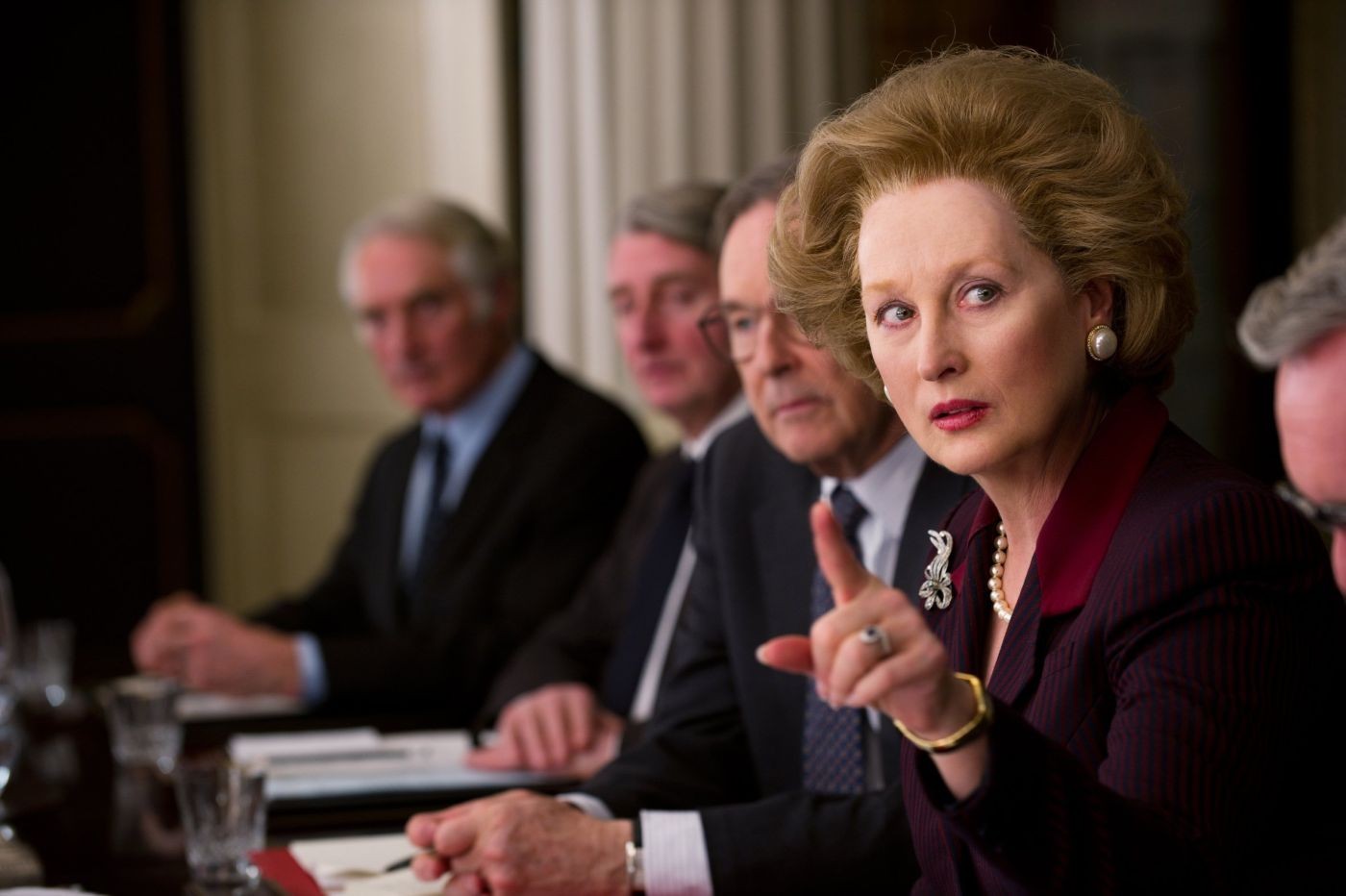
No. I haven’t seen it.
Well, she is the Iron Lady. You know, there was a lot of criticism about portraying this woman in her later years, when she had dementia, not when she was in top form.
But I thought it was very difficult to play the role as [Meryl Streep] did. Because the times she was in the public eye, she had to act normal and then she’d go home and be sitting on the couch talking to her husband, who wasn’t there.
Did you relate this character in any way? Since you were also a woman who held public office?
No, because I don’t have Alzheimer’s.
[we laugh]
One of my favorite parts was a flashback where she was interviewed and wearing this hat. After it was over her consultants told her she had to get rid of the hat. And she was “Why should I?”
[note: here my mother attempts to imitate Merly Streep imitating Margaret Thatcher but she sounds more like Meryl Streep imitating Julia Child. Yes, it is awesome]
I can remember those kinds of meetings. Like remember when I went to one of your softball games while wearing a suit and heels?
I don’t remember that.
Afterwards there was this was a poll in the newspaper. And some woman said I was “uppity” because I wore a suit and heels to my daughter’s softball game.
WHAAAAAT?
But I was talking to Dr. Garcia [my friend’s father] at that game and he was wearing a tie and jacket.
Oh my Gawd!
Mmmm hmmmm.
Is there anyone who was not nominated for best actor/actress or best supporting actor/actress who you feel was snubbed? I know you said you were angry that Leonardo DiCaprio was snubbed for his performance in J. Edgar (2011, Clint Eastwood).
Well after all the years of watching him and being such a fan of his incredible acting…I think his problem is — and this is just my opinion — I think he’s just too good-looking.

Well then what about George Clooney and Brad Pitt?
Right. I don’t get it. There have been actors in [Leonardo DiCaprio’s] situation. For example, Paul Newman never won an Academy Award. Fabulous actor. Great stuff. Cat on a Hot Tin Roof (1958, Richard Brooks).
[correction: Newman won the Oscar for Best Actor in 1987 for The Color of Money (Martin Scorsese)]
And the other one was, what’s his name? He does the Sundance stuff?
Robert Redford? Has he never won an Oscar?
He’s never won. Neither of them.
[Note: she is correct about Robert Redford, who has never won an Oscar for his acting]
I don’t know what’s going on with Leonardo. Frankly, when you look at Titanic (1997, James Cameron), what’s-her-name won Best Actress for that film. I think he was nominated and didn’t win, which is absolutely insane. I mean he was that film.
[correction: Kate Winslet was nominated and didn’t win. Leonrado DiCaprio was not nominated for Titanic. But I don’t think this invalidates my mother’s point. Kate was recognized, Leo wasn’t.]

Well, you also have a crush on Leonardo DiCaprio.
Yeah, I do.
And then in J. Edgar, I’m hoping you get to rent it, because he was magnificent in that film.
What made his performance great?
Because first of all, he became J. Edgar Hoover as you watched it. Number two, he showed this incredibly strange side that he had — this very manic thing he had with the law. But then, the film didn’t really come out and say that he was gay…
But it was implied…
There was this scene, where [J. Edgar Hoover and Clyde Tolson] are together and J. Edgar says “I think I have to get married.” And the other guy, I forget his name [Tolson], just goes beserk. They had this fight and start rolling on the floor, and then they kiss. And J. Edgar is absolutely furious about the whole thing. But that’s the way it was in those days. Whether he consummated an affair with that guy, nobody knows for sure.
The problem with the film, and I was very disappointed with Clint Eastwood because he is such a superb director, but I was disappointed with how [Leonardo DiCaprio] was young, then old, then young, then old…I didn’t like it.
Well, thanks for talking to me about movies, Mom.
I’ll get to read this?

So what do you think of my mom’s picks? Will The Artist win? Was Tree of Life simply “too weird”? Does anyone else’s mom have a crush on Leonardo DiCaprio?
Nota Bene #3: Cruising with Kate Gosselin

This is real, dear readers. Kate Gosselin, former star of Jon & Kate Plus 8, and more recent star of the “Celebrity Plastic Surgery Gone Wrong” section of your favorite tabloid, is partnering with Royal Caribbean to give vacationers the cruise experience of a lifetime! The cheapest cabin on this cruise is $3,000 and the priciest is $5,500. That doesn’t include the roundtrip airfare to the port of embarkation, 7 days worth of booze, and mandatory tips for the various staff who will be shoving complimentary ice cream sundaes in your face 24-hours a day. And you’ll need someone to watch your cat while you’re gone. That’s gonna cost you too. Especially when your cat finds out why you’ve abandoned her for 7 days and 7 nights (hint: pee in shoes).
It’s not that I doubt that there are people out there who would like to meet Kate Gosselin, or at least see her in person. If Kate Gosselin was coming to the Greenville Olive Garden, I would most definitely drive across town to see her. I’m a gawker by nature. I might even wait in a line to see her. Especially if there was the promise of endless breadsticks and salad afterwards.

What I doubt is that there are enough people to fill a cruise ship who have 1. the desire to meet Kate Gosselin and 2. several thousand dollars of disposable income. But clearly some vacant-eyed minion in Kate Gosselin’s employ must have gotten on the blower, done some canvassing, and found out that YES! there are in fact at least 3,000 people willing spend a lot of money to “learn a new craft” with Kate Gosselin somewhere in the Caribbean. Kate makes amazing crafts.
Who might these people be? I imagine these are people who have worked very hard to create a nice nest egg for themselves, one that they’ve been squirreling away for a big splurge. They are willing to spend this money on a worthwhile venture — something the whole family can enjoy. I imagine a mother of three young children, a woman who still believes that Kate Gosselin is her former self, a domestic super hero who manages to “do it all.” She does not see Kate Gosselin’s current self: a strung out fame addict making due with celebrity cruise ship gigs (which, if you didn’t already know, are the methadone of fame fixes, followed only by state fair appearances). I believe this target consumer is a generous, good-hearted woman. She thinks that Kate Gosselin got an unfair shake when her marriage to fell apart in front of the reality TV cameras and what was poor Kate to do but scramble for more TV gigs in order to make ends meet while her lazy, good-for-nothing ex-husband shopped for Ed Hardy T-shirts and had sex with young women who should know better? Lancaster county private schools don’t pay for themselves. And neither do unlimited sessions at The Sunshine Factory.

Yes, the ideal passenger on the Kate Gosselin cruise is a woman who doesn’t like to gossip, but enjoys reading gossip rags. When the cover of US Weekly proclaims “Angie is Pregnant!” she believes them and wishes the best for Angie. She owns several products featuring the “As Seen on TV” sticker. They have to work. Why would Ron Popeil lie?


This woman sees the Kate Gosselin cruise as a chance to play “fun family games with Kate and staff,” no doubt envisioning being tethered to Kate in the 3-legged race or possibly depositing an egg, ever-so-gingerly, onto Kate’s awaiting spoon. I imagine this mother has twins, just like Kate, or possibly triplets or quadruplets (but definitely not sextuplets because then this woman would also have her own show), and that’s why she identifies with Kate in the first place. She understands why Kate was so frazzled — why she barked at her children and needled her husband. She’s done that too. Having multiples is tough.
This woman might be a stay at home mom (but only temporarily, just until the twins are old enough for school) and the days are long. Some days she wonders why she keeps wiping crumbs off of the counter top after breakfast, knowing that they’ll reappear again, like magic, after lunch. She wonders why she bothers changing her clothes before loading the triplets into the minivan and heading to the grocery store. After all, she’ll be wearing her winter coat — no one will see the dribbles of coffee on her chest or the dried rice cereal clinging to the cuffs of her sleeves. But there’s always the chance. She brushes her hair, too, and puts on a little lipstick even when she knows she’ll be at home all day, just her and the quadruplets. Grooming’s important. Because you just never know who might show up at the door while you’re sitting there, not wearing any lipstick. She and Kate understand this.

She’s sympathetic to Kate and her Botox and her hair extensions and her tummy tucks. She wouldn’t mind getting a tummy tuck herself. Who wouldn’t? She plans to tell Kate all of this at that “private BBQ on deck with Kate and a fabulous band.” She’s thinking that “private” sounds nice. Maybe she and Kate will share their birth stories. Hers is a real doozy — 40 hours, no epidural. Not even a valium. She practiced her visualization and guided imagery ahead of time, thinking of her uterus as a flower slowly opening, just as her Bradley method teacher instructed. Not many women can do that. Maybe they’ll stand together at the railing, this target consumer and Kate, looking out at the ocean, quoting Titanic (“I’m king of the world!”). “Yes,” she thinks, “this could be the family’s summer vacation. Pricey, yes. But we can swing it.” And won’t it be nice to get a “A commemorative personalized gift from Kate” (one per family)? The gift will be personal because Kate understands her, just as she understands Kate.
I understand this woman, too, because part of her is me. And I think this woman deserves better. She deserves to use that $5,000 nest egg on something real and tangible — not a staged photograph with a curt former reality TV star. But she enters her credit card information. She understands the ticket is non-refundable. She’s going to meet Kate Gosselin. It’s worth it.
Nota Bene # 2: Brief Notes on THE HELP
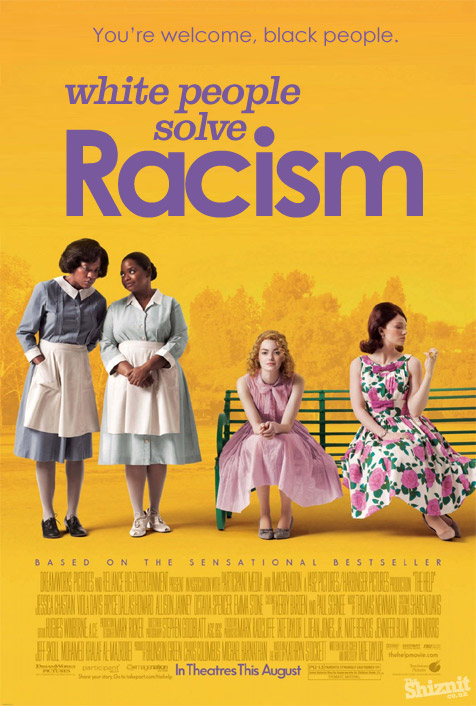
Recently I was asked by a colleague who runs East Carolina University’s Ethnic Studies Film Series to provide an introduction to the January 31st screening of The Help (2011, Tate Taylor). I agreed because, having just read the book and watched the film, I wanted to try to come to terms with what it is that rubbed me the wrong way about these two texts. I loved Kathryn Stockett’s writing style in the novel and I loved the actresses’ performances in the film, but after completing both I felt a profound sense of discomfort with them, as did so many people who read the book and watched the film.
I thought this introduction would be of interest to my readers, so I am publishing it here. There’s nothing particular earth-shattering about my arguments, and in fact, most of what I have to say about these issues comes from an article in The Daily Beast, originally posted by Dr. Kristen Warner, who consistently links to thought-provoking articles on her Facebook timeline (and you thought Facebook was useless!). In fact, if Kristen lived closer, I would have brought her in to do The Help introduction herself; even without having seen the film herself, Kristen’s insights on these issues are better articulated in a series of tweets or casual Facebook comments than I can do in an entire blog post.
*****
The reason I wanted to do tonight’s introduction for The Help is that I recently read the book and watched the film, and I found myself struggling with both texts and my own reactions to them.
On the one hand, both texts are beautifully crafted. Kathryn Stockett weaves together the stories of almost a dozen fascinating, complicated women. And the adaptation of Stockett’s novel, directed by Tate Taylor, has enlisted a talented cast of actresses to portray these strong characters, including Viola Davis, Octavia Spencer, Jessica Chastain, and Bryce Dallas Howard. Other than Bridesmaids, also released in 2011, how many Hollywood films can boast a cast that is almost entirely composed of women? Women talking to other women about women?


In addition to its spectacular cast, The Help is worthwhile because it is a mainstream Hollywood picture that grapples with America’s racist past, damning the segregationist policies in Jackson, Mississippi in the early 1960s. The film is set in 1963, just one year before Congress passes the historic Civil Rights Act of 1964. The world of The Help is a world in which white people were incapable of examining their own culpability in the racist power structure of the time. The characters believe themselves to be moral and most certainly not racist, and yet, they are very very racist. Those who have read the book will find that there are several major changes to the plot, involving Constantine (Cicely Tyson) and her daughter, revelations about Charlotte Phelan’s (Allison Janney) health, and Skeeter Phelan’s hair (Emma Stone is a little too well-groomed to play the role of Skeeter, in my opinion, but I digress…)

Despite these alterations to the novel, I think you will enjoy the film. But the purpose of the Ethnic Studies film series is to examine how the cinema grapples with issues of race and ethnicity. So for the next few minutes I’d like to address some other issues to think about as you watch The Help.
I’ll begin with a positive review of the film from The Los Angeles Times. The reviewer writes: “Since we generally prefer not to be reminded of the darker chapters of our history, it’s a risky business taking us back — even with a fictional tale — to Jackson, Miss., at a time when African Americans were still very much the serving class.” This review tells us that The Help brings audiences back to a time when African Americans were “still very much the serving class.” This line, because it uses the past tense “were,” implies that the racism we see in The Help is in the past. Viewers are encouraged to rage against the cruel villainy of Miss Hilly (Bryce Dallas Howard) and cheer for Miss Skeeter’s anachronistic color blindness. We are told that in the 1960s, domestic servants and service workers were treated like second-class citizens (but not today). In the 1960s white people lived in wealthy part of town near the “good” grocery stores like the Jitney Jungle, while the African Americans lived in cramped homes and shopped at the inferior Piggly Wiggly (but not today). In the 1960s there were terrible consequences for the disenfranchised who attempt to tell the truth (but not today). But of course that isn’t true, is it?

We cannot allow the tears and laughter that The Help generates in equal measure to distract us from the fact that the racism tearing apart 1960s Mississippi is the same racism that is tearing apart the United States in 2012. Contemporary racism is less overt, of course, and somewhat less pervasive. But it remains just below the surface of American society, which in many ways is a more dangerous racism, because it is one that we, as a society, can easily deny. When racism is bold and in your face, like when Miss Hilly begins her Home Help Sanitation Initiative, it is easy to recognize and declare as immoral. But when racism is quiet and subtle, it’s much harder to uproot. To acknowledge the racism that lurks behind the veil of inclusionary discourse in popular culture is to acknowledge that many Americans, liberals and conservatives alike, have not moved past the racial dichotomies of 1960s Mississippi. We may all be using the same bathrooms, but the belief systems underpinning Jim Crow laws remain.

To offer up just one small example, since it is directly related to The Help and its cast, I want to discuss a short clip from a roundtable of Oscar-nominated actors that was hosted by Newsweek last week. In the following clip, Viola Davis, who received a Best Actress nomination for performance as Aibileen, the depressed, emotionally-battered maid, is asked why a talented actress such as herself has only scored her first starring role at age 46. As Davis tries to explain, she is interrupted by Charlize Theron (and I still cannot figure out why Charlize Theron was there, since she has not been nomtinated for an Oscar this year.):
[Note: you can watch the video by clicking on the link below.]
Allison Samuels of The Daily Beast wrote a great article, “What Charlize Theron Doesn’t Get About Black Hollywood,” analyzing this outburst in the context of Hollywood’s racist beauty standards. Here’s what I saw happening. Charlize Theron believes that Viola Davis is saying “I’m not getting roles because I’m not pretty enough.” Charlize Theron is familiar with this lament because most white actresses will be told they are too fat or too plain or even, too pretty for a role. This burden, the burden of being judged on your looks first and your talent second, is shared by all women, regardless of race. No wonder Charlize jumped into the conversation! This is a burden she can relate to (even if it is the burden of being too damn pretty)!

But that is not the burden Viola Davis is referencing here. When Viola Davis counters, “There’s just not a lot of lead roles for women who look like me” she is not lamenting that she doesn’t look like Halle Berry. 99% of the women in the world don’t look like Halle Berry.

Davis is lamenting that there aren’t many any leading roles for African American women in mainstream Hollywood films. Why? Because Hollywood will not make these movies. Why? Because Hollywood believes that white audiences will not pay to see movies about black women (am I referring to Hollywood as if it is a person? Yes. I imagine a white, middle-aged male person smoking a cigar and furiously crunching numbers. But I digress). Why does Hollywood make movies for white audiences? Much of Hollywood—its studio heads and producers–are under the (erroneous) belief that white audiences are the ones who are paying to see movies. But this is no more true than the belief that women don’t go to see movies. The success of Tyler Perry’s films among African American audiences and Bridesmaids among female audiences is proof that Hollywood is clinging to an outdated understanding of audience demographics. Or they’re willfully ignoring audience demographics. In short, the problem is not that Viola Davis does not look like Halle Berry. The problem is racism.

So what does Charlize Theron’s off-hand comment have to do with The Help? Both are well-meaning and empathetic. Both want African American women to know that they are “hot as shit,” that they are equal to white women and that everything is going to be okay. Both tell us that racism is about individuals rather than institutions. Both would like us to rage against a racism of the past, one which we have presumably “solved,” and empowers us to feel good about our comparative enlightenment today.
But this type of filmmaking is dishonest at best and insidious at worst. As you watch The Help tonight, I encourage you to think about how the film presents racism. Where does it come from, how does it manifest itself, why is it unethical, and how do characters address it? Does the film encourage you to examine your own role in America’s discriminatory practices or does it congratulate you for living in 2012? Don’t get me wrong, any film that forces us to think about racism in America is positive. But acknowledging America’s problems with race, only to dismiss them (much as dear Charlize has done) as something that is over and done with, provides whites with a false sense of security. That our work here is done. But it’s not.
I know that I am not alone in these views. Simply Google “The Help” and a long string of critiques appear. So I guess what I’d like to hear from readers is: what value, if any, does The Help (as a book and a film) hold? Is there value there? And if so, what is it?
 judgmental observer