Year: 2009
Is GLEE Racist/Heterosexist/Ableist?
Only three episodes have aired but I am already a huge fan of Glee. Hell, I was a huge fan 5 minutes into its premiere last spring. My enthusiasm for the program largely stems from my love of the American film musical: Glee is peppered with elaborate, often integrated, musical numbers. Even the show’s nondiegetic music is sung a capella. Sure, the musical television show has tried and failed to gain traction with American audiences, but Glee seems like it’s going to make it.

In the months following Glee‘s sneak preview/premiere back in May, however, some quiet rumblings began (also here and here). The show includes an African American female character, Mercedes (Amber Riley) who is … wait for it … overweight and sassy. The show also includes a homosexual character, Kurt (Chris Colfer), who loves Liza Minelli and obsesses over his fashion choices and a wheel-chair bound character, Artie (Kevin McHale) with thick, horn-rimmed glasses and sweater vests. Yes, these are a lot of stereotypes.
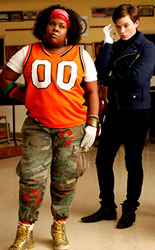
Of course, stereotypes are not inherently problematic, particularly when a show seems to revel in its stereotypes. For example, Glee is filled with numerous high school movie clichés, including snotty, blonde cheerleaders (Dianna Agron) and a squat, laconic football coach (Patrick Gallagher). But, the early complaints about Glee have been that its African American, Asian, homosexual, and handicapped characters have taken a backseat to the show’s white, heterosexual, able-bodied characters. Rachel (Lea Michele) and Finn (Cory Monteith) have received far more screen time, characterization and most importantly, solos, than any of the other young characters. For example, in the premiere episode’s “big number,” Journey’s “Don’t Stop Believin'”, it is Rachel and Finn who not only monopolize the juiciest bits of the performance, but also turn the song into a romantic duet. I’m not sure that Artie, the parapalegic or Tina (Jenna Ushkowitz), the Asian American character, have had more than 2 lines between them yet. And yet, these characters all over Glee‘s promotional images and in its trailers. As the blogger at Alas! A Blog put it “Diversity consists of real parts, not just tokenism.”
By including (and promoting) a diverse range of characters and then not utilizing them within the narrative or the musical numbers, the show seems to be saying that tokenism is enough. It’s a simulacrum of diversity. An all white cast would not be more politically savory but it would be more honest.
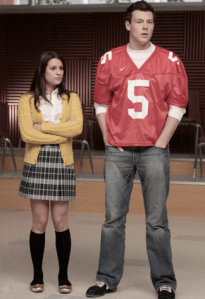
However, there are indications that the show will start allotting more screen time to some of its other perfomers. In the most recent episode, “Acafellas,” the primary narrative revolved around Will’s (Matthew Morrison) attempt to reclaim some of his lost confidence by starting up an all male a cappella quartet that performs 1990s era hip hop. This naturally leads to an a capella rendition of Color Me Badd’s “I Wanna Sex You Up.” Naturally.

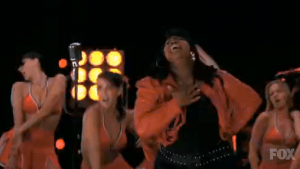
But the show’s secondary storyline finally yielded some screen time to Mercedes and her somewhat inappropriate crush on Kurt. Kurt’s rejection provides the segue for one of the episode’s main musical performances, a sultry, dare I say “window busting,” rendition of Jazmine Sullivan’s “Bust Your Windows.” I was happy to see Mercedes have her moment in the spotlight because Amber Riley can really sing. And she looked pretty fierce in her black jumpsuit and fringed red jacket (even if such clothing is completely inappropriate for washing cars). The episode also featured a tender moment when Kurt finally vocalizes, for the first time, that he is gay. Glee often operates at one move away from reality, but this scene was both grounded and touching.
This most recent episode seems to indicate that the show will shift its storylines (and its solos) to different characters from time to time. I hope this is the case because, as I mentioned, I really like musicals. And a capella versions of “Poison.”
But what do you think? Is Glee going to be the kind of program that pays diversity a lot of lip service without actually putting it into practice? Or do we need to give this show more time to grow?
TRUE BLOOD Season Finale: The End is the Beginning
The True Blood season finale was all about knowledge and whether it is best to have it or to remain in ignorance. First, Maryann (Michelle Forbes) prepared for her nuptials to the god-who-comes and once again asked Sookie (Anna Paquin) “What are you?” Sookie’s response “I’m a waitress. What the fuck are you?” was humorous, but unenlightening. We could also hear the fear in Sookie’s voice — what is she really?

While Sookie is frightened by her own ignorance, Hoyt (Jim Parrack) discovers the perils of learning the truth. While under Maryann’s influence his mother (Dale Raoul) reveals that Hoyt’s father did not die bravely, fighting off a burglar, but took his own life. And the desire to keep his mother safe from an imaginary burglar is what kept Hoyt from going to college, leaving home or having a life of his own. “I should’ve known the truth when I was 10!” he screams before walking out on his mother. This knowledge may permanently destroy his relationship with her (good riddance, I say).
There were other examples of the knowledge/ignorance theme in the finale. The residents of Bon Temps have agreed to practice collective amnesia, rather than admit to the things that they did while under Maryann’s spell. Ignorance may be the best policy, however, as evidenced by Eggs (Mehcad Brooks), who could not handle the knowledge of the murders he committed. He appears to lose his mind and demands to be arrested.
But there was more to this finale than the simple tying of loose ends. What I really appreciate about True Blood is that it has used its finale episodes to put the next season’s plotlines in motion. So here’s what we can expect from Season 3:
1. Sam Merlotte’s Origins
We know that Sam’s (Sam Trammell) adoptive parents were terrified by his shape shifting and consequently abandoned him at a young age. In the finale he returns to their home for answers about his past. In keeping with the theme of the evening his mother warns him that it is in Sam’s best interest to remain in ignorance. His biological parents are “bad people,” she tells him. But then we see a close up of a monitor. Who is on the other end? In the next shot we enter a room loaded with medical equipment and pervaded with the sucking and beeping noises of a body kept alive by machines. This is Sam’s estranged father and he is dying. I loved that there was no attempt to explain what was wrong with Sam’s father — he simply handed Sam a scrawled note with the names of his biological parents. At the bottom of the note were the words “I’m sorry.” I can’t wait to see how this story unfolds in Season 3.
2. Bill’s Kidnapping
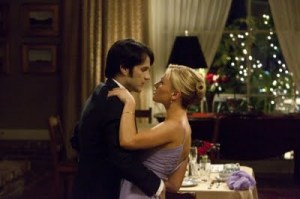
Like many fans of the show, I have very little tolerance for the blissful romance between Bill (Stephen Moyer) and Sookie. I rolled my eyes continuously throughout the scene in which he takes her to a fancy French restaurant in a gag-worthy lavender cocktail dress and then (ugh) proposes marriage (I did, however, enjoy learning that it is only legal for vampires and humans to marry in Vermont). Although the writers likely wanted my eyes to fill with tears as Sookie jubiliantly reentered the dining room to tell Bill that yes, she will marry him! only to find him gone, I actually cheered a bit. This means that Season 3 will open with Bill and Sookie apart and, I’m guessing, Eric (Alexander Skarsgard) moving in for the kill. Sweet! Oh yeah, I’m on Team Eric all right.
3. The Murder of Eggs
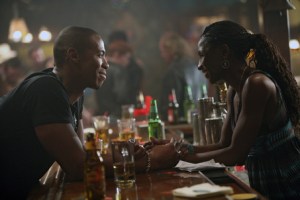
I was not particularly sad to see Eggs die. First of all, I never caught why people called him Eggs [note: since posting this I have been schooled: Eggs is a play on his real name, Benedict]. Also, his relationship with Tara (Rutina Wesley) always seemed somewhat artificial to me — created under and perpetuated by Maryanne’s spell. I’m confidant that she can find a better mate (like Sam perhaps? Hint, hint, writers). Jason (Ryan Kwanten) shot Eggs in an attempt to grab at the heroism he feels he missed during the Maryanne debacle, and although Frank Sobotka, errr, I mean Andy (Chris Bauer), created a believable cover story for Jason, I’m betting the truth will out as Season 3 progresses. In fact, I’m betting Jason will out himself. The boy has a guilty conscience.
4. And then there’s Jessica
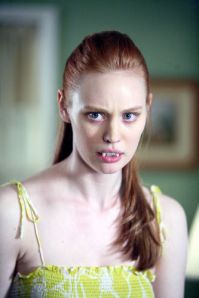
Man does Jessica (Deborah Ann Wohl) hate being an eternal virgin. The question is, how long will her blood thirsty rampage last before Daddy Bill finds out? Oh wait, Bill’s been kidnapped. Horny truckers across Bon Temps better watch out.
Teaching Tod Browning’s FREAKS
This week in my Trash Cinema class my students watched and discussed Tod Browning’s controversial horror film turned cult masterpiece, Freaks (1932). Freaks was released by MGM, but it was an odd choice for the studio given that their house style was associated with glamourous stars (Greta Garbo, John Barrymore), elegant settings, and story properties teeming with cultural capital. But after seeing the phenomenal box office returns for Frankenstein (1931, James Whale) and other Universal studios horror films, Irving Thalberg is supposed to have said to Tod Browning, “I want something that out-horrors Frankenstein!” (qtd. in Norden 115).

What Browning submitted to Thalberg was a film that touched on many of the themes that he had covered in previous releases like The Penalty (1920), The Unnkown (1927), and The Unholy Three (1930). These bleak stories emphasize protagonists (all played by the incomparable Lon Chaney) with physical disabilities and how these disabilities shape their personalities and affect those around them.

Freaks is a tale of love and vengeance in a traveling circus. But unlike his Lon Chaney collaborations, which relied on prosthetics and binding to create the image of disability, Browning cast real life “freaks” (a term embraced by the sideshow community and the freaks themselves) in his film. As a result, many anecdotes have circulated about the strange production history of this film. Most famously, F. Scott Fitzgerald, a sometime scriptwriter at MGM, allegedly walked out of the studio cafeteria in disgust when he saw the famous Siamese twins, Daisy and Violet Hilton, eating there. Another employee recalls “Suddenly, we who were sitting in the commissary having lunch would find ‘Zip the What-Is-It’ sitting at the next table or the Siamese twins who were linked together, and half the studio would empty when they would walk in because the appetites went out” (qtd. in Norden 118).

MGM employees were not the only ones to make a fuss about Browning’s casting choices. The Hays Office (which would not heavily crack down on studios until 1934) requested numerous cuts of the original print and a disastrous test screening alerted the studio that the film was going to be controversial and problematic. The uncut version of Freaks (which is lost to this day) did well in its brief, initial run but MGM eventually withdrew it from circulation. The scandal surrounding the film permanently damaged Browning’s career and resulted in Thalberg’s demotion (Norden 118). Clever exploiteer Dwain Esper knew the value of the film, however, and took it on the road, marketing it as an exploitation film under sensational titles like Forbidden Love and Nature’s Mistakes.

But what was so problematic about this film? What was so horrifying, so offensive, that it ruined careers? In her essay “Intolerable Ambiguity: Freaks as/at the Limit,” Elizabeth Grosz attempts to unpack our fascination with freak shows. She concludes that the individuals most frequently showcased in these spectacles, including Siamese twins, hermaphrodites, “pinheads” (microcephalics), midgets, and bearded ladies “imperil the very definitions we rely on to classify humans, identities and sexes — our most fundamental categories of self-definition and boundaries dividing self from otherness” (57). In other words, while we comfort ourselves by breaking down the world into neat binary oppositions, such as Male/Female, Self/Other, Human/Animal, Child/Adult, “freaks” blur the boundaries between these reassuring oppositions. She concludes, “The freak confirms the viewer as bounded, belonging to a ‘proper’ social category. The viewer’s horror lies in the recognition that this monstrous being is at the heart of his or her identity, for it is all that must be ejected or abjected from self-image to make the bounded, category-obeying self possible” (65). We need the freak to confirm our own static, bounded identities. And yet, I think there is a certain terror that we may not be as bounded as we think. If the hermaphrodite can transcend traditional gender categories, then perhaps our own genders are more fluid. For many that is a truly horrifying thought.
For example, in one of the film’s earliest scenes we witness the “pinheads” Schlitze, Elvira and Jenny Lee dancing and playing in the forest. From a distance they look like innocent, happy children. But as the camera approaches, it is clear that they are neither children, nor are they quite adults either. Thus it is the ambiguity here, rather than the disability itself, which is momentarily disturbing.
Grosz also mentions that “Any discussion of freaks brings back into focus a topic that has had a largely underground existence in contemporary cultural and intellectual life, partly because it is considered below the refined sensibilities of ‘good taste’ and ‘personal politeness’ in a civilized and politically correct milieu” (55). It is for this reason that I selected Freaks for my Trash Cinema course — the film, as well as its content, is considered to be in bad taste. It is in bad taste to exploit those with handicaps for a profit and it’s even worse to view the handicapped with horror, as Freaks seems to be asking us to do.
During our class discussion, I wanted the students to talk about these issues as well as Browning’s failure in the film. Freaks preaches acceptance and, as the above scene claims, the belief that we are all “God’s children.” And yet, the film was intended to “out horror” Frankenstein through its fantastic display of disabled bodies.
However, this teaching moment failed as soon as I replayed the famous “wedding banquet” scene for my students. In this scene the freaks have gathered to celebrate the marriage of a midget, Hans (Harry Earles), to the trapeze artist, Cleopatra (Olga Baclanova). Cleopatra and her lover, Hercules (Henry Victor), plan to poison Hans in order to collect his vast inheritance, but at this point the freaks are unaware of her ulterior motives and attempt to embrace her as one of the group.
I wanted my students to see how Browning had made this scene “horrific” by having the freaks don their performance clothing (which serves to further highlight their differences) and chant in unison, “Gooble gobble, gooble gobble! One of us! One of us!” while beating rhythmically on the table. While the words themselves are friendly and accepting, they almost sound like a threat in this scene. Indeed, in the film’s opening frame story, a sideshow barker introduces the diegetic audience to an unseen but undoubtedly horrific sight: “You are about to witness the most amazing, the most astounding living monstrosity of all time!” (Here a woman in the crowd screams and recoils in horror). “Friends,” he continues, “she was once a beautiful woman…” This opening indicates that Cleopatra will meet a horrifying fate at some point during the film.

My students, however, were not horrified by this scene. They did not think Browning was exploiting his disabled actors by making them appear monstrous or threatening. Rather, many of them saw this scene as a celebration of diversity and a warm welcome to Cleopatra (who would reject that welcome moments later). The only monstrous characters in this scene, according to my students, are Hercules and Cleopatra.
I then asked them to discuss the film’s violent climax, when the freaks exact their revenge on Hercules and Cleopatra. I pointed out that in the film’s opening a man describes the frolicking pinheads as horrible, twisted things that “crawl and glide” in the dark. We are meant to dismiss this cruel assessment and yet, in the revenge scene, the freaks are depicted as horrible, twisted, gliding things (Hawkins 269). They crawl through the mud, clutching knives, and peer out at their victims through the darkness. Although the entire film argues that the freaks are happy, normal, loving human beings, this scene appears to undo that message. I wanted my students to therefore question why Browning depicted his disabled actors in this way, exploiting their physical differences as a method for horrifying his primarily able-bodied audience. Indeed, many contemporary critics of the film denounced this scene as a “significant miscalculation by Browning and his scenarists” (Norden 116).
While my students admitted that Browning seemed to replicate the very imagery he denounced earlier in the film, they felt very strongly that the revenge — Hercules is stabbed while Cleopatra is horribly disfigured — was warranted. While most horror films ask us to identify with the helpless victim and his or her suffering, my students argued that their sympathies never shifted. Cleopatra got what she deserved.
Although this class discussion did not go the way I intended — I wanted to talk about taste and exploitation — it did prove to be an interesting example of how a film’s reception can change dramatically over time. In 1932 Browning intended to “horrify” with this film and he succeeded to such an extent that MGM had to pull the film from circulation. Although Browning successfully horrified his contemporary audiences, who were accustomed to the conventions of the freak show, it is possible that his own view of his disabled actors is more in line with those of my students, who saw the film as a quaint tale of love and revenge. So maybe Browning was not an exploiteer after all — maybe he was just making his film for the wrong audience? Regardless, I will need to rethink these issues before I teach Freaks again.
Works Cited
Grosz, Elizabeth. “Intolerable Ambiguity: Freaks as/at the Limit.” Freakery: Cultural Spectacles of the Extraordinary Body. Ed. Rosemarie Garland Thomson. New York: New York University Press, 1996. 55-68.
Hawkins, Joan. ” ‘One of Us’: Tod Browning’s Freaks.” Freakery: Cultural Spectacles of the Extraordinary Body. Ed. Rosemarie Garland Thomson. New York: New York University Press, 1996. 265-276.
Norden, Martin F. The Cinema of Isolation: A History of Physical Disability in the Movies. New Brunswick: Rutgers University Press, 1994.
Initial Impressions of the MELROSE PLACE Premiere
The CW is awfully fond of rebooting television shows of the past. Last year they resurrected Beverly Hills, 90210, calling it simply 90210. I quit the show after a few episodes (I had reached my quota of trashy teen-targeted television shows for the season), but my husband hung on. He was a die hard Beverly Hills 90210 fan in the 1990s and he didn’t want the dream to die.

As a die hard fan of the original Melrose Place I had similar motivations for putting the new version in my DVR queue. Deep down I knew this show was going to suck, but I was drawn to it like a stupid moth to a stupider flame.
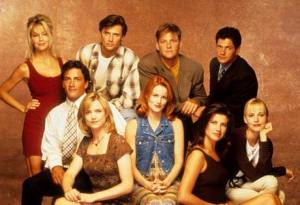
Did the first episode suck? Well, I suppose that depends on what you were expecting. I was expecting a beautiful young cast (check!), soapy storylines (check!), clunky dialogue (check!), cameos from Laura Leighton and Thomas Calabro (check! check!) and girl on girl action in a convertible (wait, what?). Yes, the show did exactly what I expected it to do. But, there were a few moments that had me screaming at my TV (I was pleased to see that Defamer also had a post devoted to Melrose Place‘s implausible plotting):
1. Lauren
I found Lauren’s (Stephanie Jacobsen) storyline to be very confusing. First, people address her as “doctor” but she is still in medical school. I asked a doctor friend of mine about this and she assured me that had she been addressed as “doctor” while still a medical student, she would have corrected the mistake. Next, I found it odd that Lauren’s suitor kept attributing his mother’s speedy recovery to Lauren and her wonderful doctoring skills. As my doctor friend informed me, while medical students do have their own patients “they are also the patients of your attending and resident. You never make your own decisions or write your own orders.” So either the show’s writers have no understanding of how the medical profession works or they want us to believe that Lauren is an egomaniac who takes all the credit for the recovery of a shared patient and allows herself to be addressed as “Dr. Yung” when she is not yet a doctor. This is a lot like when Brandon Walsh (Jason Priestly) had all that pull as student government president at California University or when Gossip Girl‘s Dan Humphries (Penn Badgley) got his short story published in The New Yorker (The New Yorker for crying out loud!), that is, it’s the common TV trope of giving the show’s young protagonists way more power and pull than they would have in the real world.

2. Jonah
a. The 5 year anniversary video Jonah (Micheal Rady, of the short-lived Swingers) made for Riley (Jessica Lucas) was a sweet idea. But who filmed all that footage of Jonah and Riley kissing in a swimming pool, having pillow fights, and romping on the beach? The camera was clearly not on a tripod since it often moved to follow the couple’s actions. So do Jonah and Riley normally bring a camera man into the bedroom while they engage in clichéd cute couple behavior? Because she seemed awfully surprised to see that video.
b. So let me get this straight Jonah: you are a struggling filmmaker living in Los Angeles and an A list director offers you $100,000 to write a script based on your “award winning” student film. But you reject that offer because you know that said director is just trying to ensure that you don’t put the footage of him making out with his daughter’s BFF on the internets? Jonah, is that because you are a true “artist”? Because, as Ella (Katie Cassidy) gushes, you have a “point of view”? Ella, did you see Jonah’s anniversary video? Jonah, you are a douchebag.
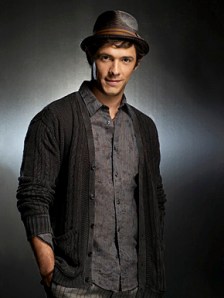
3. David
For the first 5 minutes of David’s (Shaun Sipos) conversation with his father, Michael (Thomas Calabro), I was thinking that he was the son of Michael’s ex-wife, Jane (Josie Bissett). Yes, that would mean that David had an affair with his aunt Sidney (Laura Leighton). Then I realized he was probably Kimberly’s (Marcia Cross) son with Michael and felt MUCH better [note: since publishing this post the second Melrose Place episode has aired and it turns out David’s mother is neither Jane nor Kimberly. Michael Mancini was quite the man-whore!] . But this little misunderstanding proves that the writers need to do a better job of reminding us about the various plotlines of the old Melrose Place if they are going to reference them in the new Melrose Place.
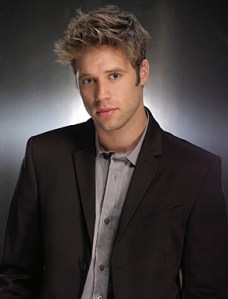
4. Ella
I have seen Amanda Woodward (Heather Locklear) and you, madame, are no Amanda Woodward.

Will you watch Melrose Place again? I will, but only to watch Ashlee Simpson-Wentz butcher her lines.
The Sins of the Mother: Some Thoughts on MAD MEN’s Betty Draper
In the most recent issue of Entertainment Weekly, Mark Harris’ column, “TV’s Great Bad Mommies” was devoted to the “bad mommies” featured on Showtime’s Weeds, Nurse Jackie, and United States of Tara. These women “invite you to be appalled — because, as we all know, few guilty pleasures are as nastily satisfying as secretly ragging on somebody else’s parenting skills.” His column concludes with a nod to Mad Men‘s Betty Draper (January Jones), who “performs motherhood like a scripted role — and experiences parenting less as a fulfillment than as the steep price she agreed to pay for the life of privilege she once wanted.”
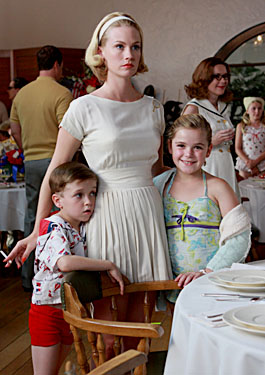
I both agree and disagree with Harris’ assessment of Betty’s approach to motherhood. While it is tempting to see her as an ice queen, as a woman who merely endures her children in order to gain access to club lunches, furs and a maid, I think this view also discounts the richness of Betty’s character. Because Don Draper’s (Jon Hamm) childhood is such a compelling mystery, it is easy to forget that Betty also experienced a traumatic childhood. Her story, like Don’s, is only revealed to the viewer in pieces.
We have learned, for example, that the late Mrs. Hofstadt was a beautiful, regal woman, but that she was also a real bitch; Betty discusses her with a mixture of reverence, fear, and resentment. Furthermore, as we discovered in last night’s episode, “The Arrangements,” Ruth Hofstadt took rather Draconian measures to ensure that her “fat” daughter lost weight (and kept it off). While sharing a tub of chocolate ice cream (with salt?) Gene (Ryan Cutrona) tells Sally (Kiernan Shipka) about how her Grandma Ruth would take her mother shopping and then make Betty walk all the way home. This parenting left an indelible mark on the adult Betty, who rarely puts anything other than vodka or cigarettes in her mouth. Oddly, Gene finds the story to be amusing, colorful even, rather than disturbing. He also urges Sally to become something other than a housewife, explaining that her grandmother did drafting work for an engineer in the 1920s. Smart women, it seems, should do things.

While this exchange exists, in part, to show some of the disdain Gene harbors for his daughter’s shallow existence, it also illustrates that he is surprisingly progressive for a man of his age and time. He sees that Betty is living a life of unrealized potential (I can’t wait for the episode in which Betty receives a copy of The Feminine Mystique [1963]) and worries that Sally, an intelligent and curious child, will grow up to do the same. “You can really do something,” he tells Sally with sudden gravitas, “don’t let your mother tell you otherwise” (I originally had a link to this scene below but it has been removed by AMC. Phooey).
After purchasing a bag of peaches for his beloved granddaughter, Gene collapses in the A & P. Sally is naturally devastated by her grandfather’s death–the only adult to take a genuine interest in her has died. Therefore, when the news is delivered to Betty by a solemn police officer, it is fitting that neither of these two adults acknowledge Sally or her grief. Instead they leave her outside to sob alone in her ballet outfit. Later, when Sally rebukes her parents and aunt and uncle for laughing over a joke (she is too young to understand that laughter is often a part of grief), Betty chastises for her for being “hysterical.” “Go watch TV, Sally,” she commands. During this exchange the mother in me longed to reach my arms through the television screen and embrace Sally. And I wondered how I was supposed to feel about Betty and Don since they did not.
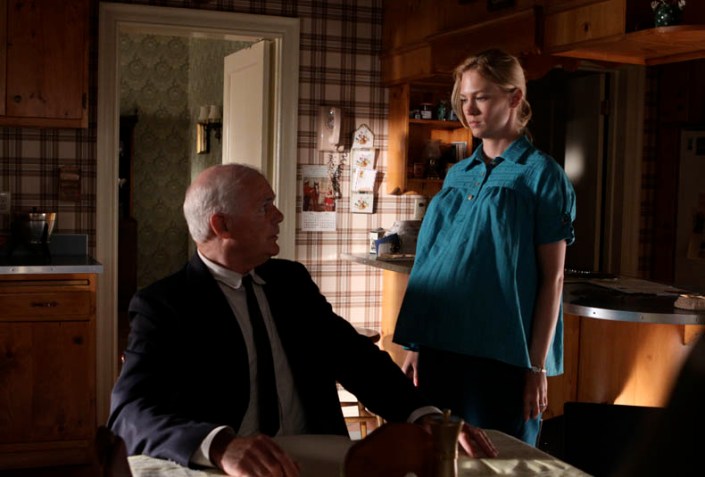
Indeed, at these moments it is difficult not to hate Betty Draper. But we must remember the lonely childhood Betty must have endured walking home from the grocery store, wiping the tears from her chubby cheeks, wondering all the while how she might gain the approval of the cold woman waiting for her at home. Betty was raised to shut herself away from food and emotion–she can’t even bring herself to discuss her father’s will with him. “Can’t you keep it to yourself?” she pleads, “I’m your little girl.”
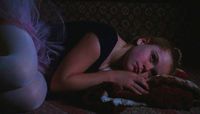
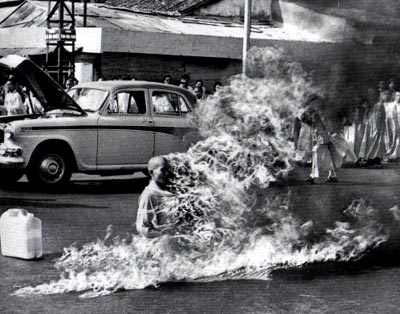
This is not an excuse for Betty’s approach to mothering, but it is an explanation. Meanwhile, Sally is left to mourn her grandfather alone in front of the television, while images of self-immolating monks dance before her eyes.
So what do you think? Is Betty meant to be a sympathetic character, or do the writers want us to hate her?
Teaching THE ROOM
When I first watched Tommy Wiseau’s The Room (2003), in preparation for my Trash cinema class, I watched it alone. I thoroughly enjoyed this experience but it was not until this week, when I screened it for 21 undergraduates, that I got the full effect of this masterpiece of cinema terrible. I had prepared my students for what they were about to watch: I told them the film had a strong cult following, that it has been dubbed the “Citizen Kane of bad movies,” and that fans had developed their own set of rituals, such as spoon-throwing. But, my students’ enthusiastic, joyous response to the film truly exceeded my expectations.
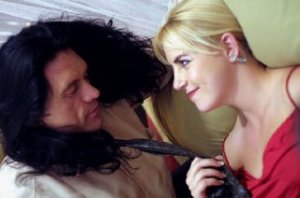
The moment Tommy Wiseau enters the frame in the film’s first scene and utters the words “Hi Lisa” in his strange, unidentifiable European accent, the room erupted in raucous laughter. And it only built from there. Usually, when I screen a film for students they remain quiet, laughing or gasping when appropriate and occasionally making a stray remark. But when watching The Room my students immediately sensed that it was acceptable to laugh, whoop, and even yell at the screen. When, for example, Lisa (Juliette Danielle) has a prolonged, Cinemax-style sex scene for the 3rd time one of my students exclaimed “But we saw this already, right?” And when a random couple appears in Johnny’s (Tommy Wiseau) and Lisa’s apartment (as characters often do in The Room), another student yelled “Who the hell are they?” When the film was over the students burst into applause, something which has never happened at a screening in my 7 years of teaching film classes to undergraduates.
In our discussion of the film yesterday in class, I asked the students to consider several key questions: Why is The Room considered to be a “bad” film? What codes, conventions, and expectations does it violate and why do these violations provoke laughter (as opposed to boredom or annoyance)? And if this film is so poorly made, then why do audiences gain so much pleasure from watching it?
Here is what we determined:
1. It’s Just Plain Bad
The movie violates almost every rule of storytelling: characters pop in and out of scenes with little explanation, plotlines are addressed and then dropped forever (Lisa’s mother’s cancer, Denny’s [Philip Haldiman] drug problems, etc.), and character dialogue is frequently nonsensical. Wiseau inserts establishing shots of San Francisco into the middle of scenes for no apparent reason and spatial continuity is nonexistent (does Johnny live in an apartment or a house and how do they get up to that roof deck anyway?). These problems are so pervasive that it almost seems as if Wiseau is making these blunders on purpose–but according to reports from his former crew, Wiseau was simply inexperienced.
Wiseau’s senseless dialogue:
One of many scenes that make no sense and do nothing to further the plot:
Who takes wedding photographs one month before the wedding?
Wiseau’s arbitrary use of establishing shots:
The film’s inability to convey the passage of time:
Is it “tomorrow afternoon” already?
2. It’s Camp
The Room is enjoyable precisely because it proposes itself seriously and yet we cannot take the film seriously because it is so over the top. Susan Sontag writes that, “Camp asserts that good taste is not simply good taste; that there exists, indeed, a good taste of bad taste.” My students agreed that in terms of bad taste, The Room is as good as it gets. For example, in one of the film’s many sex scenes, Wiseau employs rose petals, gauzy bedding, bad R & B music, and a sinewy man thrusting away at a woman’s pelvis (I would include this clip but when I uploaded it to YouTube it was determined to be “pornography” and was removed). As my students pointed out, these sex scenes bring together every cliché of the Hollywood sex scene and the effect is overwhelming.
3. It’s Passionate
In Land of a Thousand Balconies: Discoveries and Confessions of a B-Movie Archaeologist (2003), Jack Stevenson argues that a great camp film is “the product of pure passion, on whatever grand or pathetic scale, somehow gone strangely awry… pure camp is created against all odds by the naïve, stubborn director who in the cynical, hardball, bottom line movie business can still foolishly dream he is creating a masterpiece without money, technical sophistication, or (orthodox) talent.” Indeed, The Room is infused with Wiseau’s passion. From its awkward dialogue to its nonsensical plot, the film is the embodiment of this strange, quixotic man. Watching The Room is, in many ways, like the reading the diary of a tortured teenage writer. My students agreed that it was Wiseau’s unadulterated passion and hubris that made the film so engaging to watch, despite its frustrating plot and characterization.
The best example of this passion can be found in the infamous “You’re tearing me apart, Lisa!” scene, a blatant rip off of a similar scene in Rebel without a Cause
But, if The Room is so very personal, if it is Wiseau’s soul up there on the screen, then is it wrong to subject this film to scrutiny on a regular basis? Is mocking this man’s art akin to walking into an art gallery and pointing and laughing at a painting that you think is shit? Or going to the theater and yelling at an actor for being bad at his job?
Fans react to “You’re Tearing Me Apart, Lisa!”:
4. It Makes Us Feel Better About Ourselves
This leads me to the final characteristic of watching The Room: it makes the viewer feel better about him or herself. In his famous study of taste cultures, Distinction (1984), Pierre Bourdieu writes, “Taste classifies, and it classifies the classifier. Social subjects, classified by their classifications, distinguish themselves by the distinctions they make, between the beautiful and the ugly, the distinguished and the vulgar, in which their position in the objective classifications is expressed or betrayed.” When we watch The Room and mock it we are essentially saying “I am better than this. I am superior to this.” For example, during the following scene my students howled with laughter–and when we rewatched it during our class discussion they laughed even harder. Why? As one student put it, “This scene is intended to show us that Johnny’s character is a good guy because he is always buying roses for Lisa. But it just FAILS.”
So are we cruel for laughing at Wiseau’s film, for laughing at Wiseau himself? On this point my students were divided. Some said yes, that they felt guilty for laughing because the film was so personal. Others argued that the moment Wiseau made his film and put it in a public theater, he agreed to public ridicule. Personally, I am torn on this issue–but that won’t keep me from watching The Room. And laughing.
Evan Rachel Wood Ain’t MY Vampire Queen
Like many True Blood fans I was anxiously awaiting the arrival of Sophie-Anne (Evan Rachel Wood), vampire queen of Louisiana, whose existence had been leaked through various entertainment news sources weeks ago. Last week I was tantalized by the sight of her lavish home and the image of a pale female foot, bathed in a stream of blood. And as a fan of Wood, whose portrayal of a teenage terror in Thirteen (2003, Catherine Hardwicke) blew me away, I was sure that the young actress was well-equipped to handle the role of an 1100-year-old vampire queen.
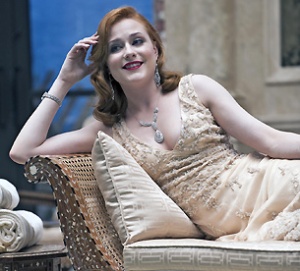
But last night I found myself underwhelmed. I don’t blame Queen Sophie-Anne’s failure on the writers–who gave her choice lines like “I haven’t been interested in men since Eisenhower was President”–or the costume designers–who gave her beautiful white gowns and bathing suits to luxuriate in (plus a vintage copy of Vogue to read!). No, this character fell flat due to Wood’s lackluster performance (though EW’s Ken Tucker disagrees with me).
Queen Sophie-Anne is supposed to be more than 1,000 years old, but Wood plays her like a precocious child playing dress up. Such a role is certainly challenging–Wood needs to convey the sense that she is an old soul even as she lives in a teenager’s body, a state of endless arrested development. But it has been done before and done well. Here I can’t help but think of Kirsten Dunst’s turn as Claudia, a mature, blood-thristy vampire trapped in the body of a sweet, prepubescent girl for all of eternity, in Interview with a Vampire (1994, Neil Jordan).
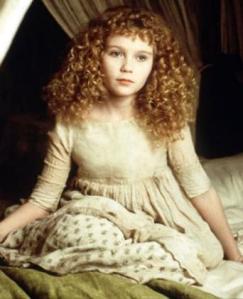
I believed Dunst’s performance–indeed, I found it to be highly disturbing. Dunst expressed her frustration with her small, child’s body and its incompatibility with her adult hungers. You could see her age in her eyes and in the way she carried her body. Queen Sophie-Anne is supposed to be elegant, regal and a commanding presence (she is the QUEEN after all) but as Wood plays her she is more like an annoying celebutante in the vein of a Paris Hilton or a Lydia Hearst. Blech.

I am not giving up on Evan Rachel Wood (girlfriend did look hot), but for now I remain unimpressed.
P.S. Not enough Eric (Alexander Skarsgard) in last night’s episode. Just sayin’.
You Haven’t Seen WHAT? And Other Humiliations
It’s week 2 for my little blog and with classes having just started and a head cold ravaging my senses I was all out of blogspiration (if this is not already a word it should be). Besides, the first weeks of baby bloghood are so unsatisfying: why am I doing this? is anyone reading this? should I take a nap? But today I received an e-mail from a colleague in my department (hello Randall!) who said this regarding my inaugural post, “The Watercooler” :
Interesting comment during your water-cooler post. I’ve also noticed how little we talk about lit and film. I wonder if some of the lack of wc talk is due to a fear of showing ignorance, revealing that you have not seen a particular movie or read a particular book. I certainly don’t want Marianne [our department’s Shakespeare expert] to know that I haven’t read most of Shakespeare’s plays and can’t remember much about those I have read.
I say we come up with a log in which every one lists their most embarrassing literary or cinematic oversights.
Upon reading this I thought “Eureka! I have something to post about this week!” So in the spirit of Randall’s e-mail I have assembled a list of the films I am most embarrassed to have not seen:
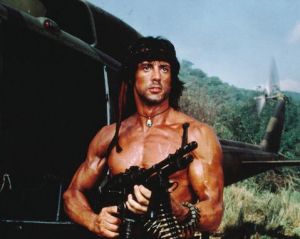
1. Rambo: First Blood (1982, Ted Kotcheff)
As a child of the 1980s, this is unacceptable.
2. Lawrence of Arabia (1962, David Lean)
My friend, Ali, is devoting a substantial portion of her dissertation to the films of David Lean. When I admitted that I hadn’t seen Lawrence, she replied “It’s long.” That pretty much sums up why I’ve avoided it.

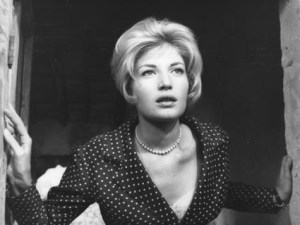
3. L’avventura (1960, Michelangelo Antonioni)
I have brought this film home from the library at least twice. And then I’ve opted to watch something like America’s Next Top Model instead. Oh the shame.
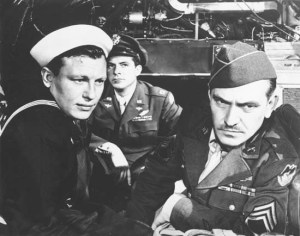
4. The Best Years of Our Lives (1946, William Wyler)
I have read numerous critical essays about this film and even sat though several conference presentations that address this classic WWII flick. Does that count?
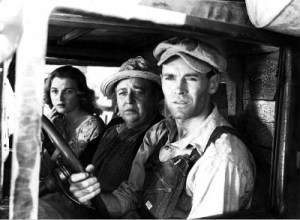
5. The Grapes of Wrath (1940, John Ford)
I haven’t read the book either. Nail me to the cross.
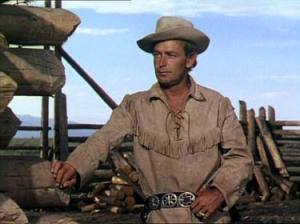
6. Shane (1953, George Stevens)
I am embarrassed about this one primarily because I always show a clip from it when I teach the Western to my Intro to Film students. Shhhh, don’t tell them.
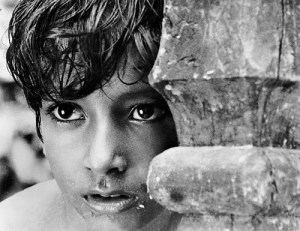
7. Pather Panchali (1955, Satyajit Ray)
My knowledge of Indian cinema is woefully thin.
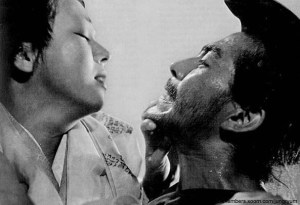
8. Rashômon (1950, Akira Kurosawa)
I know, I know, bad me.
9. Way Down East (1920, DW Griffith)
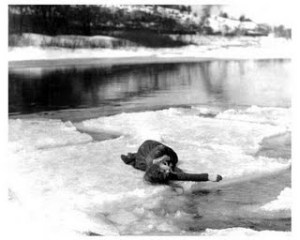
As with #6, I always show a clip (the one on the ice floe) of Way Down East when teaching melodrama. I should watch this tomorrow.
10. Thelma and Louise (1991, Ridley Scott)
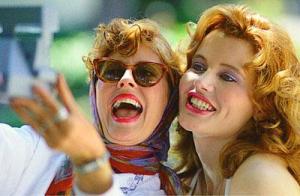
I’m an American chick who was in my teens when this film was released. What the hell is wrong with me?
That was oddly liberating.
Care to share your own list of embarrassing cinematic oversights? Yes, you may use an alias…
I’m Thinking More MEAT!: Some Thoughts on True Blood, Episode 10
True Blood seems to get better with every episode that airs. When it premiered last fall I was unimpressed and was close to giving it up. My new Southern friends here in North Carolina assured me that Sookie Stackhouse’s (Anna Paquin) accent was laughable (what did I know?) and the series’ vampire plot seemed like Buffy-lite. But slowly the show found its footing. And now I’m obsessed.
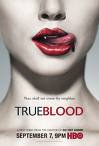
I attribute much of the show’s allure to its mastery of the slow burn. What I mean is this: while many programs with rich, soapy plots (The O.C., Desperate Housewives, Gossip Girl)) rush through their storylines, anxious to bring them to a climax before audience interest wanes, True Blood is a true tease. Mysteries remain mysterious and flirtations go on and on and on (I am particulary taken by the brewing attraction between Sookie and Eric [Alexander Skarsgard]). Furthermore, we are always finding out something new about the show’s characters–they evolve and become more complex with each episode.
Maryann Forrester’s (Michelle Forbes) story arc is another great example of True Blood‘s deft storytelling technique and character development. Maryann first appeared at the scene of Tara’s car accident at the end of Season 1, cradling a pig and looking devious. The writers made us suspicious of her character then, but buried her secrets behind Maryann’s sweet, disarming demeanor. In this way we were much like Tara (Rutina Wesley); we know something isn’t right about Maryann, but what is it? That she smokes too much weed, buys too much delicious fruit, and parties too hard for a woman in her 40s?

It is not until almost halfway through Season 2 that we find out that Maryann is an immortal supernatural being and somehow tied to the god, Bacchus. She thrives on unfettered human drives like hunger, lust and violence. The scene in last night’s episode (“New World in My View”), where Maryann crafts a pyre of meat and flowers while the sounds of buzzing flies fill the air was the apotheosis of the excess she had been slowly and cannily directing all season long. It was a satisfying moment.
The best scene of the evening, however, had to be when Jason Stackhouse (Ryan Kwanten) (who really deserves an Emmy for his work this season) and Andy Bellefleur (Chris Bauer) (who will always be Frank Sobotka to me) outwit Maryann’s angry mob by outfitting Jason as the “God who comes.” These two characters are consistently portrayed as the biggest morons in the town of Bon Temps, but they are able to (momentarily) save Sam Merlotte’s (Sam Trammell) life by using their wits. So there’s something else rattling around in Jason’s brain besides the drive to drink beer, screw and kick ass? Good to know.
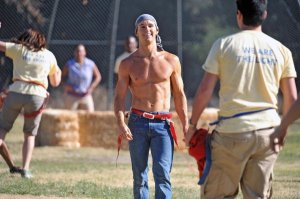
An honorable mention goes to Lafayette Reynolds (Nelson Ellis) (any scene with Lafayette is a great scene as far as I’m concerned), who banded together with his estranged aunt (Adina Porter) to yank Tara free from Maryann’s spell. At one point Lettie Mae prays for her daughter’s salvation but trails off in despair and, without missing a beat, Lafayette finishes her prayer. Lettie Mae turns, looking surprised. “Jesus and I agree to see other people. That doesn’t mean we don’t talk from time to time” he responds in his usual deadpan manner. So Lafayette has religion? Yet another nuance we can add to his already rich character.

And of course I would be remiss if I didn’t mention “the Queen” (Evan Rachel Wood), who Bill (Stephen Moyer) visits just before the episode ends. We see only her white leg, covered in a stream of blood, before the screen fades to black. As always, True Blood, like any good tease, leaves me wanting more.
The Citizen Kane of Bad Movies
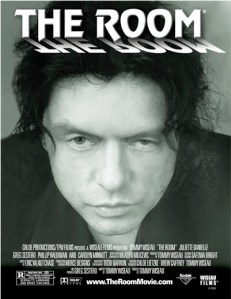
This fall I have the great privilege of teaching a course I have always wanted to teach, “Topics in Film Aesthetics: Trash Cinema and Taste.” Jeffrey Sconce has defined “trash cinema” as “less a distinct group of films than a particular reading protocol, a counter-aesthetic turned subcultural sensibility devoted to all manner of cultural detritus.” Would Sconce agree with the way I am defining trash cinema in my course? I’m not sure. Nevertheless, the term “trash” is a useful way to denote the broad and shifting category of “bad films” and as a method for getting students to discuss film aesthetics. We will watch films that have been maligned for their “bad” acting (Showgirls), “bad” taste (Pink Flamingos), “bad” subjects (Freaks), “bad” politics (El Topo) and just plain “badness” overall (Glen or Glenda?). We will discuss what qualities categorize a film alternately as “bad,” “low brow” or “cult” and how taste cultures and taste publics are established. Finally, we will discuss why certain films are believed to have “cultural capital” and why and how trash cinema rewrites the rules about which films are worth watching.
Every week I will discuss one of these films on this blog, my students’ reactions to them, and whether or not these films offer a useful way for undergraduates to discuss film aesthetics as a political, cultural, economic and social construct. This is also a good excuse for me to talk about some of my favorite films.
The first film the students will watch (during the week of 8/31) is Tommy Wiseau’s The Room (2003). The film has been dubbed “the Citizen Kane of bad films” and has gained an impressive cult following in Los Angeles, where folks line up for midnight screenings. Last year Entertainment Weekly did a wonderful story about it, which is when I first became obsessed with it. The Room even has its own Rocky Horror Picture Show-like rituals.
Which brings me to why I am posting about this now: if anyone out there (are you out there?) is familiar with any of The Room‘s rituals (I know about the spoon throwing and the yelling of “Denny!” whenever that character appears), could you please share them here? My students and I would be most grateful.
More on The Room to come…
- ← Previous
- 1
- 2
- 3
- 4
- Next →
 judgmental observer