Why the Men of JERSEY SHORE are Actually the TEENAGE MUTANT NINJA TURTLES
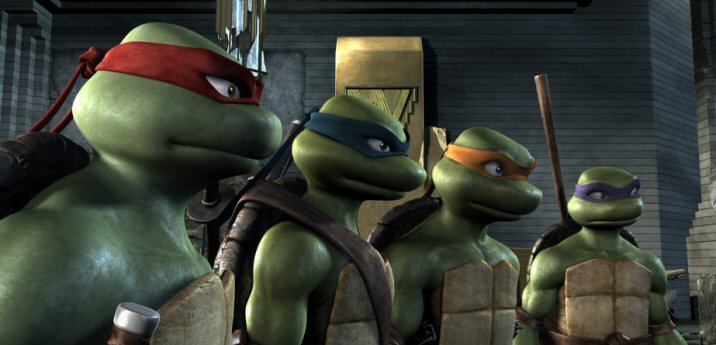
A few weeks ago, my husband and I were enjoying the latest installment of Jersey Shore. It was the episode in which The Situation, Pauly D, and Vinnie have returned from a night of “creeping” with four young, intoxicated women in tow. The men were hoping to “smush” these girls, but there was one roadblock: there was one girl too many and this girl, according to The Situation (a recognized authority on such matters), was a “grenade.” What is a group of horny, spray-tanned juiceheads to do? Within minutes, The Situation had a plan. He separated the various groups of girls into different rooms in the house. Why? The Situation tells us: “In this type of situation you need to separate the two sets of girls and then you have to separate the hippopotamus from her good lookin’ friend.” Aye aye sir! Having achieved this objective, The Situation then gathered his troops together and laid out the second part of his military strategy: “I will extract the hot one and leave the grenade to blow up in Ronnie’s room by herself.”

Upon hearing this my husband and I scoffed. How, exactly, did The Situation think he was going to carry out this difficult and dangerous mission? Surely the grenade would explode in The Situation’s finely tanned hands. But then, minutes later, The Situation did exactly what he said he would do. He convinced the grenade to take a disco nap in Ronnie’s bed, even going so far as to tuck her in and turn off the light, and then “extracted” the “hot one” from Ronnie’s room. Mission accomplished. The gentlemen then high-fived and proceeded to “smush” on their ladies of choice. Another successful evening for the Jersey Shore gang. After witnessing this stunning feat my husband had an epiphany: “They’re the Teenage Mutant Ninja Turtles!” “What?” I asked. “The Situation, Pauly D, Vinnie, and Ronnie are exactly like the Teenage Mutant Ninja Turtles!” And then he broke it down for me:
The Situation is Leonardo

Like Leonardo, The Siutation is the leader of his gang. He is also the oldest of the four and the most “skilled.” The skills I am referring to are those which are most admired by the members of his gang: The Situation can cook an amazing Sunday night meal, GTL on a daily basis, and extract grenades in the most dire of situations. He is truly a Renaissance man. One final similarity: both Leonardo and The Situation are fond of coining catch phrases: like “Cowabunga dude!” or GTL, the shirt before the shirt, and grenade.
Ronnie is Raphael
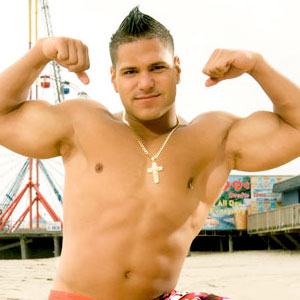
Yes, Ronnie is the “bad boy” of the group, just like loose cannon, Raphael. Raphael is known for his short temper and willingness to throw a punch, and so is Ronnie, who was arrested and spent time in jail during the filming of Season 1 for getting into a fist fight with some hecklers. And like Raphael, Ronnie has poor impulse control; although his girlfriend, Sammi “Sweetheart,” is waiting for him at home, Ronnie can’t help himself when offered the opportunity to make out with two girls at once or to “motorboat” a groupie. These indiscretions were, of course, revealed to Sammi during “Notegate,” when an “anonymous” note detailing the events was planted in Sammi’s things by roommates, J-WOWW and Snooki. But Ronnie is so money, that Sam still didn’t dump him.
Pauly D is Michelangelo

Michelangelo is known for being the most easy-going of the turtles: he likes to relax and have a good time. Pauly D is likewise the most gentle of the Jersey Shore men. In Season 2 he allows Angelina to hit him several times in the face, before simply walking away. And he has difficulty rejecting the affections of obsessed women (see his relationship with Danielle, aka “the Israeli,” in Season 1). And like Michelangelo, Pauly D is the most creative “turtle.” Otherwise known as “DJ Pauly D,” Pauly makes his living as a DJ. He uses the turntables as a means of creative expression, and was recently nominated for the title of “America’s Best DJ.”
Vinnie is Donatello
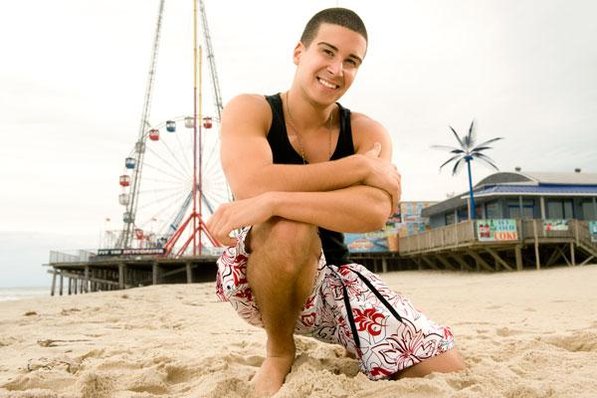
Donatello is the scholar of the group, preferring to use his mind, rather than his brawn, in order to defeat enemies. In this way, Donatello is very different from his brothers. Similarly, in the series premiere Vinnie makes a point to mention that he graduated from college and that he defies most stereotypes of the guido: he doesn’t tan, gel his hair, or wear lip gloss. He is also the only Jersey Shore man who wears a shirt on a regular basis.
Some final comparisons:
*Both groups have impressive, muscular physiques
*Both groups love Italian food
*Both groups successfully defeat their enemies at the end of each episode (whether that enemy is the nefarious Shredder or the nefarious Hippopotamus)
* Both groups have a sensei/mentor who guides them with a firm but gentle hand (the Turtles have Splinter, the Jersey Shore boys have Danny the owner of the Shore Store, and Enzo, the owner of the Lecca-Lecca Gelato shop)

*Both groups are marked by their distinctive skin coloring (green and bronze)
*Both groups are isolated from the larger society (the turtles live in a real sewer, the Jersey Shore boys live in the metaphorical sewer that is reality television)

So, what do you think of my husband’s theory? I think it’s pretty spot-on, but I (and he) would love to hear your thoughts below…
The Thrill of the Final Image
Somewhere in TV Land Jersey Shore‘s Snooki is carrying around an entire suitcase of bronzer. Nothing but bronzer. Elsewhere, Mad Men‘s Sally Draper may or may not be developing a nasty little eating disorder. And on True Blood Tara just smashed a vampire’s head flat with a medieval mace. I itch, no I yearn, to blog about these programs. But I haven’t. Because my Big Deadline–August 31–approaches and I must focus my energies on meeting this Big Deadline. For the next 4 weeks all intellectual activity must be channeled towards the Big Deadline.
But my Twitter pal, @KelliMarshall, has managed to distract me with this engaging meme. I could not resist. Damn you, Kelli.
Here are the rules:
The person tagged is to submit a gallery of images that represents “the thrill of cinema,” however s/he interprets that phrase. The other rules are spelled out thusly:
- Pick as many pictures as you want, but make them screen-captures.
- Pick a theme, any theme.
- You MUST link to Stephen’s gallery and my post too.
- Tag five blogs. \\ I am tagging the following (primarily) film studies blogs: Jamais Vu, The Lesser Feat, Ludic Despair and The Chutry Experiment. No pressure folks, just giving you the option to participate.
There is so much that thrills me about the cinema. But to convey that thrill with still images, when, as we all know, the cinema is about moving images, makes this meme a little more challenging. However, I have always been a sucker for the images that appear in the last few minutes of the film. These are the images that you just can’t shake. You replay them in you head long after the end credits have rolled. They are the images that have a visceral impact on the viewer.
They reach into your chest and squeeze your heart so tightly you can barely stand it:


Or they make the little hairs on the back of the neck stand on end, especially when you’re lying in bed, in the dark, all alone:


These are the images that can change the entire meaning of a film, or simply hammer home its main themes:


Occasionally , it’s not a final image that gets me, but a sound. At the end of I am a Fugitive from a Chaingang (1932, Mervyn LeRoy), Helen (Helen Vinson) asks her perpetually on the run fiance, James (the incomparable Paul Muni), what he will do to survive. “How do you live?” she implores as James slips back into the shadows. As the frame fills with darkness we hear him hiss “I steal!”

I could go on and on here but like I mentioned: Big Deadline.
Whatr are your favorite final images and why?
Televising New Orleans in 2010…or Why Sonny isn’t Watching the REAL WORLD: NEW ORLEANS

I love the Real World. I’m not proud of this. I’ve tried to quit several times. I managed to stay away from the series in both 2001 (“Back to New York”) and 2002 (“Chicago”). But then in 2003 came the famed “Las Vegas” season, the season that gave us the gift of Trishelle, and I was hooked again. I also skipped the “D.C.” season (even though my husband still watched) and I was so proud of myself. But people, there is no support group for addiction to bad reality TV. There is no methodone for this heroin. So this season I find myself hooked yet again. To justify my addictions I did what I always do — I decided to write about it.
So check out my short piece on Antenna (a media and cultural studies blog operated and edited by graduate students and faculty in the Media and Cultural Studies area of the Department of Communication Arts at the University of Wisconsin – Madison). I’m writing about my experiences watching HBO’s Treme alongside MTV’s Real World: New Orleans and their very different depictions of the city of New Orleans.
Here’s the link. Give it a look and leave a comment!
The End of THE HILLS

If you read this blog, then you know that I am a little obsessed with The Hills. In particular I’ve always been fascinated with show’s peculiar brand of unreality. But when the sixth and final season of The Hills premiered on April 27, the show’s mode of address appeared to shift. While earlier seasons of the series existed at one move away from reality, with cast members clearly performing their roles and hitting their assigned marks, the season six premiere actually felt real.
For five seasons Adam DiVello successfully kept the world outside of The Hills separate from the world inside The Hills: Lauren Conrad never mentioned her clothing line while she cried over lattes with Lo at some trendy L.A. eatery and Heidi Montag, God love her, never mentioned her singing “career” on camera. But when Heidi’s massive breasts and chiseled jawbone appeared onscreen in the season six premiere, it must have been clear to DiVello that the bizarre, paparazzi-filled, fame-mongering lifestyles of his cast members could no longer be distinguished from their seemingly isolated,”normal,” onscreen personas. Heidi Montag and her grotesque plastic surgery broke down the wall between diegetic and extradiegetic and the result was some pretty fantastic television. At last The Hills was addressing its impact on its own cast. It was as if a reality show was not just admitting that the reality it captured was not real — it was admitting that the reality it captured was profoundly warped by the very fact that it was being captured.

I was awfully pleased with my conclusions about season six. I even wrote a piece about it for another media studies site:
“In its final season The Hills has morphed into a treatise on the “reality” of reality TV “stardom,” a reality crafted by the rewards and labors of a life of constant surveillance and confession. I don’t think it’s a stretch to argue that this season can also serve as an allegory of the current cultural moment—in which we are starting to take stock of the high costs of self-exposure.”
I thought that was a fairly tidy conclusion. But the problem was that I came to this conclusion after only two episodes of the new season had aired. Soon after that, Spencer and Heidi disappeared from the show. The moment these two cast members exited the show, the diegetic once again split from the extradiegetic. My thesis — that The Hills was becoming self-referential and even critical of the reality TV machine — was effectively disproven. Ooops, my bad.
Why was Speidi’s exit so momentous and so disappointing for a fan like me? Why did it destroy my thesis? Avid readers of tabloids knew that Spencer Pratt was kicked off the show for threatening one of the show’s producers and for his anger problems in general. Since Heidi’s biological functions are controlled by a small, external remote that Spencer carries at all times, she naturally had to leave the show as well.

It would have been fascinating if the real reason behind Spencer’s exit had been addressed within the show — that he was simply too dangerous to keep on the set. But DiVello was clearly not ready to relinquish that kind of control. He was forced to acknowledge his young casts’ extradiegetic lives but he was not going to acknowledge that The Hills was a show. Instead, the episode, “This is Goodbye,” featured lots of scenes in which people who have no interest in Spencer and Heidi, like Lo and Kristin, sat gravely with people who do have a lot invested in the couple, like Holly Montag and Stephanie Pratt. While Lo feigned interest and compassion (something Lo does exceptionally well), Holly and Stephanie cried rivers of black mascara over the televisual death of their siblings. Their conclusion? No more contact with Spencer and Heidi until they stop being crazy (good luck with that, ladies).
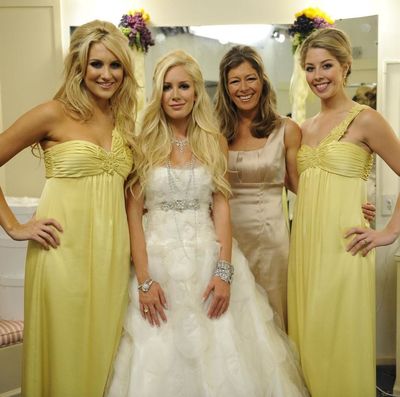
After this episode, Speidi disappeared from the world The Hills, effectively cleaving it back into two parts: the constructed world before the cameras and the real world outside of the cameras. Naturally, the cast members resumed their emotional detachment: Kristin pretended to pine after Brody Jenner (really? Brody Jenner?) and bland Audrina pursued and then ended a bland relationship with bland Ashlee Simpson Show alum, Ryan Cabrera (yes, the show always referred to him as “Ryan Cabrera.”) With the exit of Speidi — that Tasmanian devil of emotional instability — The Hills once again became boring and emotionally detached.

The emotional complexity first witnessed in the season premiere did not return until the penultimate episode, “Loves Me Not,” when Heidi’s mother, Darlene, flies to L.A. for a visit with her daughter, Holly. Darlene is anxious to see Heidi and Holly frets over her inability to locate her sister. It is clear that Holly not only misses her sister, but is also distraught over her mother’s pain and her own powerlessness in the situation. Over lunch Darlene admits that she hasn’t slept in months and has been force to take prescription sleeping pills because she is so distraught over her daughter’s absence. “I’ve been mourning the loss of a child,” she tells Holly. Both women cry. And yes, so did I. Because the whole Heidi story is truly sad. The pursuit of the spotlight has resulted in the loss of her fledging career, her good looks, and most tragically, her family.
It is difficult not to compare Darlene’s and Holly’s weeping in this scene with Kristin’s own “breakdown” at the end of the same episode, when Brody Jenner tells her that does not in fact love her. Maybe it’s because Kristin is not skilled at emoting (she’s no Lauren Conrad) or maybe it’s because I have the extradiegetic knowledge that she’s dating one of the show’s cameramen, but I could not buy into the “emotion” of this scene. I do not believe that Kristin “loves” Brody. Notice how I have to put quotation marks around everything?
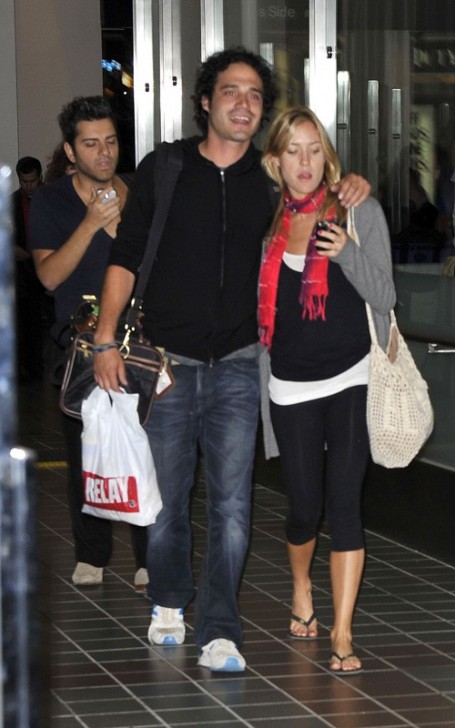
Thus, despite the hyperreality of Speidi’s image, they were, nevertheless, the only element capable of bringing reality into The Hills. This became painfully clear during the series finale “All Good Things…” when The Hills girls (minus Heidi) sit down to assess their lives and their futures and let the platitudes fly. “I feel like I need to be alone for once,” Audrina sighs. “Yeah!” the girls reply. “I want little babies,” Lo squeals. “Awwww!!!” the girls cry on cue. The girls are striving for some kind of connection here, but nothing resonates. In fact, I could sum up the The Hills finale like this:
Kristin: Blah blah blah.
Lo: Totally! Blah blah blah.
Audrina: Like, for real. Blah blah blah.
Stephanie: I know, right? Blah blah blah.
Brody: Bro! Blah blah blah.
And then, there’s that final scene. As Kristin drives away from Brody and Brody stands there pretending to look forlorn (or constipated?), the camera cranes backwards and the sunny California backdrop turns out to be an actual backdrop that lifts up to reveal … wait for it, wait for it … CAMERAS! Do you mean to tell me that these people have been followed by cameras this ENTIRE time? That the The Hills is a TV SHOW?!? I thought Kristin, Lo, and Audrina were just really tiny people who crawled into the box in my livingroom every week!
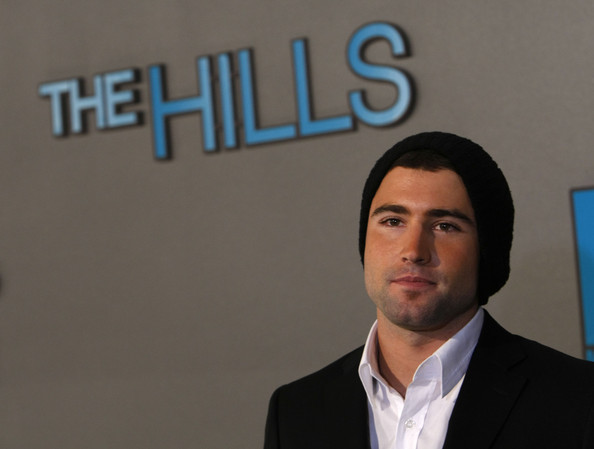
This “shocking” ending was Adam DiVello’s attempt at self-referentiality, the self-referentiality this show has so desperately needed since about Season 3. But for me it’s a case of too little, too late. DiVello pulled back the curtain, but behind it was simply another curtain. A truly shocking ending would have been a roundtable featuring Speidi, Adam DiVello, and the rest of The Hills cast hashing out their conflicts. Man, that would have been great. But hey, it’s not too late, Adam DiVello. Why not give Speidi a call? Something tells me their schedules are open…
My TV Pet Peeves
I can’t believe it’s been a month since my last post. Please forgive me, readers, and blame my pet humans instead. Both of these humans will be in some form of regular day care starting in August and yes, the thought of putting #2 in daycare does give me the weepies and intermittent panic attacks. However, daycare means that I will be able to return to blogging with some regularity. “Phew!” you must all be thinking, “Thank God she’s coming back!” Well, you’re welcome.
Now on to my post, before #2 wakes up. He has a sixth sense about my productivity. That is, he frowns upon it and likes to disrupt it with all the tricks of his trade: too-short naps, poop bombs, and my personal favorite, big, gummy smiles.
****
There are several blog-worthy shows currently on the air — True Blood, Top Chef, and soon, July-25th-soon, Mad Men! But I wanted to use this post to write about something that has been percolating in my brain for a few months now: my television pet peeves. As an avid TV watcher, I am pretty adept at suspending my disbelief. I accept that vampires, werewolves, and demons exist when watching shows like True Blood and Buffy the Vampire Slayer. I accept that there is a magic island filled with polar bears and electromagnetic energy when I watch Lost. I even accept that the idea that the teenagers in shows like Gossip Girl drink martinis at hotel bars without getting carded. And I always accept most of those overused TV tropes documented at the great site TV Tropes. But there are a few tropes that I cannot stomach and which force me to yell at the television set every time they occur (which is a lot). I don’t have a good explanation for why these particular violations drive me up the wall, but here they are in no particular order:
1. My Water Just Broke!

Despite the fact that approximately 490,000 babies are born every day, television shows rarely get the details of childbirth right. Most labor scenes begin with a character saying — usually at some inopportune time, like in the middle of a kidnapping (Desperate Housewives), in a stalled elevator (Saved by the Bell) or, in a car during a traffic jam (Blossom) — “My water just broke!” Despite its prevalence on television, most women will go into labor long before their water breaks. This trope sticks in my craw because I believe it does a real disservice to first-time parents, who, despite reading all the books, still don’t recognize that labor has started without the iconic (but relatively rare) rupturing of the membranes. Case in point: when I went into labor with my first child, it took me several hours to convince my husband that I was truly in labor. I kept telling him, rather undramatically, “I think I’m in labor.” And he kept saying things like “Did your water break?” and “The doctor said you wouldn’t have the baby until next week.” and “Let’s watch the end of So You Think You Can Dance.” I did watch So You Think You Can Dance, but I was totally in labor. Had we been trapped in an elevator and had I yelled “My water just broke!” I’ll bet my husband would have believed me. Stupid TV.
2. Where’s the Umbilical Cord?
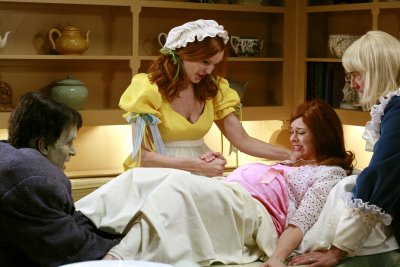
Giving birth to a baby is an exciting plot event and therefore TV scribes like to stage childbirth in all sorts of wacky places: see # 1. The brave laboring woman will often yell to a scared bystander “Whether you like it or not, this baby is coming NOW!” Or conversely, a brave bystander will yell at the scared laboring woman, “Whether you like it or not, this baby is coming NOW!” Much chaos and sweating and fetching of hot water will then ensue, followed by the birth of the baby, who is immediately placed in her quivering mother’s arms. It is at this point that I yell at the TV “Where’s the umbilical cord? You people need to cut the umbilical cord! That baby’s still attached to the placenta!” I get so agitated by this omission that I can’t fully enjoy the melodrama of the moment. Please writers, next time have someone cut the umbilical cord. That’s all I’m asking.
3. Going to Bed/Waking Up with Lipstick On

On the Glee episode “Home” (2010), April Rhodes (Kristin Chenoweth) must spend the night at Will Schuester’s (Matthew Morrison) apartment. As she slips into bed, singing some song I can’t remember, all I can focus on is her lips. Her shiny, lipsticked lips. I keep thinking about how, the moment she rolls over in bed, that nice white pillow case will be covered in sticky lipstick. Then she’ll roll back and get sticky lipstick in her pretty blonde hair. Gross. No woman goes to bed with lipstick on unless she’s drunk and passes out before getting the opportunity to wipe it off. I hate this TV trope. It drives me up the wall. “Take off your lipstick!” I scream as characters slip beneath their crisp, clean sheets. I understand that TV shows like Glee, Desperate Housewives and Gossip Girl (all prime offenders in this regard) do not aim for realism. But it is possible to make a character look like she isn’t wearing make up and still make her look pretty good. At least take off the shiny lipstick, people. No one goes to bed wearing shiny lipstick. No one.

4. Children who Don’t Resemble their Parents

- Darby and Damon with their mother Jessica, on HUNG

When two very good-looking humans have sex with each other and make a baby, that baby usually ends up good-looking too (see Shiloh Jolie-Pitt). When a very good-looking human makes a baby with a funny-looking human, the results are less predictable (see Alexa Joel). Thomas Jane and Anne Heche are both very good-looking humans so it stands to reason that their offspring would be hot, or at least, not too shabby. But on the HBO show Hung, the offspring of Ray (Thomas Jane) and Jessica (Anne Heche), played by Sianoa Smit-McPhee and Charlie Saxton, are pretty darn unattractive (sorry, I’m not trying to be bitchy here). My guess is that this is the point of this miscasting — to be funny. Ray lives in a dying city, has a job at a underfunded school, a catty ex-wife, and two sullen Goth teens who failed to inherit his dashing good looks. Hilarious! But I find this visual joke distracting since these children look NOTHING like their parents. It’s just too hard to accept that they’re related. I was also frustrated by the casting on a much better show, Six Feet Under. I love Peter Krause, Michael C. Hall, and Lauren Ambrose, and I can’t imagine any other actors in their roles, but those three look nothing like each other.
5. Teenagers with Too Much Power
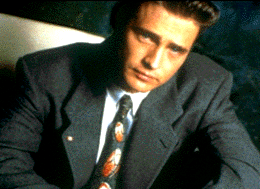
This pet peeve dates back to my 90210 days (the original, not the reboot). I was always amazed that Brandon Walsh (Jason Preistly), the student body president of fictional California University, was so important to the university’s daily workings. He was always meeting with the Dean and being asked to join task forces and to advise big university muckety-mucks on major decisions. In the Season 5 episode “Homecoming” (1994), Brandon is pressed to challenge the presence of a visiting dignitary, Quintero, who has been accused of torture. Brandon launches his own investigation into the accusations (conveniently meeting a gardener who was a victim of Quintero’s regime), and serves Quintero a subpoena. Because administering international justice is the responsibility of the student body president. On a related note, I also hate it when teenagers achieve things that it takes adults years of hard work and dilligence to achieve. For example, I scoff everytime a character on Gossip Girl mentions that Dan Humphrey (Penn Badgley) was published in The New Yorker. The odds of getting a story published in The New Yorker is so slim, and yet broody old Dan Humphrey gets his banal work published there.
6. Newborn Babies Who Are Actually 6 Month Olds

I understand why a television show cannot use a newborn baby when portraying the birth of a newborn baby. First, newborns are ugly. They are wrinkly, swollen, and many of them have coneheads (due to being pushed through the birth canal). Newborns are also highly susceptible to colds and infections and so it’s not a great idea to have them on a crowded television set. I get it. Nevertheless, it drives me bonkers when we are shown a fresh-from-the-womb baby and he is fat and bright-eyed and not at all smushy-faced. Once again, this trope does a disservice to novice parents, who, when handed their fresh-from-the-womb baby, are probably wondering “Why is my kid so ugly?” Friday Night Lights is one of the few TV shows that used a baby resembling a newborn. Gracie Bell Taylor, when she first appeared on screen, was bug-eyed, scrawny, and splotchy. Of course, as she got older, Gracie Bell continued to be bug-eyed, scrawny, and splotchy, so um, at least that kid’s getting some sweet royalty checks!
These were all of the pet peeves I could come up with before # 2 decided to take his signature too-short nap. He is currently offering me big gummy smiles and attempting to poke a slobbery finger in my laptop’s USB port. He is a productivity-disrupting super genius. But, I’d like to know what TV pet peeves you have — particularly the ones that don’t seem to bother anyone but you.
Glee: The Good, The Bad and The Funky

When I was first introduced to Glee last spring, it was love at first sight. The premiere did all the right things: it was funny, irreverent, quirky and, most importantly, featured an ass-kicking rendition of Journey’s “Don’t Stop Believin’.” Then I had an entire summer to nurture my Glee crush (absence does make the heart grow fonder). But when Glee returned in the Fall of 2009, still basking in the glow of that near perfect premiere, I started to notice some flaws: why did the show’s promotional materials hail its diverse cast—including an African-American, an Asian, a homosexual and a paraplegic—yet sideline them within the show’s diegesis? Why were performance numbers so overproduced and unnatural? And why did character motivations seem to turn on a dime, depending on the whims of the narrative? Yes, Glee seemed perfect during our first date, but after a few episodes I began noticing its beer gut and its toupee. And wait, did Glee just tell me a racist joke? Uh oh…

Like any bad boyfriend, Glee infuriates and then woos me back again, never allowing me to make a clean break and end the relationship. I find the show to be shrill and simplistic one moment and heartfelt and complex the next. And it’s pretty tough to find any television show that features musical performances (something I love in any medium).
After reading the weekly Glee columns featured on Antenna (a media and cultural studies blog operated and edited by graduate students and faculty in the Media and Cultural Studies area of the Department of Communication Arts at the University of Wisconsin – Madison) I was pleased to see that many other ardent “Gleeks” were also uncomfortable with the show’s mixture of intoxicating musical numbers and casual racism/sexism/anti-Semitism. This week I’ve added my own two cents to the “Glee Club.” If you’d like to read my column on this week’s episode, “Funk,” and join in the discussion, you can go ahead and click here.

And I promise to get back to writing for this blog soon as long as you promise to watch my baby for me. You will? Great!
THE HILLS are Alive…with the Sound of Boob Jobs

As I sat down to watch the premiere of the sixth and final season of The Hills, MTV’s faux reality battle-ax, I was mentally preparing my snarky blog post. The Hills has always existed at one move away from reality, becoming more and more detached with each season. As I argued in my recap of the season 5 finale, at this point only Audrina still thinks the show is “real.” But about 5 minutes into the season 6 premiere I realized that my snark meter–which usually provides a continuous stream of snarky comments as I watch programs like The Hills and The City–was totally silent. I found that I was watching The Hills, really watching it, and that I was completely engaged by the narrative and the characters.
But why? Why has a show that has always been the simulacrum of reality suddenly become real again (notice that I didn’t put the word real in quotation marks)? Who do we have to thank? Two words, my friends: Heidi’s boobs.
The episode opens with Lo and Stephanie, fresh out of her second (yes second!) stint in rehab, meeting at one of those outdoor lunch spots that seem to have been built solely for the purposes of these staged conversations. But this conversation (dare I say it?), feels…almost…real. Stephanie tells Lo that she has just finished up an AA meeting and then sighs, “I can’t believe I’m doing this all over again.” She looks genuinely frustrated with herself. “I’m only 23 and I’ve been to jail twice? I mean, that’s not normal.” This exchange marks one of the first moments when the world outside The Hills–the world of the paparazzi and Lauren’s clothing line and Heidi’s musical career, the world that the show’s cameras like to pretend does not exist–is entering back into The Hills narrative.

After Lo invites Stephanie to Miami with the rest of the Scooby gang to watch the Super Bowl (a great vacation idea for a recovering alcoholic, no?), Stephanie mentions that she hasn’t seen Spencer or Heidi in months. Lo then tells Stephanie “There’s been some…talk about Heidi. And…a new face.” Lo then lists all of Heidi’s surgeries (which have been exhaustively detailed in the tabs as well as the mainstream press these last few months), ending on “butt job.” “Butt job?” Stephanie asks, clearly puzzled, “Like liposuction?” “No,” replies Lo, making squeezing gestures with her hands “Like a bigger…like a bigger butt. Like a little junk in the trunk.” Stephanie still looks baffled: “But how do you, how do you add?” “I don’t know,” Lo responds, shaking her hand. And then we cut to credits.
I can’t describe how this cold open made me feel–not only was the show directly acknowledging the media spectacle that it truly is, but the show’s cast actually seemed to be having fun with it. This does not happen in the world of The Hills. I waited for the TV screen to collapse into itself. But it didn’t.

But this scene was nothing compared to the scenes featuring Heidi. When we first see Heidi, she is being filmed from behind, as she packs her suitcase to prepare for a trip home to see her family in Colorado. Spencer is talking to her from the livingroom, begging her not to go in her fragile post-surgery condition. What is great about this scene–even clever–is how the camera will not give us a view of Heidi’s much-discussed Frankenstein face or even her comically large breasts. We only see her wrists and legs. It is a tantalizing omission.
When Heidi arrives at her home in Crested Butte, CO, the camera continues to play coy. However, we are offered a series of close ups of framed family photos from around her mother’s house: Heidi as a young girl, Heidi with her siblings, etc. Looking at these photographs we are reminded of the Heidi from earlier seasons–a beautiful, fresh-faced girl. Seeing these photos now provokes…I can’t even believe I’m about to write this…nostalgia.

Then Heidi sits down on the couch with her mother, Darlene, and we get our first look at Heidi’s face–tight, swollen and chiseled all at the same time. The best term I can use to describe it is “uncanny”–something which is simultaneously familiar and foreign. A not-Heidi. Her mother nails it on head when she tells her daughter, moments before she breaks down in tears, “It’s very weird, it’s very awkward, I’m sorry…” Darlene recovers a bit and asks Heidi what exactly she had done. Heidi describes her browlift and Darlene asks “Is that permanent? They’re not going to come down a little bit?’ Darlene looks dejected when Heidi informs her that the look is permanent.
Darlene then switches her tone, becoming indignant, even angry, with her daughter: “I just feel like when you left home [for L.A.] you had more confidence and more self-esteem than anyone person I’d ever met.” Heidi begins to talk about how she always felt self-conscious about her chest size but Darlene isn’t buying it:
Darlene “It sounds to me like you want to look like Barbie”
Heidi: [brightening]: “I do wanna look like Barbie.”
Darlene: “Why would you want to look like Barbie? To everybody else that saw you, you were Heidi. No one in the world could have looked like Heidi Montag.”
Heidi “Are you telling me I don’t look good?”
Heidi then breaks down and begins crying real tears (at least she can still do that).
My snark meter was tempted to make some joke–like “Right, no HUMAN could have looked like Heidi Montag”–but I quickly told that snark meter to shut up because I got what Darlene was saying.Her mother’s words–that no one could have looked like Heidi, the Heidi we were just looking at in those family photos–are heart breaking. Heidi sacrificed her individuality–her Heidiness–for some twisted ideal of beauty that only plastic surgery addicts seem to understand.

- She looks great–who’s her surgeon?
Later in the episode Heidi goes out to dinner with her family. Her sister, Holly, asks “Don’t you think it’s so weird though? That you were always so outgoing and confident? I was envious of the confidence you had. I don’t know what happened.” When Heidi explains that she started to feel insecure, the following conversation takes place:
Darlene: “I would like to see the choice made to deal with the insecurity on a psychological level.”
Heidi: “And that’s great for you. And you live in the mountains–you don’t live where I live.”
Darlene: “Does that make a difference?”
Heidi: “Of course it does.”
Darlene: “So should you not live in that area?”
Heidi: “I don’t want to get into this.”
This may be the most compelling, the most real conversation I’ve heard yet on The Hills. This young girl, once beautiful and confident, learned to hate herself and her body, after only a few years of living in Los Angeles. Heidi, as she exists now, is almost monstrous. She has become a Heidi-monster. But it’s too late to go back. Heidi begins to weep at the table as she attempts to chew her dinner with a swollen jaw. Her family watches the Heidi-monster in amazement.
This is amazing melodrama, people. Amazing.
Further adding to the emotional complexity of the scene is the fact that the family ia surrounded by The Hills cameras–the very cameras that have followed Heidi around for the last 4 years, scrutinizing her face and body, pointing out her (non-existent) flaws. These cameras are responsible for the Heidi-monster that weeps on the couch and at the dinner table and now they continue to watch her, passively recording the spectacle of her demise. They created her and now they mock her. It’s all so cruel. If I were Darlene I would stand up, grab a wine glass from the dinner table, and smash the camera lens. After all, these cameras stole her daughter. She should be livid.

I have never before been moved by The Hills. I’ve always viewed it as a piece of pop culture fluff, as a way to discuss how reality television has ceased to record reality. But this particular episode, with its pathos and its melodrama, reminded me about what good reality TV–and good melodrama–can do. Dare I say it, friends? The Hills, at least for one episode, is real.
Tweeting at you Live from Console-ing Passions!: The Politics of the Backchannel

Note: all tweets quoted in this post are mine, unless otherwise indicated.
I just returned from 4 days in Eugene, Oregon for Console-ing Passions 2010, a conference on television, audio, video, new media and feminism. Console-ing Passions (aka, CP) is consistently one of my favorite conferences and dfter 3 ½ months of maternity leave it was invigorating to have some personal and professional time (not to mention 3 great nights of sleep). The panels I attended—from discussions of “post-racial” television to vomiting in Mad Men—were smart and thought provoking. Also smart and thought provoking? The “backchannel” of tweets that documented, augmented and critiqued the various papers over the conference’s three days.

There was much grumbling (at least on Twitter) about SCMS’s lack of Wi-Fi this year and the consequent inability of attendees to tweet at the conference. So there was much rejoicing when CP’s gracious host, the University of Oregon, made sure that all conference participants were given access to the university’s Wi-Fi. The CP home page also provided a hashtag for the conference–#cpuo—which enabled the backchannel to open up as early as Wednesday, the day before the conference started. Various twitterati announced their arrival times and chronicled their (positive and negative) travel experiences.

I live-tweeted through most of the panels I attended—first on my laptop and then, when that battery died, I moved to typing one handed on my old school I-Touch (hence, my many typos, and poor use of punctuation).

Through the first day of tweeting I was delighted to see so many folks who weren’t at CP joining in on in the online conversation. Despite this atmosphere of intellectual exchange, I discovered, over the course of the conference, that many folks at the conference were uncomfortable, and even annoyed, with the Twitter backchannel. Indeed, I believe that the presence of this back channel—and the various responses it provoked in conference attendees—is one of the most interesting discussions to come out of this year’s Console-ing Passions. Here is what people were saying—both for and against—this year’s very rich (and very controversial) backchannel:
The Uses of the Backchannel
1. For those who cannot attend
I was unable to attend this year’s SCMS in Los Angeles but was grateful for the few tweets that were broadcasted over the course of the 5-day conference (I was also an avid reader of Antenna Blog‘s informative daily recaps). I was pleased to see regular film/tv/media tweeters like d_kompare and fymaxwell engaging in the discussions on the backchannel. Sometimes their comments were merely appreciative while others raised useful questions:

2. It enriches the dialogue by multiplying voices
In an ideal world, the comments from absent twitterers, such as the one displayed above, would then be posed to panelists by during the Q & A session. In this way, scholars who are unable to attend the conference can still be a part of the conference dialogue. In fact, some tweeters at CP were able to “virtually” attend more than one panel at a time–by reading the tweets being broadcasted from the various rooms.

3. Extend and invigorate Q & A
Panel Q & A sessions are always rushed, even when panelists keep their papers within the proscribed time limits. What I enjoyed most about the CP backchannel was that the audience was able to have an on-going discussion of the papers, before, during and after the Q & A session.


I also felt that in several instances the tweets helped the twitter community to formulate better questions for panelists. For example, during Thursday’s Mad Men panel there was a lot of talk on the back channel about the papers were not satisfactorially addressing depictions of race and class depictions on the show. These sentiments were bandied about by tweeters and this culminated in one person standing up to ask that very question during the Q & A. This question—and the intelligent responses it provoked from the panelists—ended up being the most interesting (at least for me) part of the Q & A.
4. Digital Archive
Finally, the backchannel offers a flawed/funny/smart/critical archive of the entire conference—from the arrival of panelists in Eugene to the (tipsy) tweets coming out of Friday night’s reception.

Think of it as the most detailed conference recap you can find.
The Misuses of the Backchannel
1. The Complex is Simplified
As all academics know, the less space you are given to make your point (as in a conference proposal), the more simplified your argument becomes. The 140 character limit of Twitter has the potential to transform a subtle, elegant argument into something that is too simple, too binary.

And without the context of the rest of the paper, simplified, isolated tweets can lead to the complete misrepresentation of a speaker’s argument. For example, Tara McPherson’s plenary paper “Remaking the Scholarly Imagination” was subject to a series of engaged and enthusiastic tweets (I am disappointed that I missed this plenary). However, one of McPherson’s statements, made during the Q & A, was retweeted by numerous people:


Some tweeters championed this bold statement while others were troubled. Regardless, McPherson felt that her comment was taken out of context and that she was being somewhat misrepresented on Twitter:

This conversation culminated in a blog post by TV scholar Jason Mittell (who was not able to attend this year’s conference) in defense of Lost studies. McPherson also commented on Mittell’s post, which lead to an interesting conversation about what happens when statements become part of the public discourse. You can read their very interesting exchange in the comments section of Mittell’s blog.
2. Negativity
Being misrepresented on Twitter is one thing—indeed, it is par for the course in academia. But being trashed is quite another. I have yet to read the entire #cpuo backchannel, but so far I have not encountered much negativity towards the various panels or panelists. I did encounter moments when a twitterer disagreed with a panelist or had some big questions to ask but I think this kind of tweeting is both healthy and necessary. It only becomes problematic when those disagreements and questions remain in the realm of the virtual, rather than the actual. Be critical and raise questions on the backchannel, but if you do, make sure you raise your hand when the Q & A begins. Otherwise, these comments can become the equivalent of the anonymous Amazon.com book review—difficult to trust because there is nothing at stake in the criticism.
Given how much people enjoy the twitter backchannel (myself included) I believe that it’s presence at conferences is only going to become stronger. Having said that, I do think the twitterverse and the academic community need to work together to come up with a series of protocols governing the use of the backchannel at conferences. Perhaps panelists can request that their work not be tweeted or maybe twitterers should identify themselves at the beginning of a panel so that speakers know when and if their work is being discussed online. But the issue must be addressed to ensure that everyone who presents their work at a conference feels comfortable with the arrangement.
But now I’d like to hear your thoughts. Please comment below.
The D2D Release: Notes on a Burgeoning Market
Yes, it’s true, my blogging has decreased precipitously over the last three months. I had a second child and he takes up all of my time, what with his eating and pooping and inability to sit up on his own. But I did recently finish one last article for the online journal, FLOW on the subject of Direct to DVD releases. In it I argue that the study of direct to DVD films (D2D films) offers an important contribution to the fields of both reception and genre studies. If you’re a fan of such classics of Hood of tha Living Dead or Leprechaun 5: Leprechaun in the Hood, then my friends, this is the article for you.

You can click here to read the article. And for those of you still reading my blog, thanks and I promise to post more frequently in the coming months.
Notes on Parenthood & PARENTHOOD

When my first pet human was born, back in the summer of 2006, I was still a grad student and had no maternity leave. After two months I went back to teaching/dissertating/job searching and it was pretty tough to do it all, let alone do it all well. My daughter was only with a caretaker part-time, but I felt like I was “working” all the time: stealing a spare hour here, a few minutes there, typing up job letters while I nursed her.
Therefore, when I realized that my second child would arrive in mid-January of this year, giving me an entire semester of maternity leave, plus the summer, I was overjoyed. My daughter goes to a Montessori preschool in the mornings and then on to an afternoon daycare, so I decided to pull her out of the latter. I knew that I might never again have such a lengthy period of time to spend with my children, and visions of afternoons in the park and elaborate crafts projects danced before my eyes. And when both children napped (because of course they would do this in tandem), I would work on my book revisions and even write blog posts. Yes, I was going to be an awesome (and intellectually productive) stay at home Mom.

But when pet human # 2 arrived on January 13th of this year, these illusions were immediately shattered. As it turns out, #2 is not a great sleeper. And after a morning consumed with diaper changes, feedings, laundry folding and food preparation, #1 would arrive home demanding “Where’s my lunch!” and “What are we doing today?” So how bad am I at this stay at home Mom thing? One month into it my daughter asked me “Mommy, why don’t I go to daycare anymore?” and I replied “Because Mommy isn’t working right now and wants to spend more time with you. Isn’t it fun to be home with Mommy?” Her reply, after mulling it over was characteristically honest. “No” she told me. I explained to her that she would return to afternoon daycare in “the fall” and since then she has asked, multiple times, “When will it be The Fall?” Ouch.
This entitre experience has made me reevaluate my ideas about what my children need from me and what I need from them. Is being home with an overtired, constantly breastfeeding mother necessarily better for my daughter than being with kids her own age, who don’t mind when she picks her nose or wants to play the same game over and over an over? Is this “quality time” really quality for her?

Why am I sharing this personal story on a blog devoted to film, television and media studies? Because in the midst of my stay at home Mom crisis, NBC premiered Parenthood, a loose adaptation of the 1989 Ron Howard film of the same name, which chronicles the lives of the Braverman family. I will admit that after watching the pilot I was initially left feeling unimpressed. First, Dax Shepard, who plays “free spirit,” Crosby, is miscast in my opinion (and I still can’t get over the fact that he is engaged to Kristen Bell. Really, Kristen Bell? REALLY?).

Second, I find it highly implausible that the Braverman clan — busy as they with careers and children — are able to get together for breakfast, brunch, dinner, late night BBQs, little league games, preschool concerts, and school fundraising events on what seems like a daily basis. My God people, you’ve lived in Berkeley your entire lives, haven’t you made any other friends besides your siblings and parents? Finally, the conclusion to the pilot, in which little, autistic Max Braverman (Max Burkholder), decides that yes! he WILL play in his little league game after all, prompting the entire family to rush out to the field, cheering and full of pep, to watch, was the ultimate in cornball.

But the show has been winning me over with its storyline involving Julia Braverman-Graham (Erika Christensen), her husband, Joel (Sam Jaeger), and young daughter, Sydney (Savannah Paige Rae). Some bloggers I know, find Julia’s story to be both dated and somewhat unbelievable. Myles McNutt wrote:
“I don’t quite understand why Julia is just now realizing that her daughter is starting to drift away, and Christensen’s performance (while good) seems to be making the character more stubborn and bullish than sympathetic.”
I don’t think it’s that Julia is just discovering that her relationship with her daughter is less than ideal; in the pilot Julia remarks, in an only slightly joking tone, that perhaps she needs to lower her expectations for her relationship with Syndey, “She will be like…a relative of mine!” Though Julia’s statement is an exaggeration — her daughter seems to really love her — it is clear that the child prefers her father. And is that really so awful? If it were the other way around would it even warrant a storyline on the show? No, I don’t think Julia feels all that guilty for loving her job and being proud of her work — and she shouldn’t. Her husband is a wonderful, engaged, stay at home Dad so Sydney is not lacking in parental attention.
Instead, I think these first few episodes have brought to light Julia’s realization that other parents might disapprove of her choice to work — such as “wonder mom” Raquel (Erinn Hayes)– and that perhaps her husband might (though the show has not made this entirely clear yet) prefer a wife who bakes cookies, takes their daughter to swim lessons, and has a tacky tattoo over her rear end (something I’ve always referred to as a “tramp stamp,” but I digress). It is clear that Raquel does indeed judge Julia, albeit in a passive aggressive fashion, but I like that the writers have depict Julia as being judgmental of Raquel as well. This was perfectly encapsulated at Sydney’s school fundraiser’s auction, when Julia and Raquel engage in a bidding war over a parking space. The war culminates with Julia exclaiming (while still on microphone) “She doesn’t even work!” It was a funny, squirm-worthy moment.

I appreciate Parenthood‘s depiction of these much-maligned “Mommy Wars” primarily because so many women want argue that the division between working mothers and stay at home mothers doesn’t exist. But it does. It shouldn’t, but it does. Depicting both sides of this “war” — how judging a mother for the choices she makes is counterproductive and painful for all involved, is an important task for this series since it is a reality of modern mothering.
As a working mother who is trying her hand (albeit temporarily) at being a stay at home Mom, I’ve learned two important lessons: 1. It is just as difficult, exhausting and stressful to stay home with your children as it is to work full-time, and 2. Some women serve their families best by staying home with their kids while others serve their families better by working. I think Parenthood is handling this very touchy issue well. The viewer wants to sympathize with Julia over the too-perfect Raquel (after all, she is taller, bustier and is definitely hitting on Joel),but then we get a scene in which the camera lingers on Raquel’s face, the day after Julia publicly ridicules her for not working, to reveal her feelings of hurt. These moments speak to the unreasonable expectations that mothers place on themselves, and worse, on each other, to be everything to everyone — their partners, children, employers, friends — at all times.

So maybe Parenthood isn’t that great of a show — there are weaknesses (Who is Joel as a character? Does Kristina [Monica Potter] have a personality? Dax Shepard, REALLY?) and maybe the reason I’m enjoying it so much is because it came to me at a pivotal moment in my life, when I’ve begun to reexamine my role as a mother and as worker. But isn’t that the role of good, serialized television, after all? To settle itself into your bones and make you think about your own life, about what it is and what it isn’t, from week to week? While it might be a little too precious when the image of Adam (Peter Krause) gazing lovingly at his sleeping son is intercut with an image of Crosby watching the sleeping Jabbar (Tyree Brown), we nevertheless get the feeling that Crosby is slowly learning the small pleasures of parenthood. Indeed, during that very scene I couldn’t help but look down at my own newborn son, who was sleeping on my lap, and feel the same surge of pleasure these fictional characters were feeling.
 judgmental observer
