My Popular Culture New Year’s Resolutions

I realize that New Year’s Resolutions are pretty pointless. They are the reason why I have to wait in line to use my favorite elliptical machine at the gym for the entire month of January. They are the reason why people stock up on healthy crap, like quinoa and farro, and then never ever cook it. Resolutions give people false hope that it is possible to change their change terrible lifestyle habits and grating personality ticks. I’d like to think that I’ll be a better mother/wife/daughter/sister/friend/colleague in 2011. But I will likely go on being my inadequate self, no matter how many resolutions I make.

However, resolutions that do not require me to diet, exercise more, act nicer to people I don’t like, act nicer to people I do like, or stop kicking puppies are far easier to keep. In the spirit of not making myself a better person in 2011, below I have listed my popular culture resolutions. Please to enjoy:
1. Rather than watching them in fits and starts, in 2011 I resolve to finish watching all available episodes of Dexter, Breaking Bad, and Friday Night Lights.

I tend to watch TV on DVD in the summertime, when most good television is on hiatus, or during the “slow” times, like the winter holidays. That means I tend to feast on back-t0-back episodes of a series, watching two episodes an evening for several weeks. But then, like a fickle lover, I abandon the series as soon as one of my favorite network or cable shows premieres. I have completed seasons 1 and 2 of Breaking Bad and seasons 1, 2 and 3 of Dexter. But Friday Night Lights? Poor, sweet, Friday Night Lights. We have watched you in such a piecemeal fashion that I can’t recall where we left off. Is Julie (Aimee Teegarden) dating Matt (Zach Gilford) again? Is Landry (Jess Plemons) still trying to cover up that accidental murder? Is Tyra’s (Adrianne Palicki) hair straight or curly? I am so sorry Friday Night Lights. I have neglected you and you deserve better.
2. I will make more of an effort to see movies while they are still in the theaters.
Before I had children, I went out to the movies all the time. ALL THE TIME. After the birth of my first child in 2006, I didn’t go nearly as much. And after the birth of #2 in January 2010, movie-going stopped almost entirely. I needed to be around to put the baby to bed around 7:00 pm (he is/was breastfed) which meant I could only go to movies that started at 7:30 pm or later. And due to the chronic sleep deprivation inflicted upon me by my darling baby boy, I couldn’t go to any movies that finished later than 10:00 or 10:30 pm. Indeed, I am ashamed to admit that I recently fell asleep (briefly) during a 9:20 pm showing of True Grit (2010, Ethan and Joel Coen). This means that any movie I wanted to see had to start no earlier than 7:30 pm and no later than 8:00 pm. Not much wiggle room. Not much fun for those who tried to make movie plans with me. However, in 2011 I plan to wean the baby (soon soon soon) AND teach him how to sleep through the night. Easy right? Greenville movie theater that smells like pee, here I come!
3. I will watch Firefly.
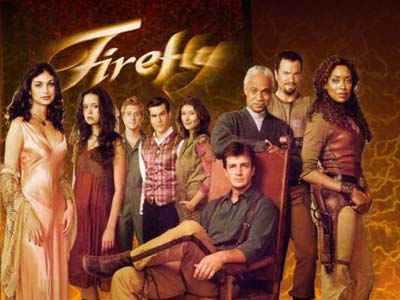
A few years ago my husband and I borrowed Season 1 of Buffy the Vampire Slayer on DVD from a friend. We loved it and proceeded to watch the next 6 seasons within one year (hey, we only had the one kid then). So when Firefly, Joss Whedon’s much-lauded follow-up project became available on Netflix Instant earlier this year, my husband suggested that we watch it. At the time we were still knee-deep in Breaking Bad episodes (see Resolution # 1), and our DVR queue was filled with shows. I simply couldn’t commit. So my husband watched it without me. Then, last semester I decided to observe my colleague’s class, a team-taught course on frontier mythology. The day I visited they were discussing Firefly. By the end of the class I realized that I had made a terrible mistake. Why didn’t I watch it with my husband? Oh the regret! You see, 90% of my TV and DVD watching is done with my husband at my side; this is our “quality time” together. So if I ever want to watch something that he does not want to watch, it is very difficult to find the time for it. But in 2011 I will make time for Firefly. Even if it means putting the kids back into their safety cages. Don’t be concerned. They like their cages.
4. I will watch more movies that are a. not new releases and b. not assigned for my classes.

There was a blissful time in my life, not too long ago, when I would sit on my couch, pen and notebook in hand, watching film after film. These were the dissertation years, when watching films all day was part of my “homework.” Sure, some of the films I had to watch were real stinkers, like Cutthroat Alley (2003, Timothy Wayne Folsome) and Teenagers from Outerspace (1959, Tom Graeff). But it was fun even watching the stinkers. However, once I started my position at ECU, I found that I stopped watching older films unless I planned to teach them in my classes. I stopped working on that list of films that all film scholars have in their heads: “The List” of films that I want to see and that I know that I need to see. So in 2011, I resolve to watch at least some of the following (Yes, I realize that there are some films on this list that I should have watched a looooong time ago. And yes, some of these are stinkers):
Eyes without a Face (1960, Georges Franju)
Thelma and Louise (1991, Ridley Scott)
Rashomon (1950, Akira Kurosawa)
Rambo: First Blood Part II (1985, George P. Cosmatos)
Red Dawn (1984, John Milius)
Summer Stock (1950, Charles Walters)
Panther Panchali (1955, Satyajit Ray)
Play Time (1967, Jacques Tati)
There are so many more films on “The List” but I want my New Year’s resolutions to be reasonable. And I am hoping that blogging about my resolutions will ensure that I stick to at least some of them. I also plan to blog about some of the films in Resolution #4 as I watch them.
5. I will stop wasting precious “screen time” on Reality TV shows with little nutritional value.
Most reality programming is the TV equivalent of McDonald’s. It’s great when you’re consuming it, but you know that at best you’ve filled your body with worthless calories, and at worst you’re gearing up for a heart attack. Don’t get me wrong: MTV’s reality shows have served me well. I have devoted many a blog post and article to The Hills, The City, The Real World and Teen Mom. And my next book project will focus on these programs and their teenage audiences. But, in 2011 I vow to cut out all “unnecessary” TV junkfood from my diet. I will not watch the revamped American Idol. I will not watch any dance competition shows. I will not watch anything in which people try to lose weight, compete for plastic surgery, or interact with a Kardashian. This is not a moral choice. There is nothing “wrong” with these shows. But if I want to keep Resolutions #1-4, then I need to trim some fat. My kids won’t stay in their cages forever.
6. Finally, and most importantly, in 2011 I will play more Angry Birds.

Because those stupid pigs won’t kill themselves.
So, what are your popular culture resolutions for the year? Remember, it is so much easier to watch a movie than exercise! Won’t you join me on the couch in 2011?
The Films that Fill Me with Dread
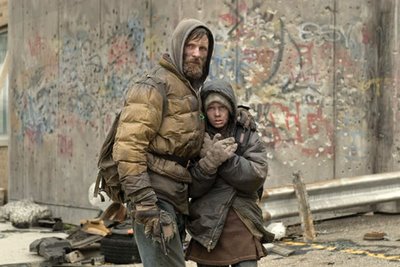
For me, winter break is a time to catch up on all the movies that I didn’t get to see in the theaters during the year. I had a second baby at the beginning of 2010 so “all the movies that I didn’t get to see in the theaters during the year” = “all of the movies released this year.” But don’t pity me, friends. My Netflix queue is pretty kick ass these days and I’ve really enjoyed playing catch up over the last few weeks.

Earlier this week my husband and I decided to watch a film that we had both been wanting to see for months, The Road (2009, John Hillcoat). We were at his parent’s house and had their TV all to ourselves, which is a rarity in a house where 8 people are staying. We were about 40 minutes in to the film when my husband’s sister and her boyfriend returned from a friend’s house. We chatted with them for about 15 minutes and when they headed upstairs I said to my husband “Okay, let’s finish the movie.” He replied, somewhat despondently,”Do we have to?”
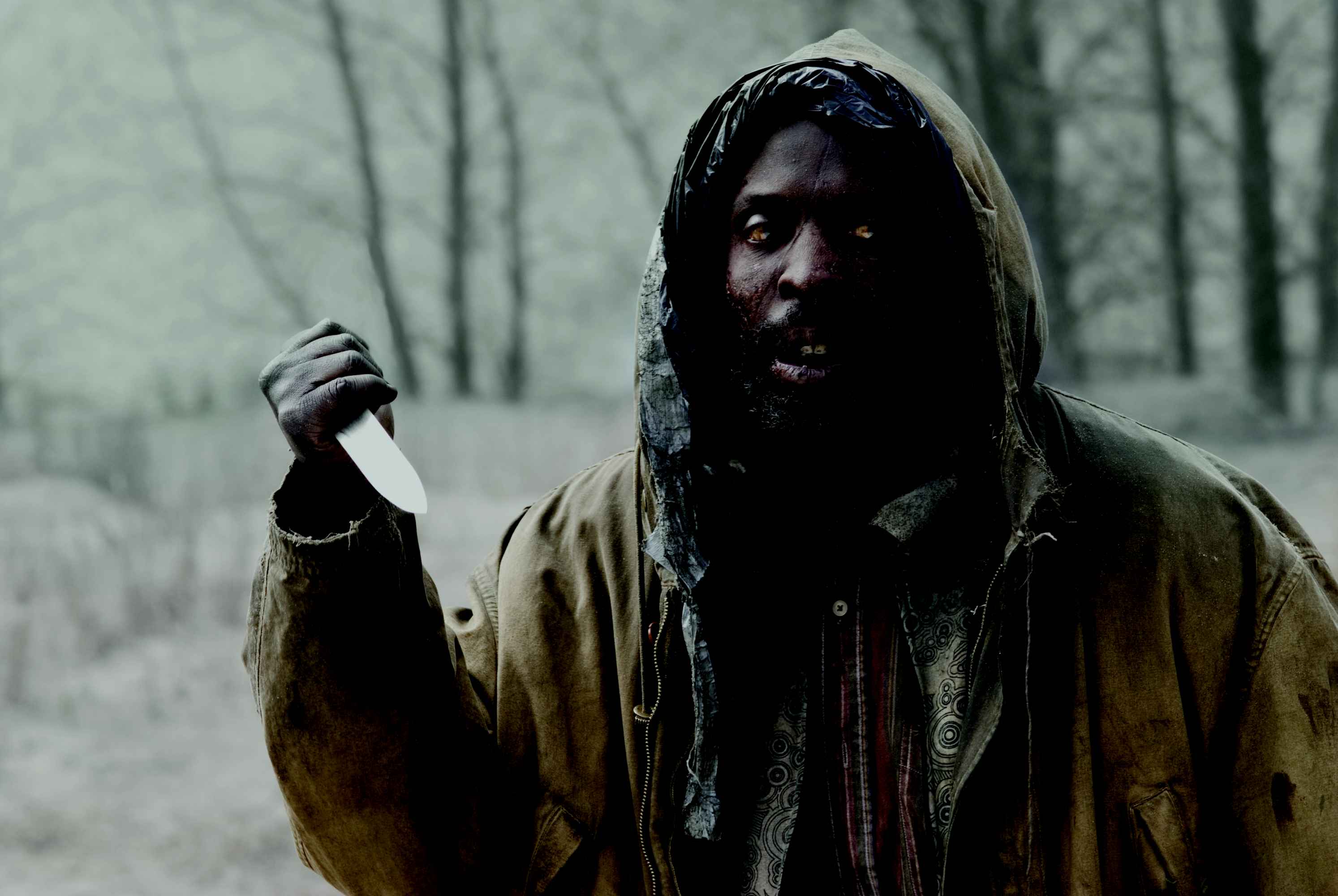
You see, The Road is a real downer. It focuses on two characters, the Man (Viggo Mortensen) and the Boy (Kodi Smit-McPhee) — they are never given proper names — who spend the majority of the film wandering through a frigid, grey-toned, postapocalyptic wasteland. They are dirty, tired, and hungry. All plant and animal life has died, so food is almost non-existent. Things have gotten so bad that people have started to eat each other; in one scene the Man and the Boy happen upon a basement full of naked, emaciated human beings that are being held captive in a makeshift slaughterhouse. Good times.
The Man and the Boy do have a mission. They are heading “South” because the Man hopes that things will be “better” there. But this seems unlikely — the world is dying, after all. So their arduous, seemingly unending journey feels pointless. Yes, the Man tells his son that they must keep going because they have a “fire” inside of them, and they cannot let that fire go out. But why? Why subject your child to this living Hell? To what end? And why subject the viewer to this Hell? The Woman (the Boy’s mother, played by Charlize Theron) had the right idea when she offed herself.
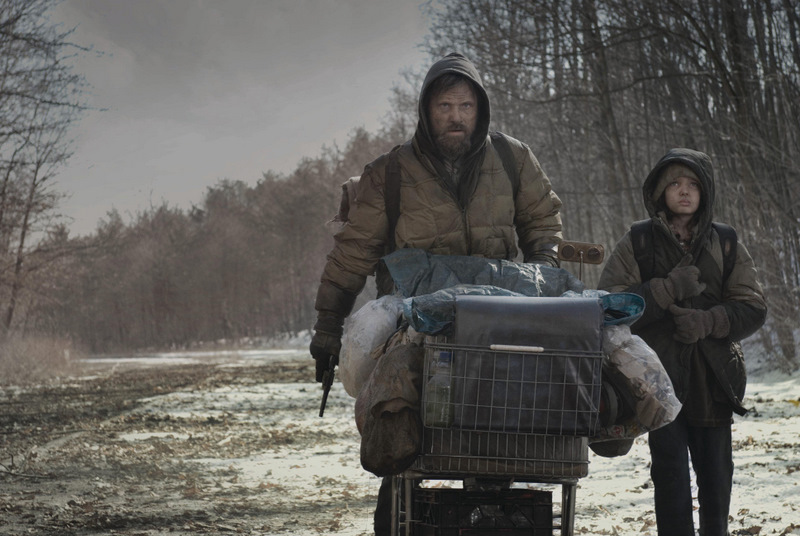
Despite the crushing depression we were experiencing, we did finish watching The Road. But it was difficult. My husband and I even resorted to using coping mechanisms — like heckling the film at moments of high drama — as a way to detach ourselves from the agony. For example, at one point in the film the Man has a breakdown and begins to sob. He is exhausted. His life and the life of his child are continually being threatened. He is dying of some unidentified lung ailment. The world is coming to an end for crying out loud! Right when the emotion of this scene became too much to bear — the Man is beginning to realize that soon he will be leaving his boy alone in this awful world — my husband yelled “Oh wahhhh! Poor me!” Normally I would be annoyed that someone had broken the spell of the film, but now I welcomed it. I needed to be detached from the pain and the agony on-screen. In fact, I was so unsettled by The Road (despite its optimisitic ending), that it took me several hours to fall asleep afterwards and I was plagued with dark and troubling dreams throughout the night.
The next morning I awoke exhausted and angry with myself: why did I decide to watch this movie? After all, a few years ago I made a vow to myself that I would no longer force myself to watch movies that are mentally traumatizing. I came to this decision after watching the English-language remake of Funny Games (2007, Michael Haneke). For those who don’t know, Funny Games tells the story of a wealthy white family who heads out to their beautiful, idyllic lake house for a family vacation. They are soon taken hostage by two smiling sociopaths, Paul (Michael Pitt) and Peter (Brady Corbett), who mentally torture them before [SPOILER ALERT] killing all three of them. I knew that these deaths were going to happen from the moment I spied Paul’s smiling face and yet I continued to watch. I watched as they tied up the couple’s young son and then killed him with a shotgun. I watched as the mother (Naomi Watts) wailed over the dead body of her only child. I should have turned the film off then. But I didn’t. I kept watching because I like to finish what I start. I kept telling myself “It’s just a movie.” And then I didn’t sleep all night.

In the case of both The Road and Funny Games my sleeplessness and nightmares were not caused by fear. I wasn’t worried that a bomb would destroy the world as I slept nor did I fear that two smiling young men would break into the house and hold me and my family hostage. What kept me awake and haunted my dreams was the dread each film stirred inside of me. Both films tapped into my deepest fear — the thing that I dread more than anything else — which is a world in which I will be unable to protect my children from harm. These films exploit these feelings of dread, offering parent protagonists who try and fail to keep their children safe under extreme circumstances.
When I watch a drama, I try to sympathize with its protagonists and see the world from their point of view. If I don’t do that, then I don’t feel like I am truly experiencing the story. The directors of Italian Neorealist films like The Bicycle Thieves (1948, Vittorio De Sica) depended on this sympathy — without it their films would fail as calls to action. And in melodramas like Imitation of Life (1959, Douglas Sirk) sympathy, and the tears that flow when we realize that Sarah Jane (Susan Kohner) will never be able to tell her mother that she loves her, are central to the genre’s pleasures.
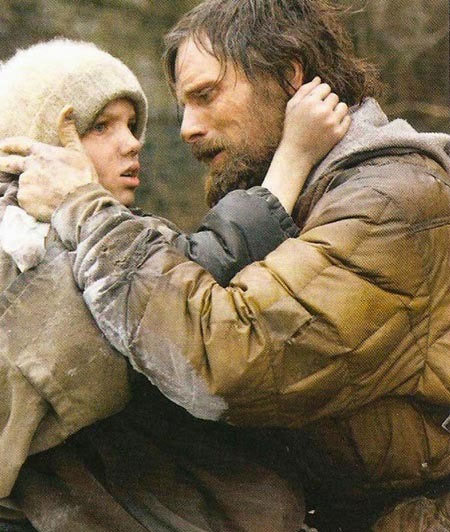
However, this sympathy becomes a liability when watching a film like The Road. For example, every morning the Man wakes up, gasps in terror, and places a frantic, searching hand on the Boy’s chest. He is making sure that the Boy is still there. This little detail filled me with dread. How does the Man even sleep? How could he lie down and rest, knowing that his boy could be stolen away by a band of cannibals? Contemplating such a life, even entertaining the possibility of such an existence, is mentally overwhelming to me. And this pervasive feeling of dread lingers for days, sometimes weeks, after the film is over. For this reason I think I need to stop watching any movie in which children are put in danger or are killed. I’ve already stopped watching zombie movies for similar reasons (they give me terrible nightmares).
But banning certain movies from my life makes me sad. I’ve devoted my life to the study of film so the idea of limiting what I watch doesn’t seem right. Now I know that Kelli Marshall refuses to watch movies with animals in them. And last spring Amanda Lotz wrote a piece for Antenna about how being a mother affected her reaction to a scene from Lost. So I know I’m not alone in feeling this way. Who we are affects how we watch and what we watch. But sometimes I wish that it didn’t.
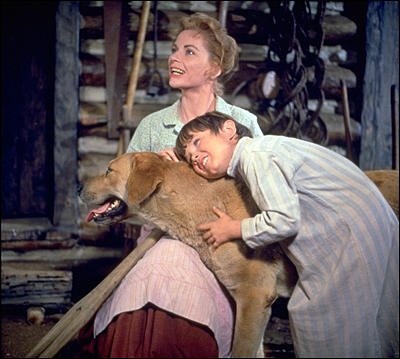
In conclusion, my experience with The Road has led me to wonder: has parenthood limited my ability to watch certain films? Can personal experiences — like my early (and traumatic) exposure to zombie movies — profoundly alter our ability to watch certain types of films? Or do I just need to suck it up?
And what about you: what films fill you with dread and why? Has this kept you from watching them? Or do you enjoy this feeling of dread? I’d love to hear your thoughts below.
Nucky Thompson: The Gangster who Won Me Over
When Boardwalk Empire premiered on September 1 of this year, I was unenthused with Terence Winter’s decision to cast Steve Buscemi in the role of the series’ central protagonist, Nucky Thompson. Traditionally the gangster hero is played by an actor (almost always male), who is formidable in stature (Vito Corleone), personality (Rico Bandello), or both (Tony Soprano). The gangster is the very definition of a “tough guy.” If he shoulder checks you on the street, you’re not going to demand an apology. The gangster inspires fear, even when he’s a puny as Little Caesar‘s (1931, Mervyn Leroy) Rico Bandello.

By contrast, Buscemi is a character actor best known for playing weaselly, neurotic, or pathetic characters. In Reservoir Dogs (1992, Quentin Tarantino) he objected to his assigned alias, Mr. Pink (“Why do I have to be Mr. Pink!”) and petulantly refused to tip his waitress, inspiring one of my favorite movie lines of all time:
Mr. Pink: [rubbing his thumb and index finger together] You know what this is? It’s the world’s smallest violin playing just for the waitresses.

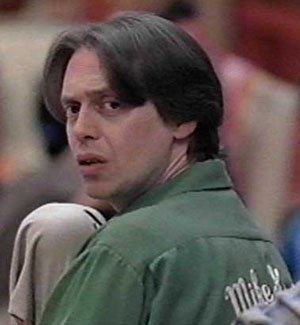
In The Big Lebowski (1998, Joel and Ethan Cohen), he is Donny, one of The Dude’s (Jeff Bridges) bowling buddies. While good-natured, Donny is incredibly annoying and is often told to “Shut the fuck up!” Buscemi has a face that almost demands that it be told to “Shut the fuck up!”
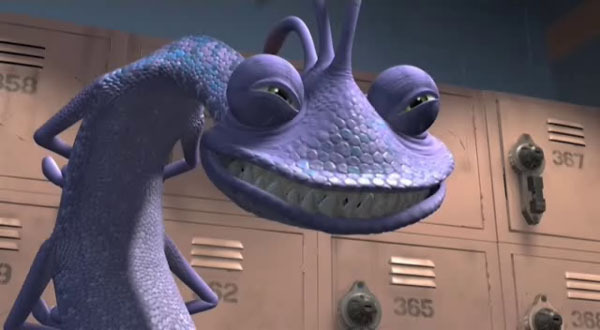
Even when animated, as he is in Pixar’s Monsters, Inc. (2001), Buscemi plays Randall Boggs, a duplicitous chameleon who delights in his profession (the scaring of children), and is consumed with jealousy over the success of his rival, Sulley (John Goodman). As always, Buscemi’s character fails to master his bigger, smarter, braver and, almost always, better looking, foes.
As a fan of Buscemi’s work, this is how I like him. He is a “character actor,” after all. Character actors, by definition, are not the leading men. They are there to support, antagonize, or bewilder the leading men. Thus, I was surprised to hear that he was cast as the lead in a television series. A movie only demands that an actor be charismatic for 2 hours but a television series asks that actor to command the screen week after week. As I watched the opening credits of Boardwalk Empire, which, like The Sopranos, features its protagonist taking stock of his domain, I was doubtful:
Buscemi stands on the beach, looking like something out of a Magritte painting; he appears stylized and inscrutable, devoid of the fire and passion I expect of my gangster heroes. “This is not going to work,” I sighed to myself.

After the first few episodes of the series, I believed that I was right. A gangster story is only as good as its hero, and Boardwalk Empire lacked one. Nucky seemed too calm, too polite, too contained, too un-Buscemi-like, to carry the series. In his seminal piece on the genre, “The Gangster as Tragic Hero” (1948), Robert Warshow argued that “[t]he gangster’s whole life is an effort to assert himself as an individual to draw himself out of the crowd, and he always dies because he is an individual.” Thus, Nucky’s seemingly reasonable demeanor stands in stark contrast to one of the gangster hero’s central qualities: his excessive nature. The gangster’s outsized desires and ambitions are what lead to both his success as well as his demise.
Nucky, by contrast, appears to be a conciliatory man. He gives money to anyone who asks for it, endures back talk from his ward/employee, Jimmy Darmody (Michael Pitt), and wines and dines politicians whose piggish desires clearly disgust him. We don’t see Nucky lose his cool, punch a disrespectful underling, or accidentally kill anyone (as say, Tony Soprano might do). What kind of gangster hero is that?
But as I continued to watch the series I realized that Nucky was a great gangster hero and that Buscemi was nailing the role. While other gangster heroes are defined by their unbridled passion, their inability to contain their desires and emotions (such as Tom Powers’ suicidal decision to avenger his best friend’s murder in Public Enemy), Nucky’s power lies in his ability to be in control at all times. And given Buscemi’s small, 5 foot, 9 inch frame, such control makes sense. A Tony Soprano can throw a punch when he likes, but a little man like Nucky would invariably fail as a physical aggressor. Instead, Nucky must rely on his intellect and reason in order to remain dominant.
This quality is best exemplified in the finale, when Jimmy, who has recently discovered the role Nucky played in the procurement and rape of his mother at age 13, confronts Nucky at a party. Jimmy is not just angry about the abuse his mother endured, he is also hurt to discover that Nucky took care of him out of an obligation to the Commodore (Dabney Coleman), rather than out of love. Jimmy always saw Nucky was a father figure but he now realizes that Nucky just viewed him as another item on his long to-do list. When Jimmy directly poses this question to Nucky, the aging gangster responds, “What difference does it make?” Nucky seems almost perplexed by Jimmy’s anger, as if the love between a father and a son is incomprehensible to him. And given Nucky’s abusive relationship with his own father, it probably is.

Just because Nucky appears controlled on the outside does not mean the man is not excessive. He is just adept at having others enact his excess for him. For example, when Nucky discovers that Margaret Schroeder’s (Kelly MacDonald) husband, Hans, has beaten her to the point that she has a miscarriage, he decides to have the man killed. But Nucky’s decision proves to be dangerous to his empire. It attracts the interest of Federal Agent Nelson Van Alden (Michael Shannon), who is sure that the murder is somehow linked to Nucky. We only find out in the finale that Nucky’s decision to have Hans killed was based purely on emotion; his son died when he was just a few days old and therefore the death of any baby strikes a nerve. Even when telling this story to Margaret, Nucky’s emotions are barely visible, registered in the twitch of his lips or perhaps a moment when we can detect tears in his eyes. But only for a moment. Then he shakes it off and once again becomes “Nucky Thompson.” For this reason, one of my favorite moments of the season was when Nucky burned down his father’s home. It was so out of character for him, but also very revealing of the emotions he normally keeps buried.

Nucky must reign in his emotions and dispassionately govern those around him in order to maintain his power. The few moments when he does slip up and allow his emotions to take over, such as the murder of Hans, are the cause of most of his problems. Indeed, his hasty to decision to fire his brother Eli (She Wigham) will likely prove to be his greatest mistake yet: the finale closes with Eli, Jimmy, and the Commodore conspiring to oust Nucky from his seat at the top of the Boardwalk Empire.
In this way, Nucky hearkens back to one of cinema’s most beloved gangster hero’s, Michael Corleone (Al Pacino). Like Michael, Nucky uses reason to get ahead and both men know how to run a tight ship. Nucky and Michael embody the mantra, first articulated by Tony Camonte (Paul Muni) inScarface (1932, Howard Hawks) “Do it first, do it yourself, and keep on doing it.” However, both characters inevitably alienate those who love them most because of their inability to emotionally connect. Terence Winter must be aware of these parallels because the season finale clearly references The Godfather‘s famous Baptism scene:
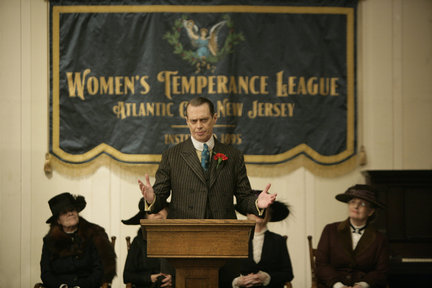
In the above scene from The Godfather, Michael and his family are attending the baptism of their infant son. As Michael’s son is washed clean of his sins, and Michael repeats the prayers, his henchmen kill off his rivals one by one, thus securing his place at the top. Similarly, in Boardwalk Empire, Nucky speaks at a voter rally in support of his hand-picked candidate for mayor of Atlantic City. As Nucky assures the crowd that a Republican administration will crack down on crime, specifically seeking out the individuals who murdered five bootleggers in the woods at the beginning of the season (the true culprits being Jimmy and Al Capone, of course), we see Nucky’s henchmen carrying out this “justice.” There is even a moment in which Jimmy slits the throat of Leo D’Allessio (Max Casella) as he sits complacently in a barber’s chair, a direct reference to Moe Green’s (Alex Rocco) execution as he received a massage. If The Godfather‘s baptism scene was about the contrast between family and business, and how it is impossible to keep the two separate, Boardwalk Empire‘s homage is about the contrast between American politics and crime, and how it is impossible to keep the two separate. Applied specifically to Nucky Thompson, this scene is also about the contrast between reason and passion, brain and body, and how, soon enough, Nucky will not be able to keep them separated.

So while initially I felt that Steve Buscemi was wrong for the role of Nucky Thompson, and that Nucky Thompson was the wrong character to play the role of gangster hero, I am happy to say that Boardwalk Empire has changed my mind. Buscemi, with his small, squirrelly body and his sad, trout face, was the perfect choice for a character who has spent a lifetime privileging his ambitions over his emotions.
So what do you (or did you) think of Steve Buscemi in the role of Nucky Thompson? Do you find him, ummm, sexy? ‘Cause I certainly don’t. No, not me. Don’t find Buscemi sexy at all. Now look away, nothing to see here folks…
Me and My Twitter: Our Untold Love Story
This week I taught the film Wall*E (2008, Andrew Stanton ) in my Film Theory and Criticism course. I selected the film to complement the week’s topic on digital cinema. However, my students were far more interested in discussing the film’s post-apocalyptic vision of an Earth so overrun with consumer waste that it must be abandoned for a clean, automated, and digitized existence on the Axiom, a spaceship that caters to humankind’s every need. Robots take care of human locomotion (which is why these humans are no longer able to walk), food (lunch in a cup!), grooming (robot manicurists!) , and even decision-making:
My students were critical of these human characters: for their sloth, their apathy, and most importantly, because of their inability to form real human connections. “They only communicate with each other through screens!” they lamented. I then pointed out that the behaviors of the humans on the Axiom are not too different from the behaviors of the humans on our college campus. As I walk to and from my office I see students, heads bent, eyes averted, typing away on their smart phones. Those who aren’t typing on their phones are talking on their cell phones or listening to their I Pods. Eyes plugged, ears plugged, the students I see each day rarely commune with the real world around them. Like the humans on the Axiom, we are surrounded by screens and by virtual relationships. This realization seemed to depress my students.

But I’m not all that saddened by this vision of the future. No, I don’t want to become a rotund, infant-like drone, sucking my lunch out of a cup, but I am quite fond of the connectivity fostered by the internet and the proliferation of increasingly more affordable smart phones. In particular, I love Twitter. Man, do I love Twitter.

When I first joined Twitter in March 2009, I found it to be a lonely place. Gone were the hundreds of friendships I had accumulated on Facebook. Gone were those cute pictures of people’s babies and dogs (no really, I like seeing those). Gone was the instant validation I received when friends commented on my witty and hilarious status updates with their witty and hilarious rebuttals. Instead, I was faced with a long lists of 140 character statements, typed up by strangers, and addressed to no one in particular.

But over time I grew to understand the role of Twitter in my life. As many people have pointed out, Facebook is for connecting with the people I already know. Twitter, however, is for connecting with the people I would like to know. Sound creepy? Sure it does. But really it makes a lot of sense.
In my profession (higher education), networking with colleagues is key. In the past, such networking took place mostly at academic conferences. For example, imagine you are the editor of a film studies journal and you hear someone deliver a paper that sounds perfect for your next issue. You might approach the speaker at the end of the panel and ask her if she’d consider submitting her conference paper for publication in your journal. Or imagine you’re a graduate student and you need to find a scholar outside of your university to serve as a reader of your dissertation. You can approach one of your academic heroes at the bar later that evening, introduce yourself, and pop the question.
Yes, that’s all fine and good for the extroverts among us. But me, I’m an introvert. Or rather, I am the worst kind of introvert — an extroverted introvert. In other words, I love to socialize and meet new people, but I hate being the one who initiates the socializing and I hate introducing myself to new people. I don’t make a great first impression, but I make an excellent third impression. So up until the advent of Twitter, I was not able to meet many new people or forge important professional connections when I attended conferences. Instead, I mostly hung out with my (admittedly awesome) friends from graduate school, getting very drunk in the hotel bar.

But all of this has changed because of Twitter. Not only has it allowed me to meet with loads of new and interesting film and media scholars at conferences, it has also allowed me to develop professional relationships with people I have yet to meet. Many of the people I follow on Twitter also teach film and media studies courses and, even though we have not personally met, are more than willing to offer advice. For example, I am currently developing a syllabus for a new course, American and International Film History (1945 to the Present) and was having a hard time selecting a film for my week on New Hollywood Cinema. What to choose? So, I posed to the question to the Twitterverse:

And here are some of the responses I received:


This kind of conversation is especially important for someone like me, who teaches at a university in which there are only a few film studies scholars (there are three of us to be exact). Twitter provides me with an opportunity to brainstorm syllabus ideas, to get research suggestions for upcoming projects, and even to receive feedback on works in progress (via this blog) with an unlimited, virtual community of colleagues. It’s pretty amazing when you think about it.
Another thing that I love about Twitter is that it assembles an ever-present virtual community who is willing to listen, or at least bear witness to, my daily grievances. Here’s a post from a few weeks ago:

There is nothing profound about this tweet. In fact, it’s the kind of banal statement that most people would cite as evidence of Twitter’s utter pointlessness. But when I wrote this, I was having a bad day. And the shoes that I had to wear during my long walk home in the rain were destroyed. So it felt good to send my annoyance out there into the Twitterverse. Even if no one read it, the Tweet exists, and that’s enough for me.
Twitter is also great for someone in my profession because much of my work is completed in solitude. Yes, I teach in front of large groups of students and yes I have to attend committee and department meetings, but by and large I work alone. Therefore, Twitter affords me the opportunity to drop in and out of ongoing conversations, to comment on someone else’s tweet, to read a recommended article, or to watch a clip of someone crying about a “double rainbow,” when the mood strikes.A few minutes here, a few minutes there. It’s just the break I need in order to remain productive and, oddly enough, focused on the task at hand. Twitter is like a virtual coffee house filled with hundreds of interesting, funny, and bizarre individuals, who can be tuned in or tuned out throughout the course of the day.
It’s true, Twitter has caused me to share more banal details about my life than Facebook ever did:

And no one really needed to know that my cat doesn’t clean his ass after he uses the litter box:

Nevertheless, Twitter has added real value to my life. When I got my very own smart phone almost two months ago, I joined the other screen-entranced zombies who shamble across the ECU campus. But it’s not so much that I’m tuning the real world out. I like to think that I’m bringing more of the world in.
If you’re interested in reading more about the impact of being “plugged in,” you may be interested in the much-discussed (at least in the Twitterverse) article by Virginia Heffernen, “The Attention-Span Myth,” as well as Michael Newman’s thoughts on her piece. Both were written with more time and care than this blog post. But that’s because I’m too busy tweeting, ya’ll.
Why Does Pop Culture Like to Hate on Cornell?
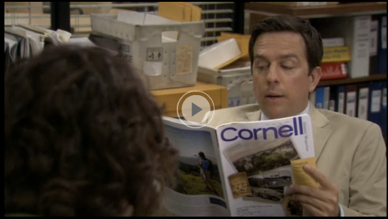
“Andy, Cornell called, they think you suck.”
-Michael Scott (Steve Carrell)
I am an alumna of Cornell, class of 1999. I regard those four years of college as some of the greatest in my life. I received a top-notch education, met an array of smart, interesting, and hilarious people, and drank a lot of alcohol. I also met my husband at Cornell and so the two of us often wax poetic about our times there: about getting beers at Ruloff’s, hiking through the gorges (“Ithaca is gorges!”), and heading to the Commons for a great meal. Our daughter has been informed that she, too, will attend Cornell (a move ensuring that she most certainly will not attend Cornell), and we have been dressing the baby in Cornell gear in the hopes that he will get Big Red fever by osmosis. In short, we love Cornell.

So of course we were both delighted when one of our favorite comedies, The Office, gave Cornell a big shout out in the Season 3 premiere “Gay Witch Hunt.” It is in this episode that we first meet Andy Bernard (Ed Helms), Jim’s (Jon Krasinski) new co-worker at the Stamford, CT branch of Dunder Mifflin. During one of the show’s signature “talking head” interviews Andy tells us “I went to Cornell, ever heard of it?” This reference is used to provide the viewer with key information about this addition to The Office’s cast: Andy is threatened by his new co-worker, Jim, and believes that mentioning his prestigious alma mater will make him appear more impressive to the show’s fictional documentary crew. It doesn’t. Nevertheless, I gushed to my husband: “I can’t believe they’re talking about Cornell!”
Over time, however, my enthusiasm for The Office‘s Cornell obsession began to wane. You see, Andy, like Michael, is both incredibly insecure and yet has an inflated sense of self. He is a fool. A boob. The running joke about Andy’s Cornell name-checking is that it reveals his need to brag while at the same time demonstrating that he doesn’t have much to brag about at all. He thinks his Cornell degree is impressive but no one else does.
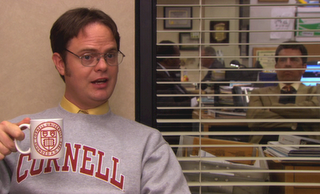
The series’ most extended Cornell reference occurs in “Employee Transfer,” when Dwight (Rainn Wilson) decks himself out in Cornell gear and proclaims that he will be applying to Cornell, all as a way to get under Andy’s skin. Andy decides to interview Dwight as part of the application process and the scene culminates with Dwight deciding to apply to Dartmouth instead since it is a “vastly superior school.” Indeed, Dartmouth is frequently ranked higher than Cornell, a fact which rankles many a Cornell undergrad. Things are starting to get personal, people.
All of this joking at Cornell’s expense got me wondering: did someone on The Office‘s writing staff know a Cornell graduate who was a total douchebag? Or was one of the show’s writers rejected from Cornell? [Note: a reader just informed me that the character of Andy Bernard is a tribute to former NBC president Kevin Reilly, class of 1984]. Or, is it possible that a Cornell degree has come to be a signifier for a particular kind of character? For example, the holy trinity of Harvard, Princeton and Yale are referenced when we are supposed to see a character as being particularly smart. MIT is used if that person is a science or math geek. If you’re smart but also a free-thinker? Then you went to Brown. And if your character loves to party? Then it’s Arizona State, Ole Miss, or any school with a good football team.
So does The Office have a bone to pick with Cornell? Or are they simply playing off of well-known Cornell stereotypes? Is Cornell synonymous with self-important fools who are not nearly as smart as they think they are? Let’s take a look at some of the other famous, fictional, Big Red alums:
1. The Simpson‘s Sideshow Mel
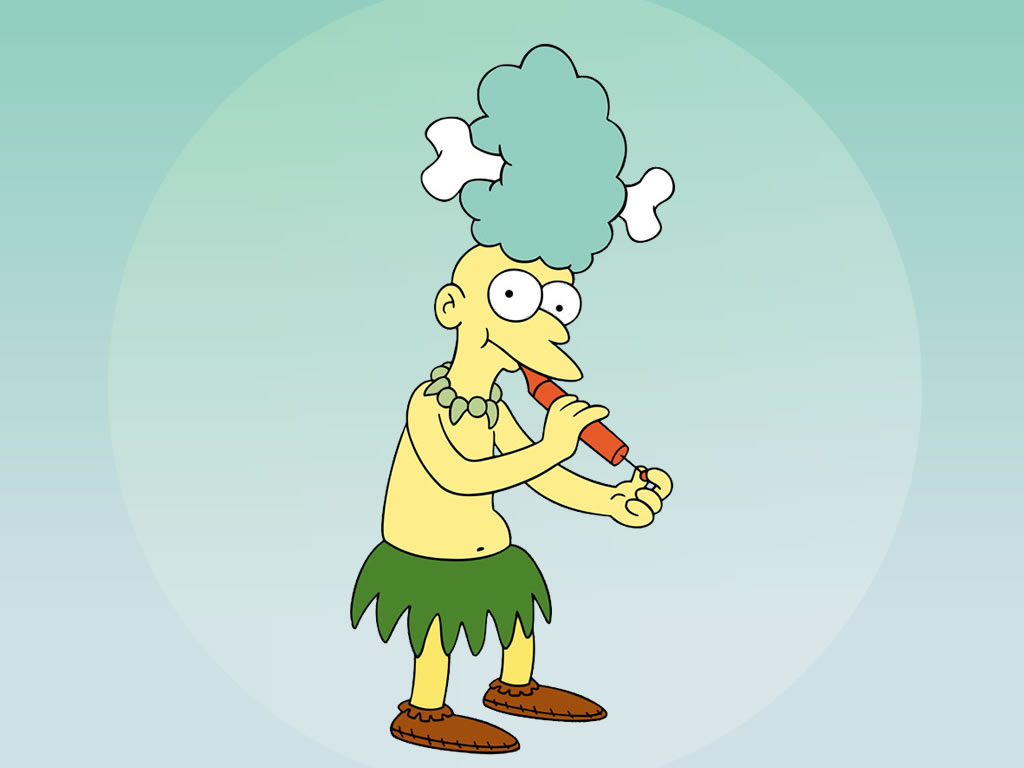 Mel first appears in the episode “Itchy & Scratchy & Marge ” as a replacement for the murderous Sideshow Bob. At some point it is revealed that Sideshow Mel is a graduate of Cornell University. Sure, he wears a bone in his hair and communicates via a slide whistle, but offstage he speaks in a lovely British accent (which means he’s smart, y’all!) and once played the role of Biff in Arthur Miller’s Death of a Salesman. He is also lactose-intolerant. Advantage: Cornell.
2. Up in the Air‘s Natalie Keener
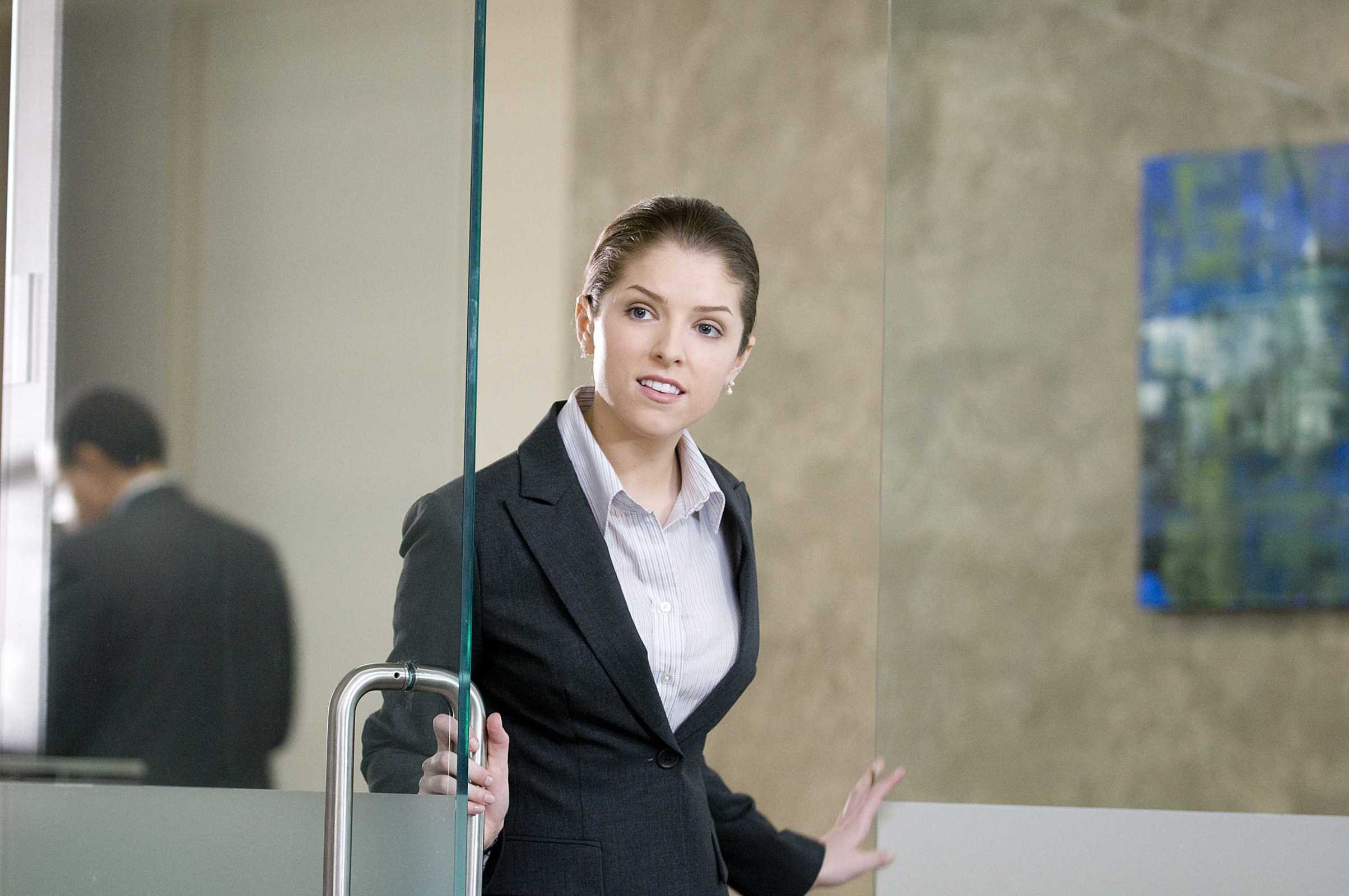
One of the first things we learn about young, ambitious Natalie (Anna Kendrick), is that she is a recent graduate of Cornell University. By citing Cornell, the movie is not necessarily highlighting Natalie’s intellectual pedigree; that is what references to Harvard, Yale and Princeton are for. Instead, Cornell is meant to show us that Natalie is a hard worker, a striver, even. She is like a yappy dog that won’t shut up until you crouch down and pet it. Luckily, Natalie becomes more likable as the film progresses and we learn more about her life. In a way, Natalie needs to get past her life at Cornell (and the rigid blueprint she had for her life) in order to embrace what she wants. Advantage: Haters.
3. Ugly Betty’s Nick Pepper
I do not watch Ugly Betty. Or rather, I should say that I watched it once, thought it was awful, and have never attempted to watch it again. But from what I have read, the character of Nick Pepper (Max Greenfield) is a Cornell alum. And from what I have read about him, he is quite similar to The Office‘s Andy: he has an inflated sense of self, annoys his co-workers, and dresses in what he believes to be the trendiest of clothes. Normally, I would give this point to the Haters, but given that Ugly Betty is a terrible show, I am going to go ahead and call it a Draw.
4. Made of Honor‘s Tom Bailey
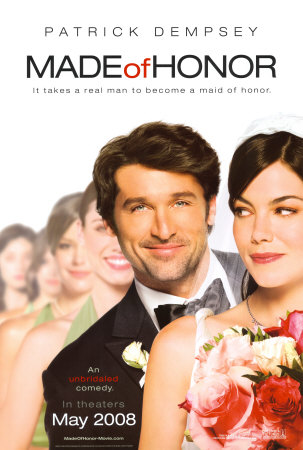
I don’t even need to describe this character, played by Patrick Dempsey, or his relationship with Cornell. The movie is called Made of Honor. Get it? Nope, I don’t either. Why substitute “Made” for “Maid”? Poor use of puns means Advantage: Haters.
5. American Pie‘s Vicky

Vicky (Tara Reid), one of the horny teenagers in this classic teen sex comedy, is headed to Cornell after graduation. Vicky is actually pretty likable: not too uptight, not too arrogant. Yes, she’s played by Tara Reid, but it’s pre-Taradise Tara Reid, so it’s Advantage: Cornell.
In conclusion, it’s difficult to determine exactly what Cornell’s screen image is. Certainly the Cornell screen image is not as solidified as Harvard’s or Penn State’s screen image. So for now, I’ll take the Andy Bernards and the Sideshow Mels as evidence that Cornell has some significance in popular culture. And that’s all we self-important, type A Cornell grads want in the end — a little recognition.
Cornell grads: can you think of any other prominent fictional Cornell alumni? If so, discuss below. And, of course, Go Big Red!
Welfare Queen Redux: TEEN MOM, Class and the Bad Mother

Earlier this fall I wrote a post about Teen Mom. In it I praised the parenting skills of some of the mothers, such as Maci, and was extremely judgmental of other mothers depicted on the show, like Amber. In several episodes we see Amber physically and verbally abuse her on-again, off-again, fiance, Gary. In one particularly harrowing scene, Amber repeatedly punches Gary in the head and kicks him in the back, all while calling him a “fat fuck.” Gary, a passive, lump of a man, accepts these blows without retaliation, calmly asking Amber “Are you done?” What is most amazing about this scene is that it was caught on tape. In other words, during this violent fight, MTV’s cameras continued to roll. No one intervened on Gary’s behalf. No one called the police. As many commentators have pointed out, had this abuse been reversed — if Gary had been the one beating the shit out of Amber — there would have been a very different reaction. But our society has some very odd double standards when it comes to violence and who may wield it. Men should never hit women. But women? They can beat their men as much as they like because they’re just women. They can’t do much harm with those teeny tiny hands!

Beyond the damage inflicted on poor, doughy Gary in this scene, we must also account for the damage inflicted on little Leah. Where was she as her mother repeatedly beat her father? Was she playing, unsupervised, by an open window again? A more likely scenario is that she was sitting by the feet of one of MTV’s cameramen, watching this primal scene unfold. What lessons about love, family and basic human decency are being conveyed to an impressionable little girl at such a moment? We giggle when we see little Leah imitate her mother by tottering around in her high heeled shoes. But it would be far less amusing if Leah walked up to her father, punched him in jaw and called him a “fat fuck.”

Yes, we can all agree that Amber is a Bad Mother. In addition to beating up her significant other in front of her child, she seems completely unaware of how to care for her daughter. When Leah throws a tantrum, Amber’s response is to scream “SHUT UP!” over and over until Leah quiets down. Sometimes this technique even works (who knew?). Amber is also fond of lounging in bed, listening to her I-Pod or texting on her smart phone, as Leah runs around their bare apartment, looking for some way to amuse herself. In these moments I am amazed at how well-behaved Leah is. When my daughter was 1 she required constant attention and supervision. But at a young age Leah has clearly learned how to fend for herself. And how not to fall out of an open window. Way to go, Leah.
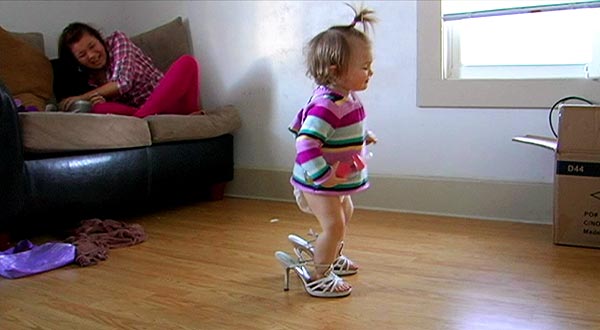
I’ve devoted the last 450 words to criticizing Amber’s parenting and I could easily write another 450. And that’s exactly what MTV wants me to do. You see, Amber is the arch villain of Teen Mom, its prima facie case for teen abstinence. The message is: “If you don’t use a condom, kids, you WILL become a Mom-monster, just like Amber!” The network has come under fire for “glamorizing” teen pregnancy. But to refute these charges, Teen Mom‘s executive producer Morgan J. Freeman needs only to point at Amber. A villain like that will make even the horniest teenager jump into a cold shower.
However, my opinion and my judgment of Amber was radically altered after watching her on the Teen Mom reunion special that aired on October 19th. The Amber that appeared on this show was a very different woman from the one who appears in Teen Mom. This new Amber was clearly on some kind of medication (anti-depressants, Lithium, valium?). But it wasn’t just the medication. This Amber was sad and contrite. This Amber had clearly watched the Amber that appeared on Teen Mom and did not like what she saw. Indeed, after reviewing a “highlight reel” of her poor behavior, she told Dr. Drew, that cunning exploiteer of human suffering, “If that was said to me, I’d go crazy on somebody.” Self reflection. This is something new for Amber.
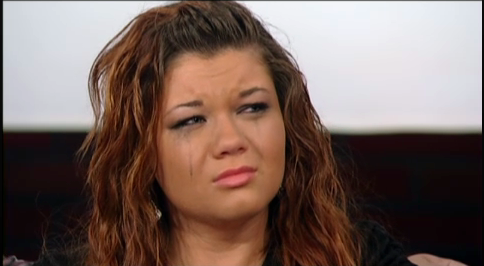
Throughout this devastating — yes devastating — interview, Amber alternately sobbed or covered her face with her hands. When Dr. Drew asks Amber if her own childhood resembled Leah’s, Amber truly looks shocked, as if she had never considered the parallels between the abuse she suffered/watched as a child and the abuse her daughter now endures. Dr. Drew asks “Is that what you were exposed to as a kid” and we can actually see the wheels turning in Amber’s head. Her face crumples and all she can say is “Fuck,” before bursting into tears. As I watched Amber I felt empathy for her. I realized that despite her horrific behavior, she was a victim too. This revelation does not excuse her behavior, but it certainly explains it. And I wish MTV had done a better job of giving viewers this background. Instead, Teen Mom presented Amber as a simple villain, which is exactly what they needed her to be in order to promote their message about safe sex. Talking too much about Amber’s shitty childhood would complicate a message that needs to remain simple: “Don’t have sex, kids! For the love of God, DO NOT HAVE SEX! Because if you do, then we will need to cancel the third most watched original cable series! And we really don’t want to do that. Now please watch this sexy music video.”

In many ways, Amber is similar to that other archetypal Bad Mother, the mythical “welfare queen” invented by the Reagan Administration as a way to dismantle what they saw as a corrupt and flawed welfare system. If you are interested in reading more about the parallels between Amber and the welfare queen of the 1980s, please read the article I just published at FLOW, where I discuss these and other illuminating arguments in more detail. Or you could just stay here and look at this picture of Leah stuck in a steering wheel. Don’t babies do the darndest things?
GLEE as Integrated Musical (Finally!)

If you read this blog with any regularity (and shame on you if you don’t), then you know that Glee is a show that drives me to distraction. I love it. I hate it. I hate to love it. Why do I have such passionate emotions for a television show? First of all, I don’t get out much. When you have two young children, one of whom is a baby who likes to wake up at all hours of the night, you find yourself at home, watching a lot of television. Yeah, it’s a sexy time over here.

But even more than that, my passionate response to Glee is very much tied to my love of the film musical. Watching a musical releases the endorphins in my brain. Because I love musicals so much, I have high expectations for Glee. And as you probably know, when you have high expectations for something, you will invariably be let down. I’m a glass half full kind of gal.
But this week’s episode of Glee, “Grilled Cheesus” (oh what a title!), did justice to the film musical. I’ve explained why in a post over at Antenna. If you’d like to read it, click here. Thanks ya’ll!
BADLANDS: The Film I Always Find a Way to Teach

Whenever I meet new people and they discover that I teach film for a living, they invariably ask me: “So what’s your favorite movie?” I realize that this is polite, small talk kind of question. It’s the kind of question people think that they are supposed to ask me. But to someone who has devoted their livelihood to researching, analyzing, and teaching about moving images, the question is agonizing. Asking me what my favorite movie is is like asking me: “Which of your children do you love the most?” There is simply no way for me to answer this question in a satisfying, honest way. So I usually tap dance around the answer, trying all the while to not sound like a pretentious academic douchebag (which is what I am). “Oh it’s so hard for me to choose!” I say. When the asker looks sufficiently annoyed, I usually submit and say something expected like “Casablanca. Casablanca is my favorite movie” Then they leave me alone.
But the real answer to the question “What is your favorite movie?” is very complex for me. I love different movies for different reasons. I love Double Indemnity (1944, Billy Wilder) for its whipsmart, sexy dialogue. I love The Crowd (1928, King Vidor) for its winsome, bittersweet ending. I love Magnolia (1999, Paul Thomas Anderson) because it was the only movie to figure out the exact kind of role that Tom Cruise should play. I love The Breakfast Club (1985, John Hughes) because I watched it pretty much every Saturday afternoon on TBS when I was 12 and didn’t realize that they weren’t smoking cigarettes during that one scene in the library. I love American Movie for so many reasons but especially because of this scene:
And I love Terence Malick’s debut film (his DEBUT!), Badlands (1973), because it is, for lack of a better word, a perfect movie. Badlands is a movie that I never tire of watching. I get giddy about the opportunity to introduce it to new people. For that reason, I try to put Badlands on my syllabus whenever possible. In fact, this week I screened Badlands for my Film Theory and Criticism students for our unit on film sound. I love teaching this film because, as I mentioned, it’s perfect, and most students have not heard of it. Therefore, after the screening students generally exit the classroom with the same dazed, but happy, expression I had after I watched it for the first time.

So what makes Badlands a “perfect” movie?
Terence Malick’s Script

In the very first scene of the movie we see Holly, a 15-year-old girl (Spacek was 24 when she played the role) with red hair, freckles, and knobby knees. She is playing with her dog on her bed. It is a scene of innocence, of total girlhood joy. But this happy, carefree image contrasts with Holly’s vacant, flat, voice over, which informs us “My mother died of pneumonia when I was just a kid. My father kept their wedding cake in the freezer for ten whole years. After the funeral he gave it to the yard man. He tried to act cheerful but he could never be consoled by the little stranger he found in his house.” In four brief lines Holly aptly summarizes her childhood: she was an only child; her father was once a real romantic (he kept his wedding cake in the freezer for 10 years after all) but the untimely death of his wife deadened his heart (he gave the cake to the yard man after his wife’s funeral); Holly and her father are unable to connect emotionally (Holly knows that her father sees her as a “stranger”). Such is the mastery of Malick’s tight script — not a word is wasted.
Malick’s script is also admirable in that he was able to capture the rhythm and the texture of a teenage girl’s stream of consciousness. Holly doesn’t speak like an adult and she doesn’t speak like a child. After Kit kills Holly’s father he instructs her to grab her schoolbooks from her locker so that she won’t fall behind in her studies. Holly’s voice over then tells us “I could of snuck out the back or hid in the boiler room, I suppose, but I sensed that my destiny now lay with Kit, for better or for worse, and it was better to spend a week with one who loved me for what I was than years of loneliness.” If these words were in Holly’s diary they would probably be adorned with hearts over the i’s and little flowers scribbled in the margins.
Holly’s Voice Over/The Stereopticon Scene
There are so many scenes I could point to that illustrate the genius of Sissy Spacek’s line readings in this film, but my favorite is the much-lauded stereopticon scene. After killing Holly’s father the couple flees to the woods and build themselves a Swiss Family Robinson-style tree house (though it is likely that the grandure of this house has been imagined by Holly). In the middle of this segment, Holly sits down to look at some “vistas” in her father’s stereopticon. This is the first time that Holly has mentioned her father since his murder and yet she still does not mention if his death bothers her. As Holly looks at travelogue images of Egypt and sepia-toned lovers, she waxes philosophical, in the self-involved way that only a 15-year-old girl can. As she looks at an image of a soldier kissing a morose young woman she wonders “What’s the man I’ll marry look like? What’s he doin’ right this minute? Is he thinking about me now by some coincidence, even though he doesn’t know me?” As the camera slowly zooms in on this particular image Holly asks, the excitement barely rising in her quiet voice “Does it show in his face?”” The non-diegetic music becomes more intense as the scene progresses. Holly is coming to an epiphany. She is just some girl, born in Texas, “with only so many years to live.” She is aware that her life is structured by a series of accidents (her mother’s death), and yet, that life is also fated (“What’s the man I’ll marry look like?”). This voice over indicates that Holly is able to see her role in the larger web of humanity, and yet, this same girl watches as her boyfriend shoots her father and random unfortunates who happen to cross their path. It is infuriating and chilling. In fact, every time I watch this scene I get chills.
Kit/ Martin Sheen

I can’t say that I know much about Martin Sheen’s body of work, other than his roles in Apocalypse Now (1979, Francis Ford Coppola) and Wall Street (1987, Oliver Stone). I do know, however, that Martin Sheen frequently mentioned that Badlands was his best work. And I’ll take his word for it. Sheen is amazing in this role. He plays Kit as a man in limbo, a study in contradictions. He lectures Holly about the dangers of littering (“Everybody did that, the whole town’d be a mess”) but shoots her father without comment. He fancies himself a man of ideas, but when given the opportunity to speak, he has nothing to say. Kit wants to be a rebel, like his idol James Dean, but he speaks in platitudes.
Kit is constantly wavering between two poles. Sheen could have therefore played Kit as a bipolar monster — a man who shifts from one personality to the next. But instead, he makes Kit’s duality into an integrated whole. He plays Kit as a man who does not know who he is or what he should do; he only knows that he must fully commit himself to whatever choice he makes. For example, after Kit has been arrested he is allowed to speak with Holly briefly. Kit boasts “I’ll say this though, that guy with the deaf maid? He’s just lucky he’s not dead, too.” Then, in the same breath he tells Holly “Course, uh, too bad about your dad…We’re gonna have to sit down and talk about that sometime.” These moments are almost comical. Indeed, my students often laughed at Kit’s antics, even when he was shooting people.
The Music
I am incapable of talking about film music in a useful way. I can only ever use vague words like “haunting” or “tense” to describe a score. But there is something … haunting … about the non-diegetic tracks used in Badlands, such as the angelic, choral music that plays as Holly’s childhood home is consumed by fire:
So I suppose the next time someone asks me what my favorite movie is, I should just say “Badlands.” It wouldn’t be true, of course. As I mentioned, I could never pick just one. But it’s a movie that represents everything I love about movies: beautiful cinematography, impeccable acting, a tight script. And those chills.
Notes on TEEN MOM

When 16 and Pregnant debuted on MTV in the summer of 2009, I had no desire to watch it (I had assumed, wrongly, that it was some kind of Pro-Life propaganda show). When the follow up series, Teen Mom, premiered last winter, I was more intrigued, but figured it was too late to jump on board. I only agreed to watch Season 2 of Teen Mom because my husband was so passionate about it. He even rewatched the Season 2 premiere with me, pausing the DVR every few minutes to fill me in on each mother’s backstory. Yes, he’s a good husband.
After just one episode I was hooked. In fact, more so that any other reality TV show, the cast of Teen Mom has wormed its way into my everyday existence. When, for example, I am cajoling my 4-year-old into eating dinner while hand feeding the 8-month-old and also intermittently washing the dinner dishes so that I can get them both into the bathtub before the 8-month-old has a meltdown and Can’t-you-please-just-finish-your-dinner-now-Maisy!, I stop and think “If this scenario is driving me, a 34-year-old woman, crazy, how must it be for a 17-year-old girl?” Or, when I read about one of the Teen Moms in US Weekly (they’ve been all over the covers of the tabs the last few weeks), I find myself excitedly relating the news to my husband, as if I’m telling him about a close friend: “Did you hear? Farrah’s dating Pauly D from Jersey Shore!” or “I’m so disappointed that Amber and Gary are still together. They really need to break up.”

My unnatural attachment to these young women is based on two divergent affects. On the one hand, I identify with the Teen Moms. Watching these girls encounter the various pitfalls inherent in being a first time parent reminds me of the first year of my daughter’s life, and how incredibly challenging and rewarding it was. For example, in one episode, Farrah takes her daughter, Sophia, to the car wash and realizes that she has forgotten to bring diapers. But she can’t drive back home, or to a store, because her car is being detailed. “I’m such a bad mother!” Farrah wails. With Sophia in dire need of a diaper change, Farrah fashions a makeshift diaper out of towels (for the record, if the entire event had not been recorded by MTV’s cameras, there is NO WAY that the owner of the car wash would have consented to giving Farrah his towels to use as diapers. Blech).
Now those of you without children may agree with Farrah’s self assessment — that she is a bad mother for dressing her daughter’s precious bum in car wash towels. But, let me assure you: every new mother will make the mistake of going somewhere and forgetting to bring the diaper bag. It will likely happen just once because the consequences of that mistake will remain seared in your brain for eternity. I found myself in a similar situation when my first child was only a few months old. I’ll spare you the details but it involved an unexpected traffic jam, a screamy, screamy baby, and me gripping the driver’s wheel repeating the mantra “I will never leave the house without the diaper bag again.”

While part of Teen Mom‘s allure is this bittersweet reminder of my own struggles to raise a young child (as well as the Schadenfreude that comes from watching truly bad parenting in action), I am also drawn to the show because I view the Teen Moms as their parents as well. The mother in me wants to pull each girl aside and give her a reassuring hug. I think back to when I was 16 — how I slept until noon on the weekends, got drunk at parties, obsessed about my appearance and social standing, and generally thought of nothing but myself. In other words, I was doing precisely what a 16-year-old should do. So when I watch single parent Farrah working overtime at a pizza joint, then returning home to take care of her daughter, and then study, I feel an incredible sadness for her. Now I know Farrah loves her daughter and one day, both of their lives will be easier. But at this age Farrah should be going to Homecoming dances and gossiping about boys and staying out past curfew and spending long stretches of her free time listening to music and writing tortured poetry while locked in her bedroom. But she can’t because she’s a mom. And mothers of young children don’t get to be selfish or spontaneous. Or at least not as often as they need to.

This is why the inclusion of Catelynn and Tyler, the only couple of the group who decided to put their baby up for adoption, is such an interesting counterpoint to the other stories on Teen Mom. Given Catelynn’s wildly unstable home life — her mother is verbally abusive and her step father (who is also her fiance’s father, natch) is in and out of prison and rehab — her decision to give Carly up for adoption was both wise and mature. We therefore expect to see Catelynn and Tyler having a wonderful time in comparison with the harried mothers featured on the show. Instead, the adoption remains an open wound for the young couple.

While Catelynn dealt with her guilt immediately after Carly’s birth, this season has focused on Tyler’s attempts to come to terms with what it means to be a father and yet be childless at the same time. The episode in which Tyler calls another, older, adoptive father for support and advice was one of the most moving scenes in reality TV history (yes, really). When his mentor tells him the act of adoption was a loving and selfless act, Tyler replies (with tears starting to trickle down his cheeks) “That’s something that I struggle with a lot. Admitting that, you know, she deserves better than me. I mean, when you’re the man, the father, you are the provider. And to admit…that I can’t give her that, that’s the hardest thing.” How many 17-year-old boys are this self-aware, this in touch with their own complex emotions? I bawled through this scene. Thus, it is oddly the couple who chose not to raise their child that speaks most poignantly to the high emotional costs of an unplanned pregnancy. You can bet that I will make both of my children watch Season 1 and Season 2 of Teen Mom when they start dating.
Random thoughts and questions:
1. Is anyone watching Catelynn’s little brother? Did you see him making out with the refrigerator the other week? Dear Lord, can he go live with Carly’s adoptive parents too?

2. I am totally exasperated by Amber and Gary’s horribly dysfunctional relationship. Mark my words: after spending a childhood watching her father pack and unpack his bags, leave and return, over and over, Leah will have a warped vision of how a loving relationship is supposed to work. How about we send her to Carly’s adoptive parents too?
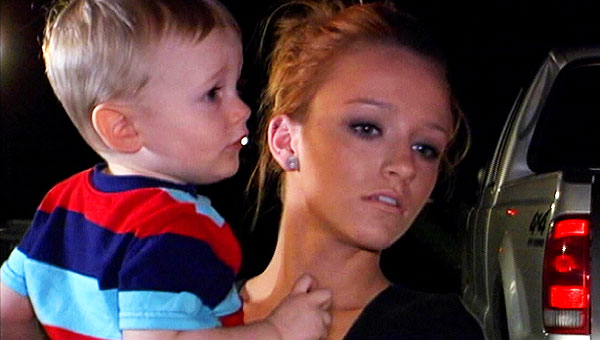
3. While the parents of all of the other Teen Moms seem to be in a secret competition for “World’s Biggest Douchebag,” Maci’s parents prove time and again that they are exceptional parents. I’m thinking in particular about the episode in which Maci considers moving in with a group of girlfriends, and bringing Bentley along. I love how her parents didn’t immediately say “Are you insane?” but rather gently pointed out how difficult it would be for a group of college girls to live with a toddler. Thankfully, Maci agreed.

4. Butch says his drug of choice is cocaine. Bullshit. That man is on meth.

5. Does Catelynn’s mother realize that the big metal machines following her around are video cameras? And that these video cameras are recording her atrocious behavior and then broadcasting it to millions of people across the world? Or she is just on meth?
6. Tyler’s monogrammed “Baltierra” baseball cap. Where can I get one of those?
In light of the many US Weekly cover stories about the show’s cast, blogs and online news sites have been debating whether or not Teen Mom glorifies teen pregnancy. Others point to how people like Maci and Farrah seem to be doing okay and how that sends the wrong message about the “reality” of teen pregnancy. I agree that Teen Mom is not realistic, primarily because it’s cast is all white (with the exception of Farrah whose father is Hispanic, I believe?). I do wish MTV had included more women of color to better reflect the reality of teenage pregnancy in America. However, it is difficult to argue that Teen Mom glorifies teen pregnancy when you watch Maci miss out on the fun of college life, or Amber fail her G.E.D. practice test because she simply cannot remember what she learned in high school, or Farrah getting swindled out of $3,000 because she is far too young to be handling her own finances, or Catelynn cry because her mother can’t forgive her for giving her baby up for adoption. Yes, these girls love their children, but they are girls who have been forced to become women way too soon.
So why do you love Teen Mom? Or better yet, why do you hate it?
MACHETE: Camp Deluxe
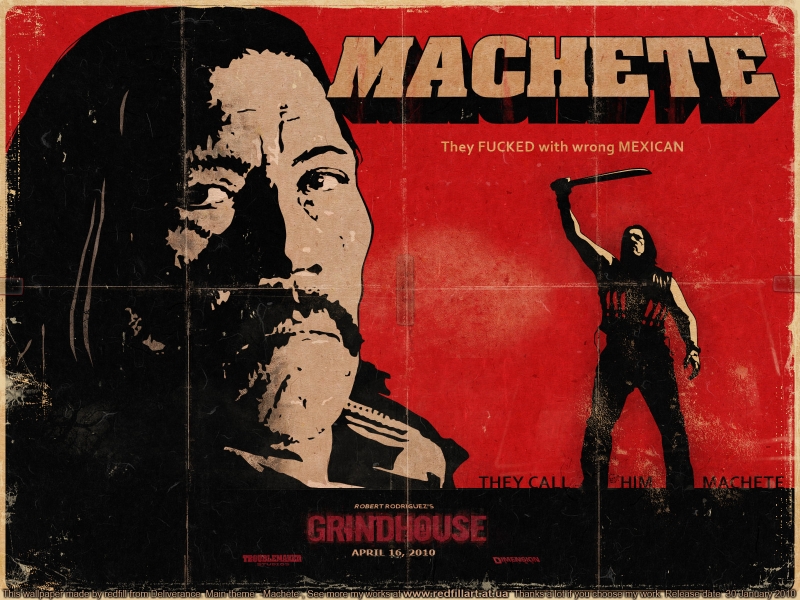
Machete was not a movie that I planned to see this summer. Films like Inception, The Kids are Alright, Scott Pilgrim Vs. The World, and even Piranha 3-D (yes, really) were higher on my to-do list. But there were several factors that drove us into the arms of this film: the movie theaters in Greenville do not hang on to independent films for more than a week (Get Low we hardly knew ye). In fact, if a film does not contain explosions, fart jokes, boobs, or talking animals, it probably won’t even make it to Greenville; I could only go to see a movie that was over by 10 pm (the 8 month old is still not a stellar sleeper); and finally, my husband and I had wrangled us a babysitter. So, no matter what, we were going to see a movie dammit. And that was how I found myself sitting in a darkened theater, watching Machete last Saturday night.
Almost immediately Machete, yet another entry in Robert Rodriguez’s canon of Mexploitation films, won me over. I’m a sucker for exploitation films. Indeed, the opening credits were a perfect replica of low-budget 1970s blaxploitation films: an animated title card pronouncing our hero’s name (MACHETE!), and then a simple listing of the credits. Then there was the music. Blaxploitation films often featured cohesive soundtracks written exclusively for the film, and which acted as a Greek chorus, commenting on the action in the film, praising or scolding the hero, and making future predictions. Machete‘s thumping, rock n’ roll/mariachi band hybrid soundtrack was composed by Chingon. They sing about the film’s hero (Danny Trejo), providing him with his own personal soundtrack. Hell, the “Machete Theme” makes me want to pick up a machete and kick some ass, and I’m just some lame white lady.

In addition to having his own soundtrack, Machete resembles his blaxploitation ancestors in his uncanny ability to punch, kick, shoot, and of course, slice his way through any fight with barely a scratch. At one point in the film Machete is offered $500 to participate in a street fight with a shirtless thug who has just pummeled the life out of his latest opponent. Machete consents, but continues to hold onto the burrito he has just purchased. As his increasingly annoyed opponent swings and jabs, Machete calmly dunks, swerves and chomps on his lunch. The fight ends when Machete dodges a punch in a such a way that his opponent ends up punching a rafter and breaking his arm. Machete wins the fight without ever raising his fist. Finally, as in blaxploitation films, the villains of Machete are unequivocally evil. Von (Don Johnson!) shoots a pregnant Mexican woman in the stomach to prevent her from giving birth on American soil while Torrrez (Steven Seagal!) decapitates Machete’s wife as he is made to watch. By tying this evil to the heated emotions surrounding contemporary immigration debates, the character of Machete effectively gives filmic form to the revenge fantasies of countless, enraged (and terrified) illegal immigrants living in the United States, much as Sweetback (Melvin Van Peebles) “sticking it to the Man” in Sweet Sweetback’s Baadasssss Song made contemporary black audiences stand up and cheer back in 1971.

Where Machete differs from blaxploitation, however, is in its self awareness. Blaxploitation films were, for the most part, quite earnest. When Superfly tells The Man “You don’t own me pig!” by golly he means it. Machete contains lines like these — my favorite being “We didn’t cross the border! The border crossed US!” But they are always delivered with tongue planted firmly in cheek. Nevertheless, Machete is self-aware without being a full on parody. The film wants us to laugh, but doesn’t hit us over the head with its humor. This is a delicate balance to achieve, and one of the film’s primary achievements. For example, in the film’s best visual gag, Machete is being treated in a hospital. The attending doctor and nurses start discussing anatomy, leading one of the nurses to state “So you mean the human intestines are 80 feet long?” This statement is made in the great Chekhovian tradition of “If in the first act you have hung a pistol on the wall, then in the following one it should be fired.” Indeed, moments later Machete’s enemies storm the hospital. The doctor informs Machete that his only means of escape is through the window, which is approximately 80 feet above the ground (wait for it…). As Machete hacks his way through the crowd of baddies (with a grotesque weapon assembled out of medical-grade knives, natch), he disembowels one unlucky fellow, grabs hold of his intestines and then leaps out of the window. It took about 20 seconds for the audience to comprehend what had just transpired on-screen and then? Raucous laughter.
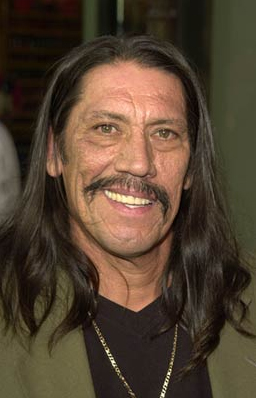
There were many scenes like this in Machete — violent, disturbing scenes — that provoked the audience’s laughter. What a strange and liberating feeling — to laugh at something which would normally provoke disgust or terror. This switching of affect highlights Machete’s status as pure camp. The term camp comes from the French word “se camper” which means “to posture or flaunt.” To be camp, a film must be extraordinary in its aims. It must be flamboyant and theatrical. Why have your hero behead one man when you can have him behead three at once (and filmed in a stunning aerial shot)? Why have your hero use a machine gun when you can attach that machine gun to a motorcycle flying through the air?

Susan Sontag argues that to be pure, camp must be naive. Camp must love itself passionately but be blind to its own missteps. Camp takes itself seriously but cannot be taken seriously. By contrast, most film parodies disparage their subjects, revealing a contempt for them. Sontag does admit that on a few rare occasions (as in the work of Oscar Wilde) camp can be self-aware. I would add Machete to that short list of self-aware texts that are also camp. Rodriguez knows that his film is farce, yet he is never contemptuous or disparaging. He films Machete with a real love for the character. We can tell that Machete is Rodriguez’s hero too.
Here are some of the great camp moments in the film:
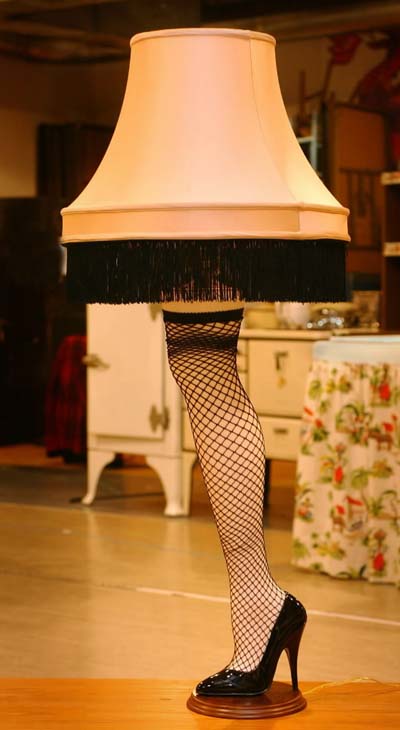
1. Two words: Linday Lohan. At this point in her career, Lindsay Lohan has become the ultimate in camp. She is pure artifice, a replica of Hollywood celebrity. Like a lamp that is shaped like a woman’s leg, Lindsay is what she is not. Every time her image appears on-screen it screams “Lindsay Lohan!” or better yet “LINDSAY LOHAN!!!” And she is therefore a perfect choice to play April, the strung out, adored daughter of Machete’s nemesis, Booth (Jeff Fahey).
2. In the film’s only gratuitous sex scene, Machete agrees to engage in a threesome with April and her mother, June (Alicia Marek). And yes, those names are used, but not abused, to hilarious effect. When the women reveal their breasts –as is the custom in gratuitous sex scenes — it is clear that April is being played by a body double. Even the hair is different. There is no reason why Lindsay Lohan should be shy about revealing her breasts — she’s done it before. So this moment exists more as a nod to the camp films of yore, where little care was taken with disguising body doubles or with correcting obvious mistakes. It is also a tease to the audience “Did you come to this movie to see Lindsay Lohan topless? Too bad for you!”

3. Every character in a camp film must appear in quotation marks. When that character appears on-screen we must instantly know what that character embodies. Thus, Machete is “Machete.” Machete becomes myth/archetype/folk hero within the first few minutes of the film when he and his partner storm a house where a kidnapped woman is being held. Machete slams his foot on the gas and drives through a throng of machine guns. The bullets ricochet through the car, making contact with his partner. By the time Machete has driven his car through the wall of the house, his partner is bloodied mess (and very, very dead). Machete, however, is fine. Because he is “Machete.” In fact, when Agent Sartana (Jessica Alba) does a background check on the hero, she discovers, among other details, that his birth name is “Machete.” Of course it is.

4. Camp is all about exaggerated sexuality: highly feminine femininity and highly masculine masculinity. Woman is “woman” and man is “man.” Thus, throughout the film, Agent Sartana wears stiletto heels, despite the fact that she is often chasing bad guys around and shooting weapons. She even uses one of her heels as a weapon later in the film. Sartana also researches the internet while taking a steamy shower (and with full make up on). Who has a computer hooked up in their shower? I would not have been surprised if she were wearing stilettos in the shower. And I won’t even mention the secret agent featured in the opening scene who hides a cell phone in her vagina because she is naked and has no other place to put it. Oops, I guess I did mention that. Sorry.

Camp taste is a mode of enjoyment and appreciation rather than judgment. Camp is not mean, but loving. Rodriguez clearly loves his subject: exploitation films, grindhouse cinema, seedy border films, and revenge fantasy flicks. He does not want us to laugh at the silliness of these film. Instead, he invites us to celebrate them in their excessive glory. As I watch Danny Trejo slice his way through bodies, fashion deadly weapons out of objects he finds around him, and make out with Jessica Alba while driving a motorcycle, I am not incredulous. The film tells me “I am silly but I am wonderful. Don’t judge me! Enjoy me!” And I did.
 judgmental observer